Disease
bacterialAlmond Leaf Scorch
Xylella fastidiosa
Bacterial disease vectored by sharpshooter leafhoppers, causing progressive leaf scorch and tree decline. Same pathogen species as Pierce's disease in grape.
- Pathogen type
- Bacterial
- Hosts
- 1
- Symptoms
- 3
- Scientific name
- Xylella fastidiosa
- Resistant varieties
- 0
Biology and conditions
Almond leaf scorch is caused by Xylella fastidiosa, a xylem-colonizing bacterium best known in viticulture as the agent of Pierce's disease in grape. The same pathogen, different host. Infection reaches almonds through sharpshooter leafhoppers (primarily the blue-green sharpshooter, Graphocephala atropunctata, and the glassy-winged sharpshooter, Homalodisca vitripennis) that acquire the bacterium from infected riparian plants and inoculate the tree during feeding.
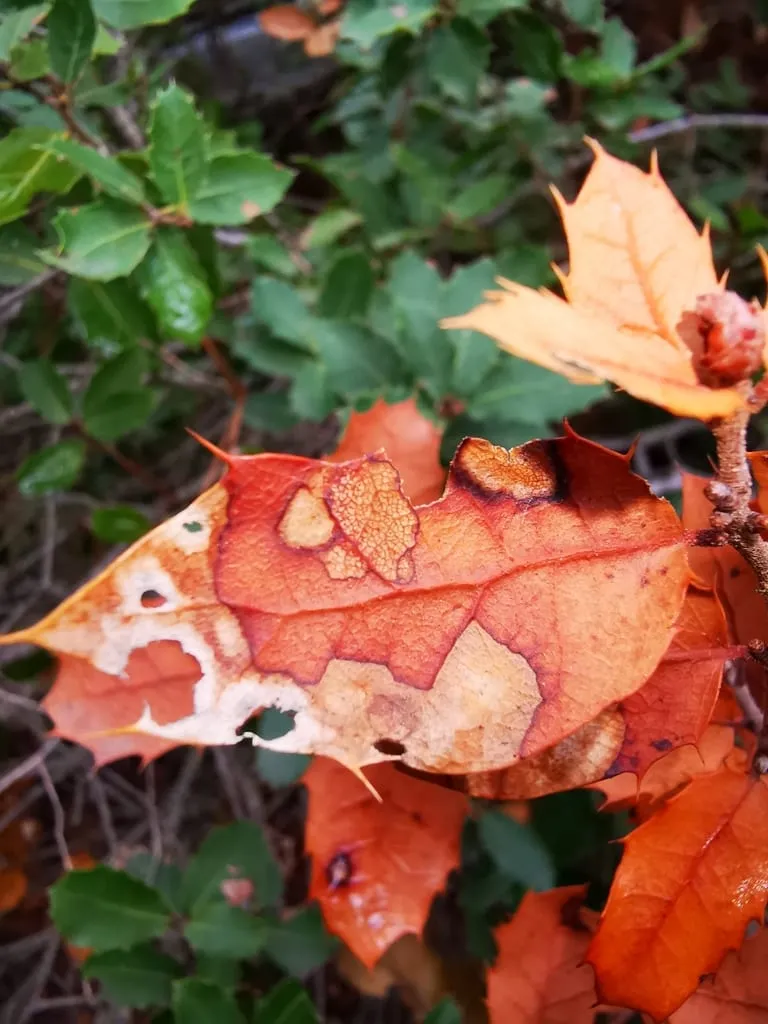
Once inside the xylem, the bacterium multiplies and blocks water transport, producing the characteristic marginal leaf scorch: brown, crispy leaf edges separated from healthy green tissue by a narrow yellow halo. The pattern is distinct enough to suggest the diagnosis in the field, though laboratory confirmation is advisable before removing trees. Affected branches defoliate progressively; over two to three seasons, the infection spreads and reduces kernel fill, then kills scaffold limbs, then the tree.
Conditions that favor spread are those that favor sharpshooter populations: warm winters that allow overwintering in riparian corridors, abundant weed and grass cover along ditch banks and hedgerows, and orchards planted close to infected wild hosts such as elderberry, blackberry, and perennial grasses.
No cure exists once a tree is systemically infected. The most cost-effective management strategy is spatial: site orchards away from riparian vegetation where feasible, monitor orchard edges during summer for early scorch symptoms, and remove confirmed infected trees promptly before sharpshooters can acquire the bacterium and spread it. No commercially available almond varieties with documented X. fastidiosa resistance are currently listed for this pathogen.
Symptoms
- ▸ Marginal leaf browning with yellow halo separating dead from healthy tissue
- ▸ Progressive defoliation of affected branches
- ▸ Reduced kernel fill and tree vigor over consecutive years
IPM controls
- ✓ No effective cure once infected; remove and replace affected trees
- ✓ Manage sharpshooter populations along orchard edges
- ✓ Avoid planting near infected riparian vegetation (the primary inoculum source)
- ✓ Monitor and rogue out infected trees promptly
Affected crops
Image: "bacterial leaf scorch", by no rights reserved, via iNaturalist, licensed under CC0 Source.
Related