Reference
Pests
60 pests in the database, with scientific names, host crops, identification signs, and integrated pest management controls. The site favors low-spray approaches where they're effective; conventional sprays are noted but not the default recommendation.
Widespread pests
affect 5 or more crops
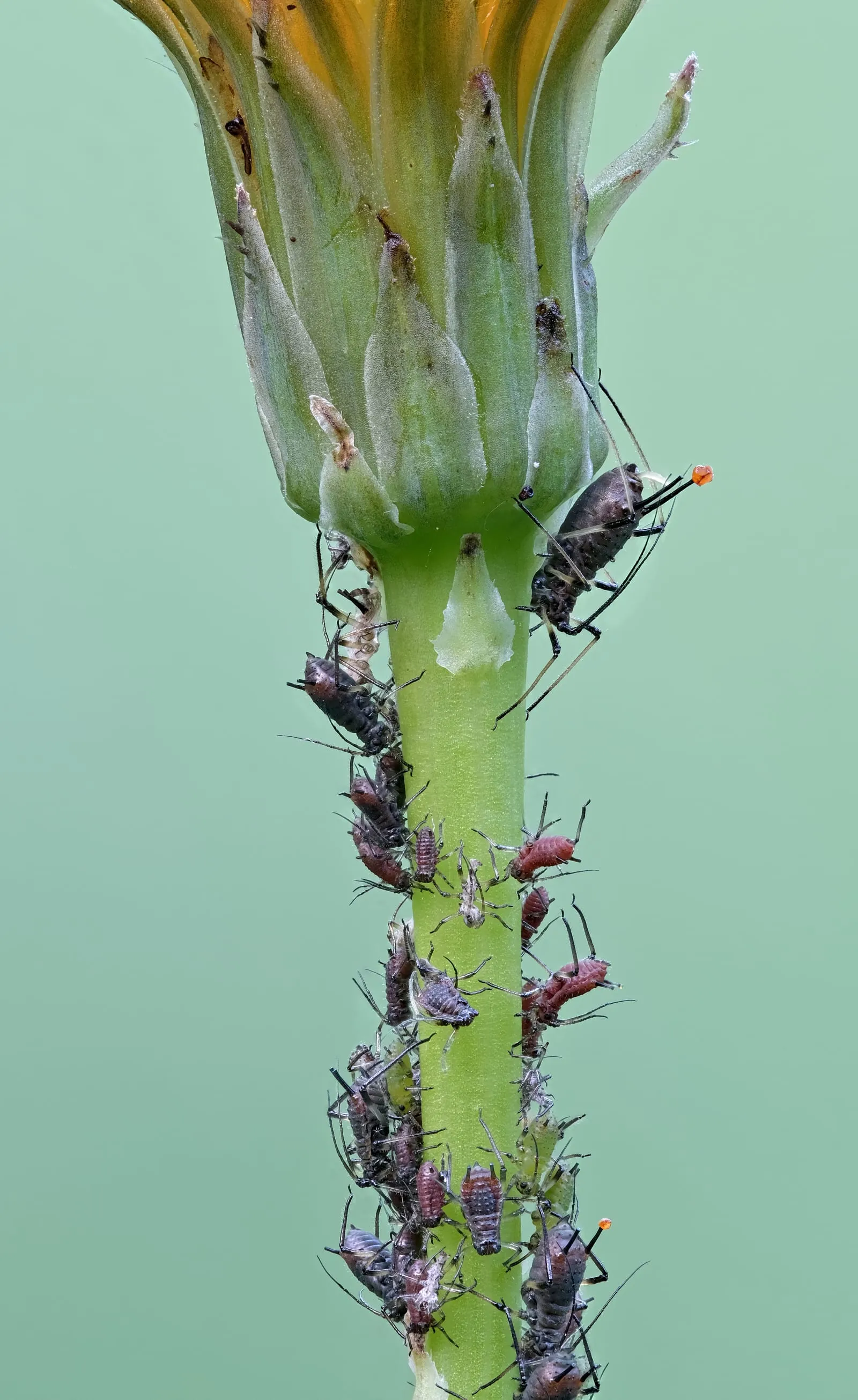
Multiple species (Aphididae)
Small soft-bodied sap-sucking insects that reproduce explosively in spring. Excrete honeydew that supports sooty mold and attracts ants. Transmit viral diseases.
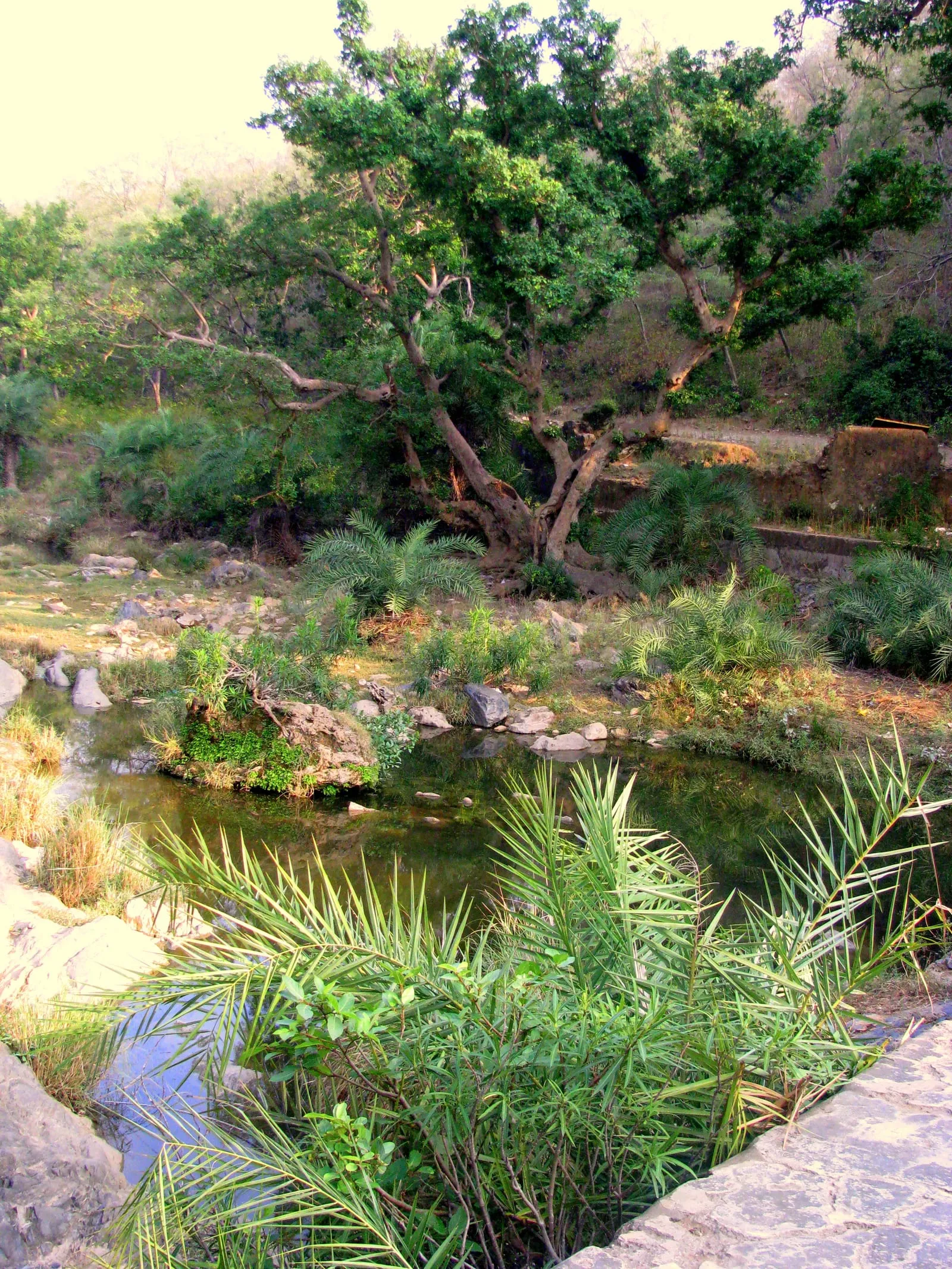
Multiple species
Robins, catbirds, mockingbirds, starlings, cedar waxwings and other songbirds can strip ripening berry and fruit crops in days. Crows and blackbirds also damage fresh sweet corn ears in milk stage. The single biggest yield-loss factor in unprotected home plantings.
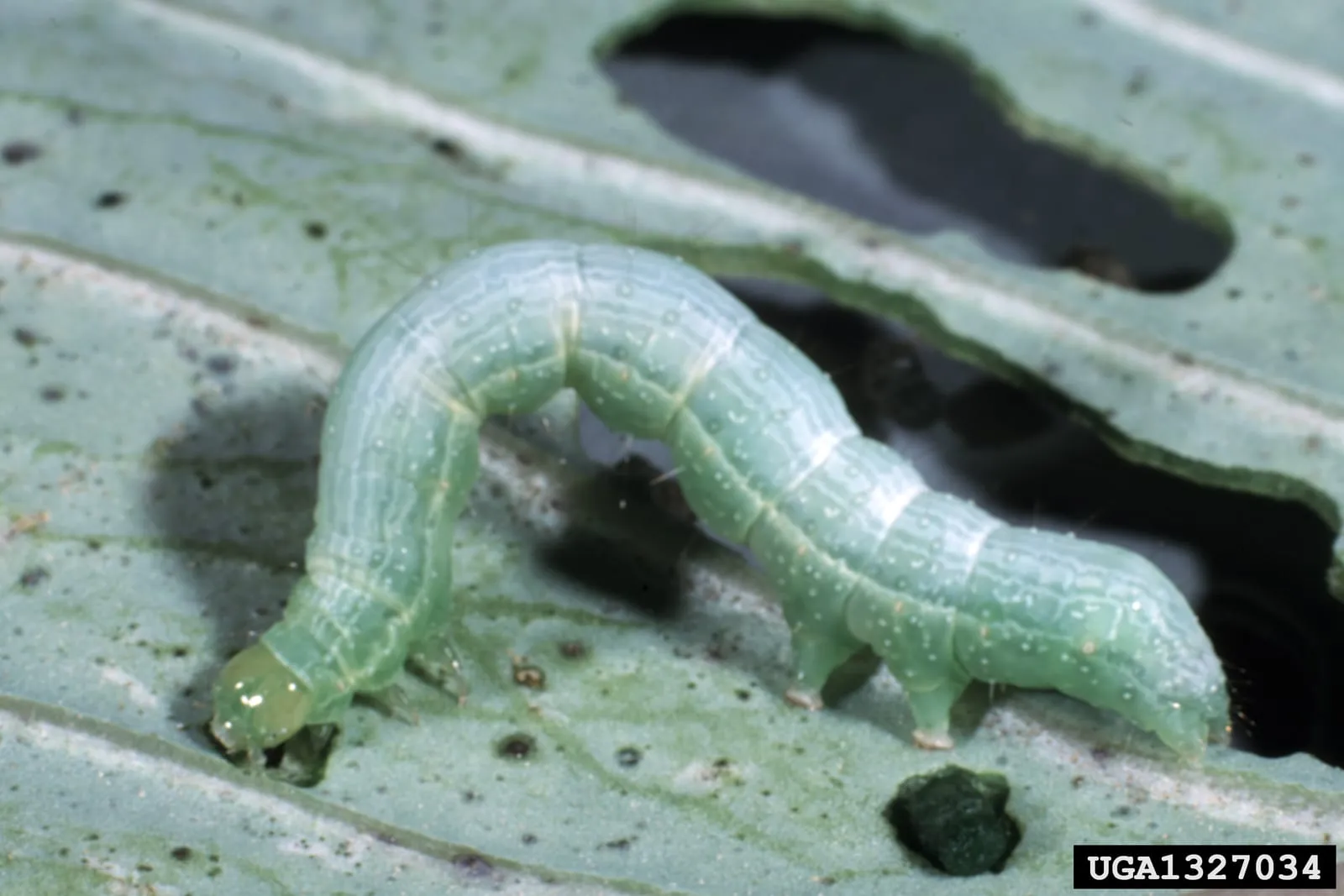
Trichoplusia ni
Pale green caterpillars that arch their backs (loop) when crawling. Defoliate brassicas and lettuce, contaminate harvested heads. Adults are mottled gray-brown moths.
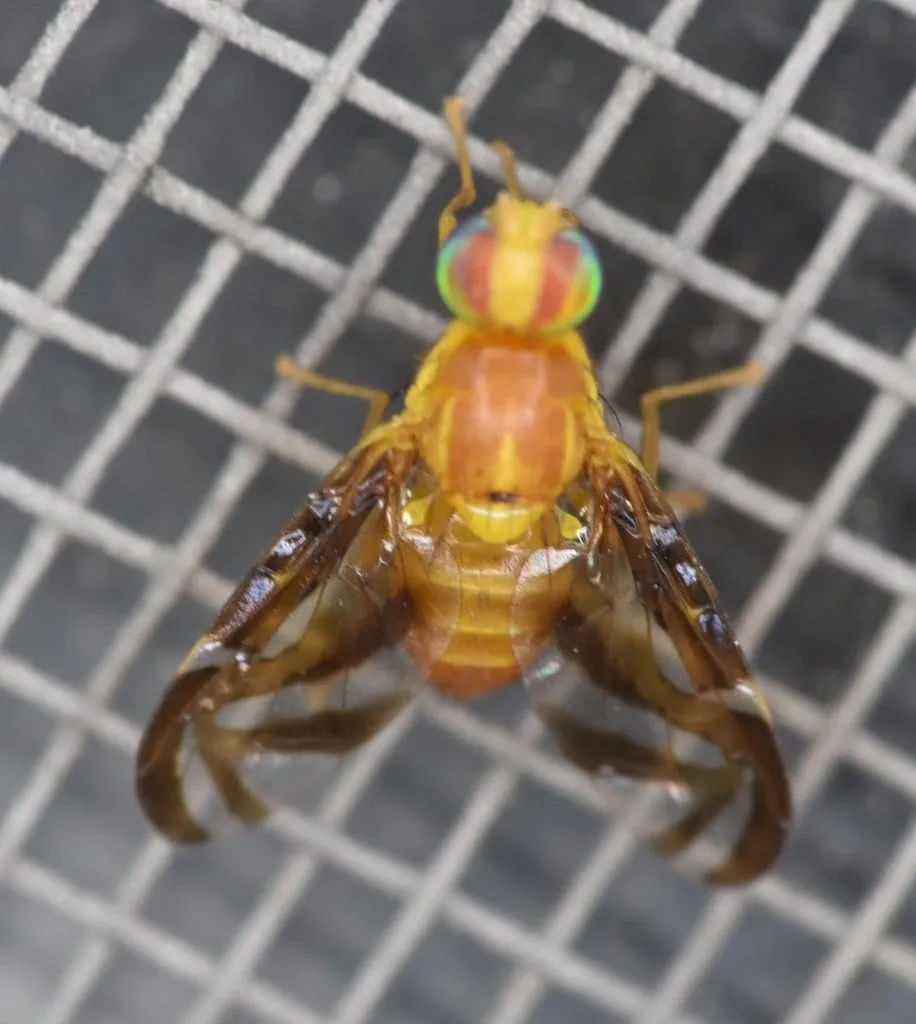
Anastrepha suspensa
Tropical fruit fly endemic to Florida and the Caribbean. Less aggressive on commercial citrus than Mediterranean fruit fly, but devastating on guava, carambola, and other thin-skinned tropicals.
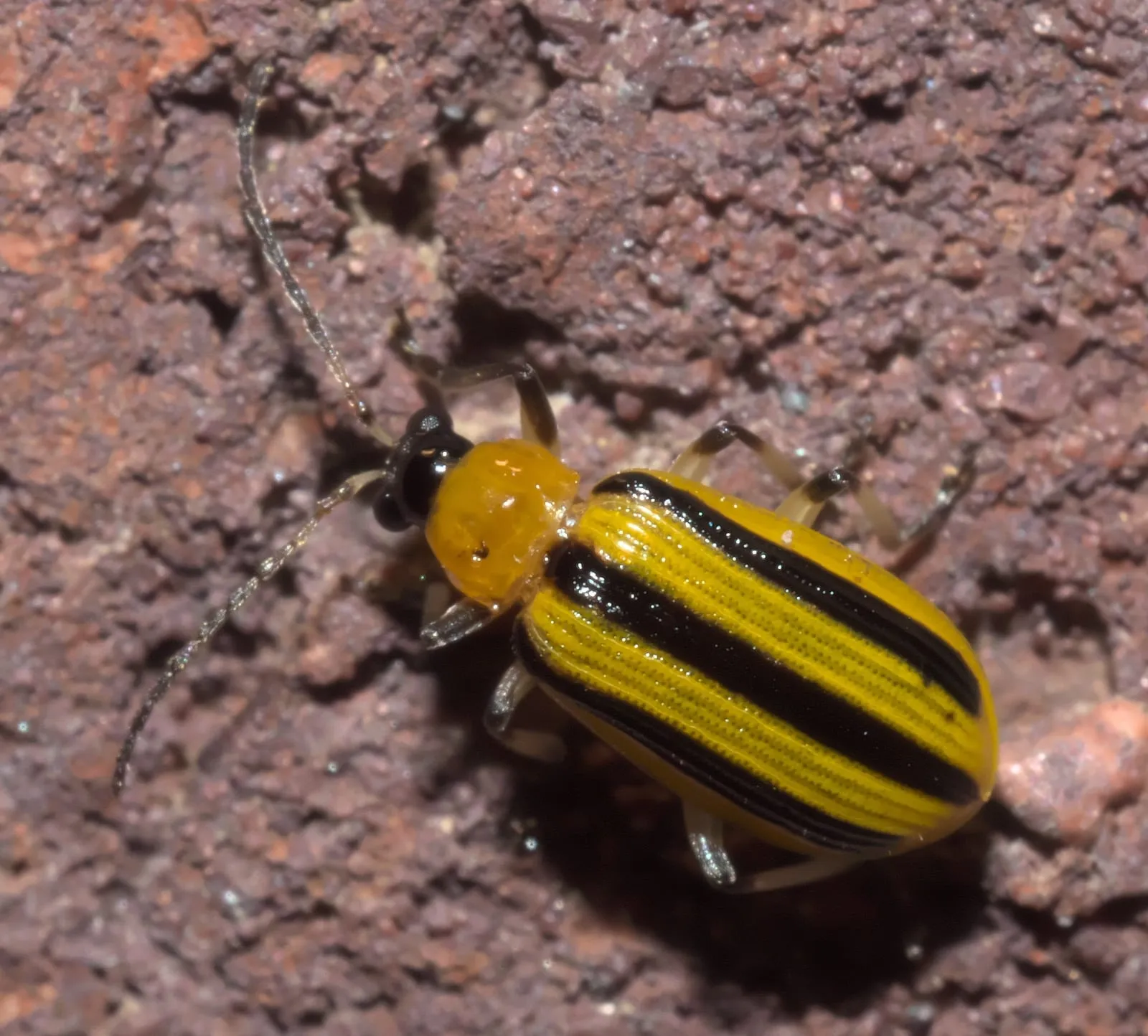
Acalymma vittatum (striped) and Diabrotica undecimpunctata (spotted)
Yellow-and-black beetles that feed on cucurbit foliage and flowers, but the bigger problem is that they vector bacterial wilt and cucumber mosaic virus.
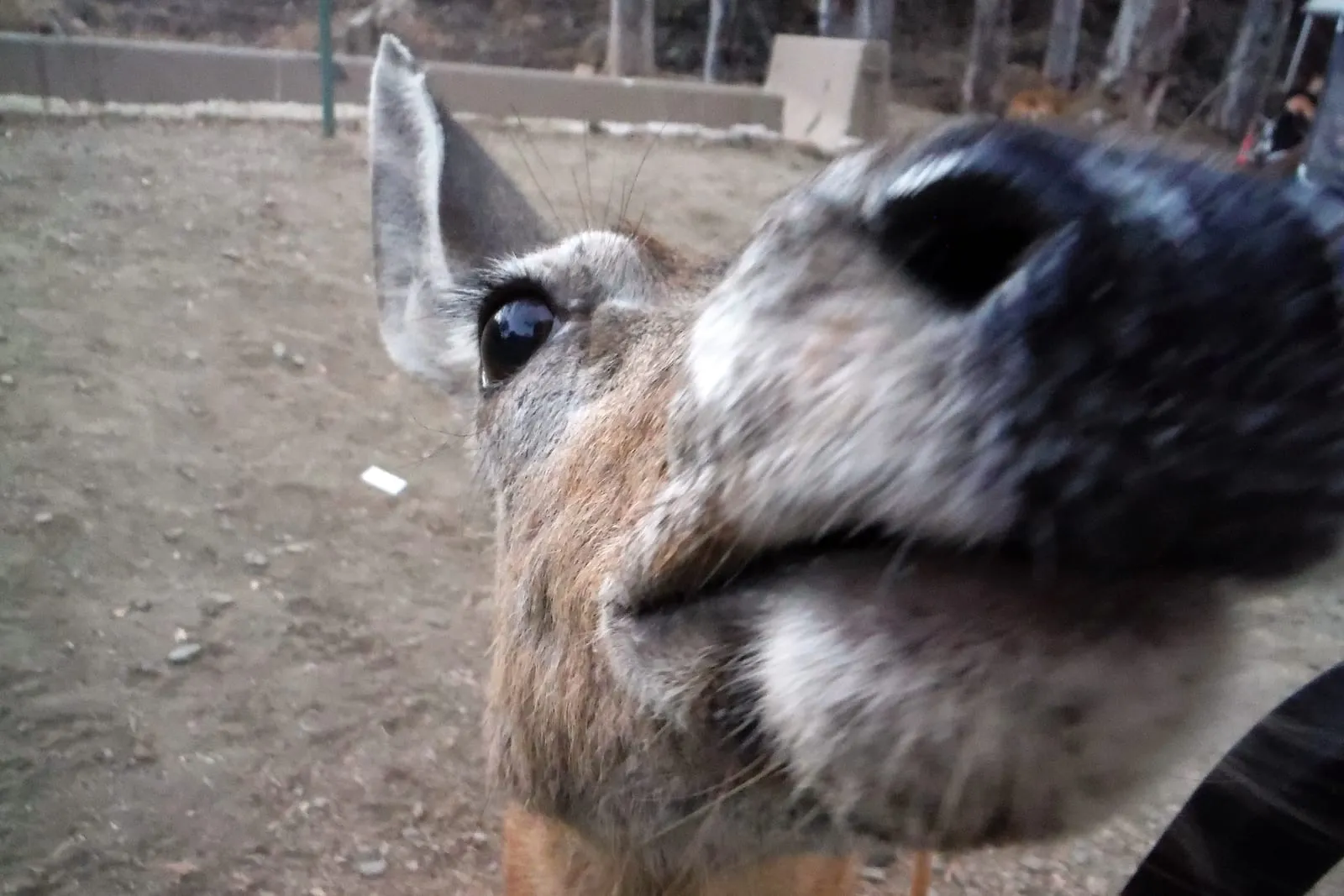
Odocoileus species
Whitetail and mule deer browse can devastate orchards and gardens, particularly in winter when food is scarce. Antler rub on young trunks kills saplings outright.
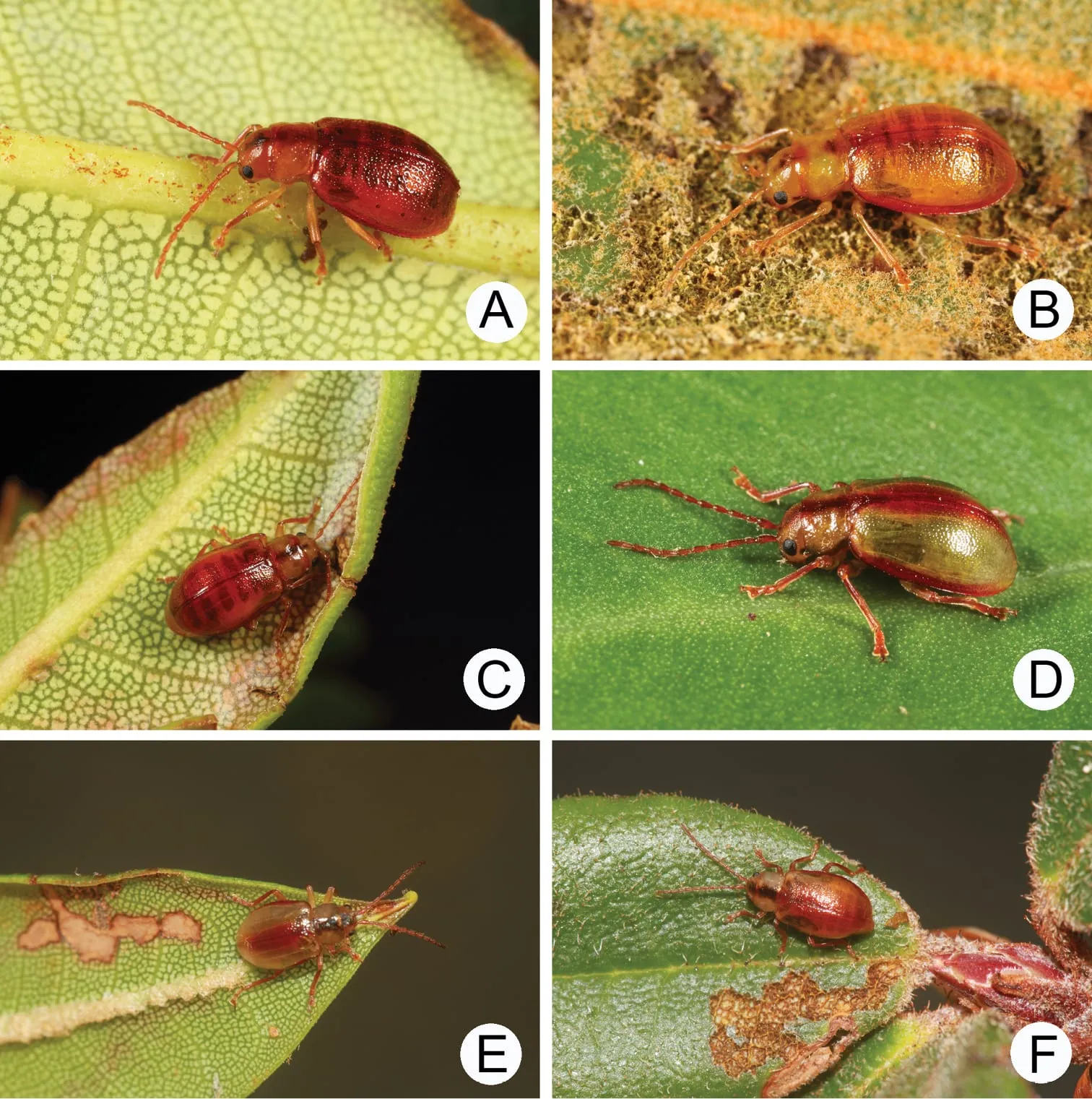
Multiple species (Chrysomelidae)
Tiny black or bronze jumping beetles that put hundreds of small holes in seedling leaves. Most damaging on direct-seeded brassicas and young eggplant.
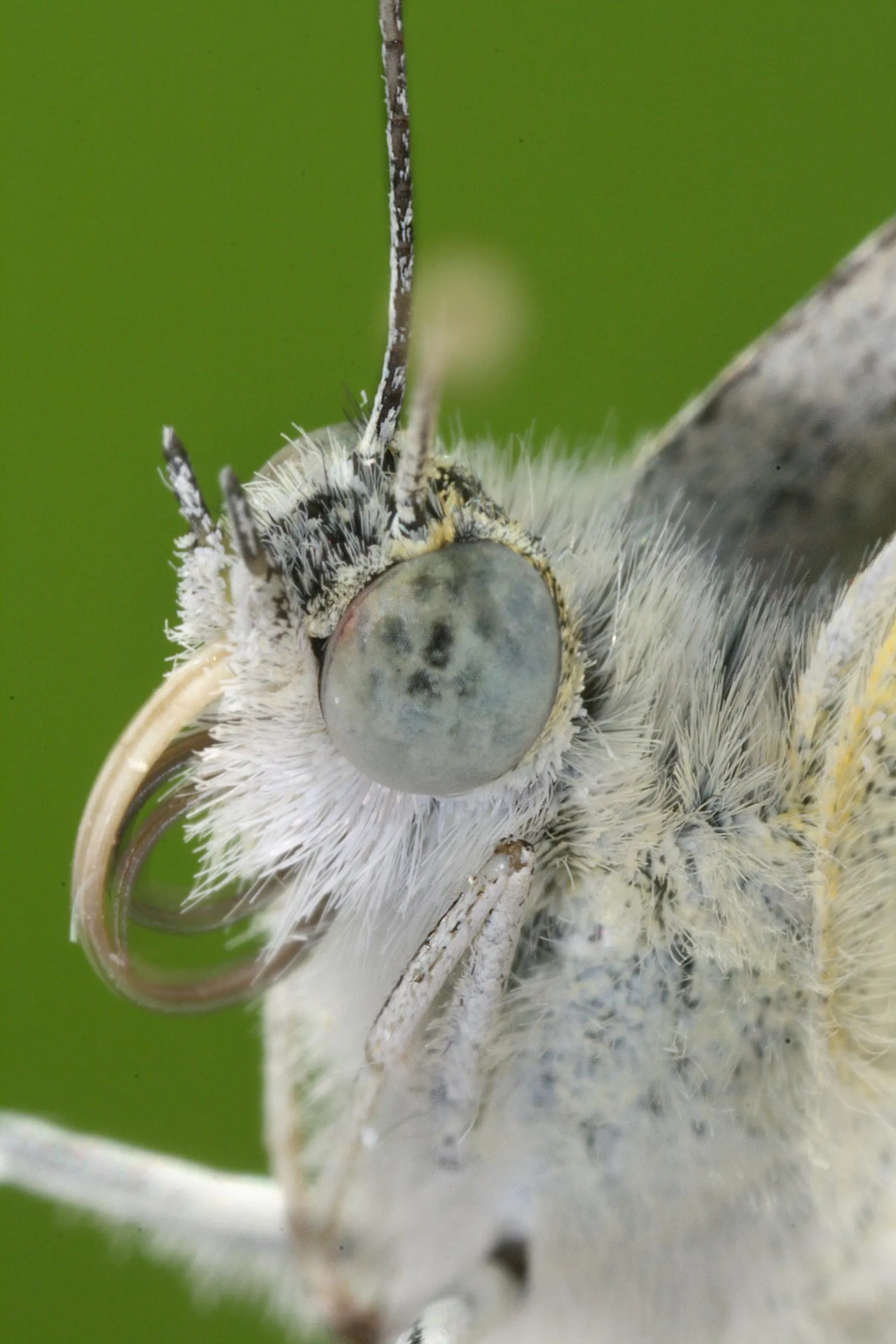
Pieris rapae
Velvety green caterpillars that chew large irregular holes in brassica leaves and bore into heads. Adults are the small white butterflies seen fluttering through the garden.
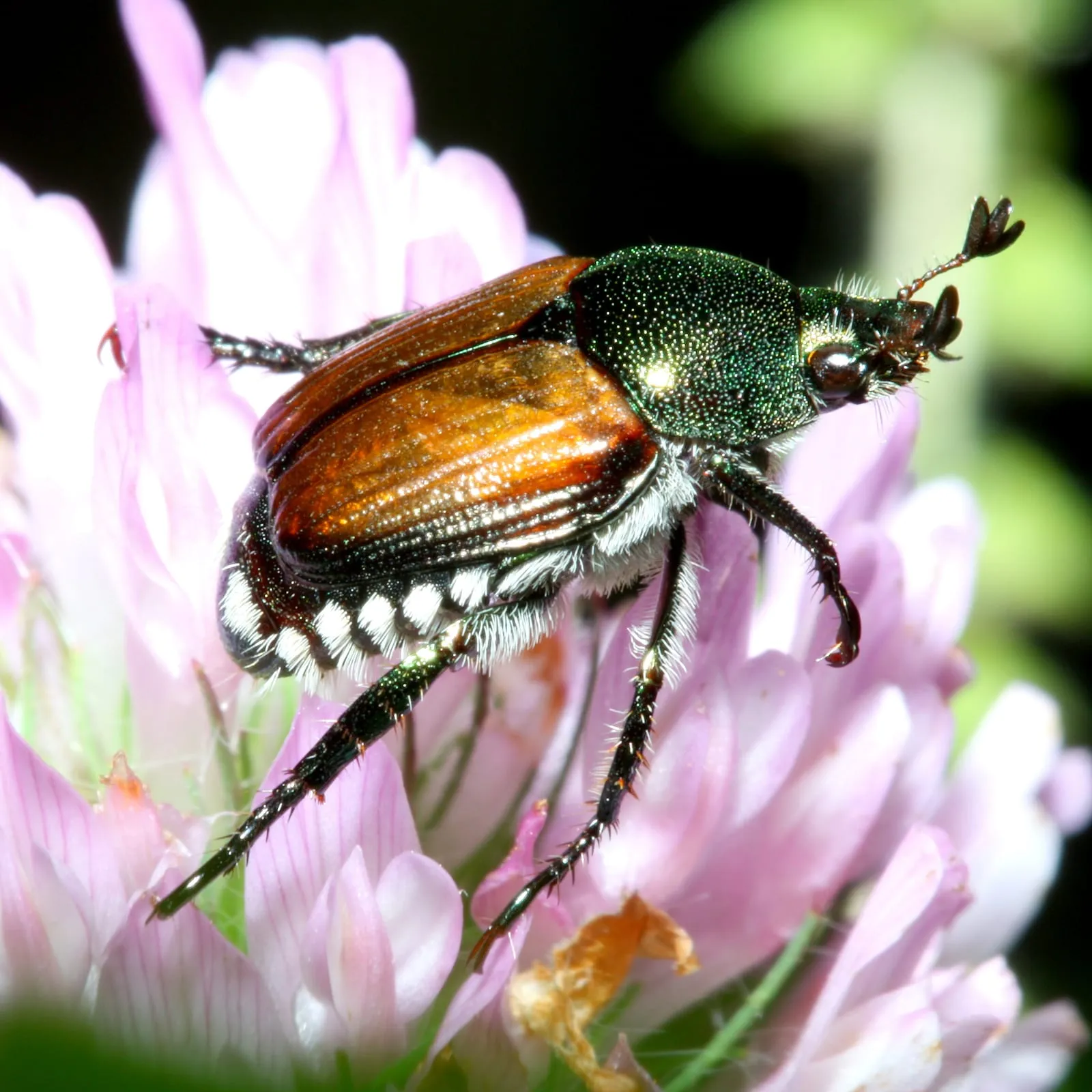
Popillia japonica
Defoliating beetle introduced to North America in 1916. Skeletonizes leaves of many fruit trees, berry canes, and pecan.
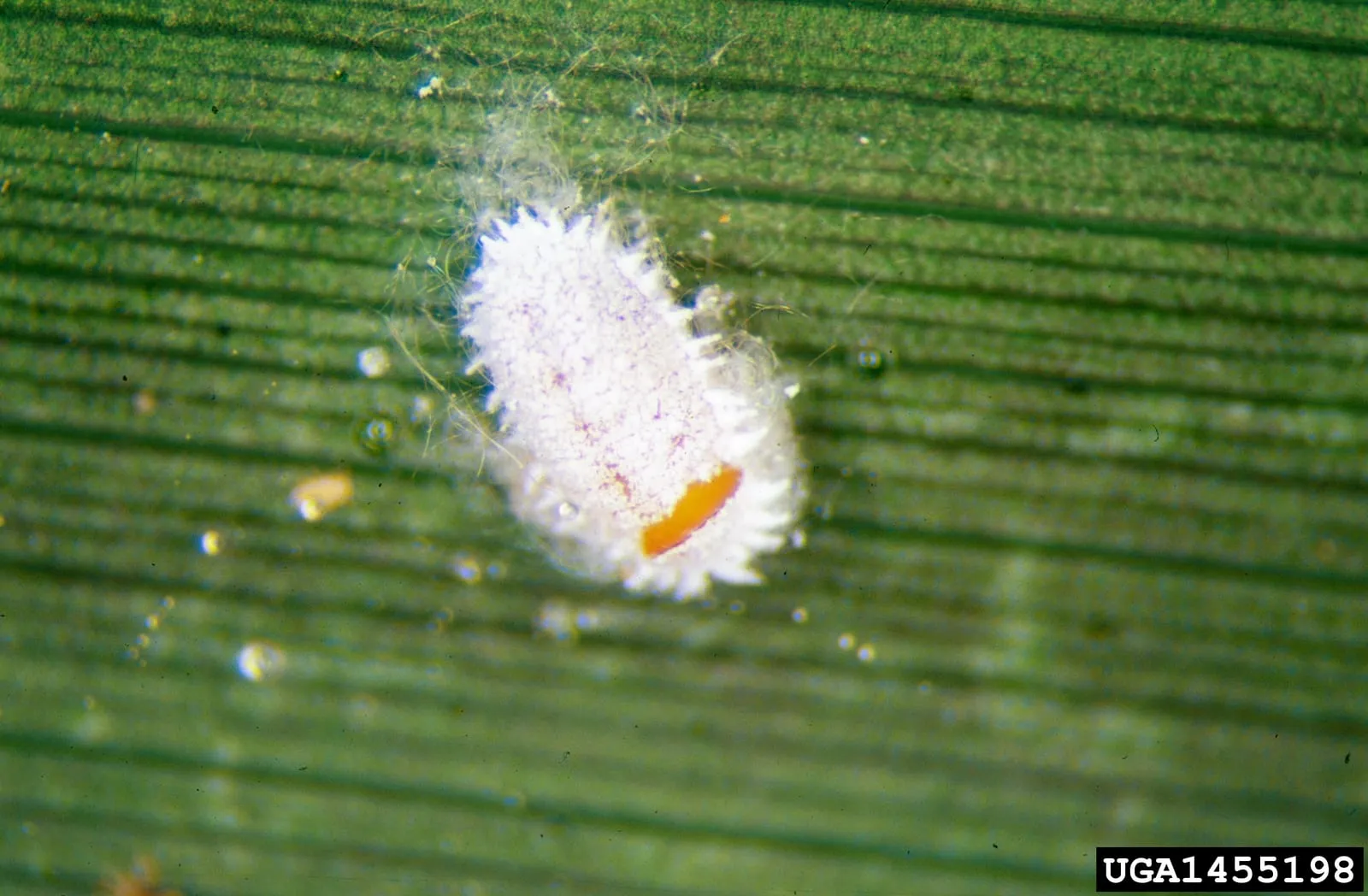
Pseudococcidae spp.
Soft white waxy insects that cluster at leaf joints, fruit stems, and root crowns. Honeydew secretion supports sooty mold; root mealybugs cause decline that mimics drought.
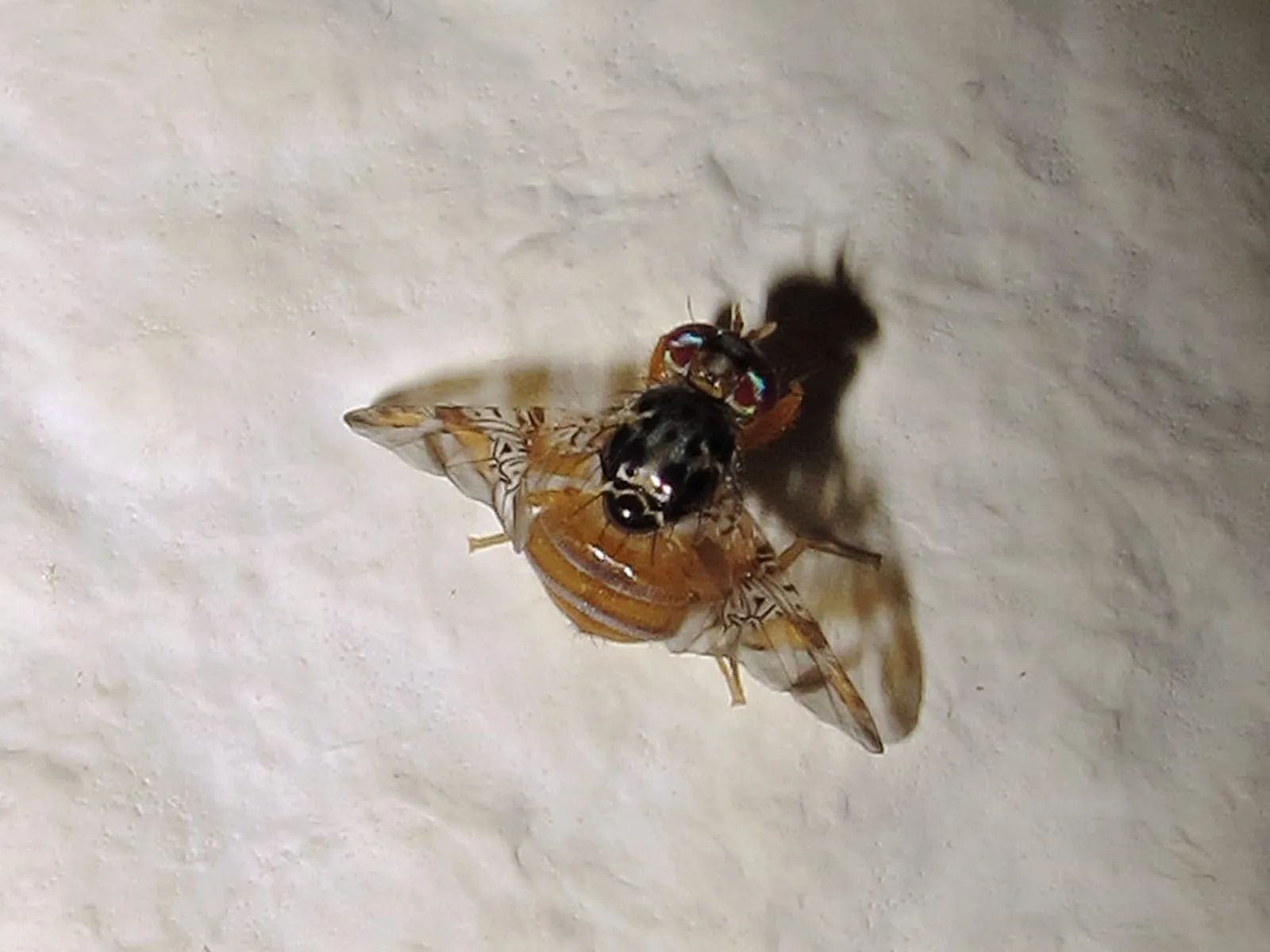
Ceratitis capitata
Quarantine pest in many regions. Adult females puncture ripening fruit to lay eggs; larvae tunnel through the flesh, causing premature drop and rot.
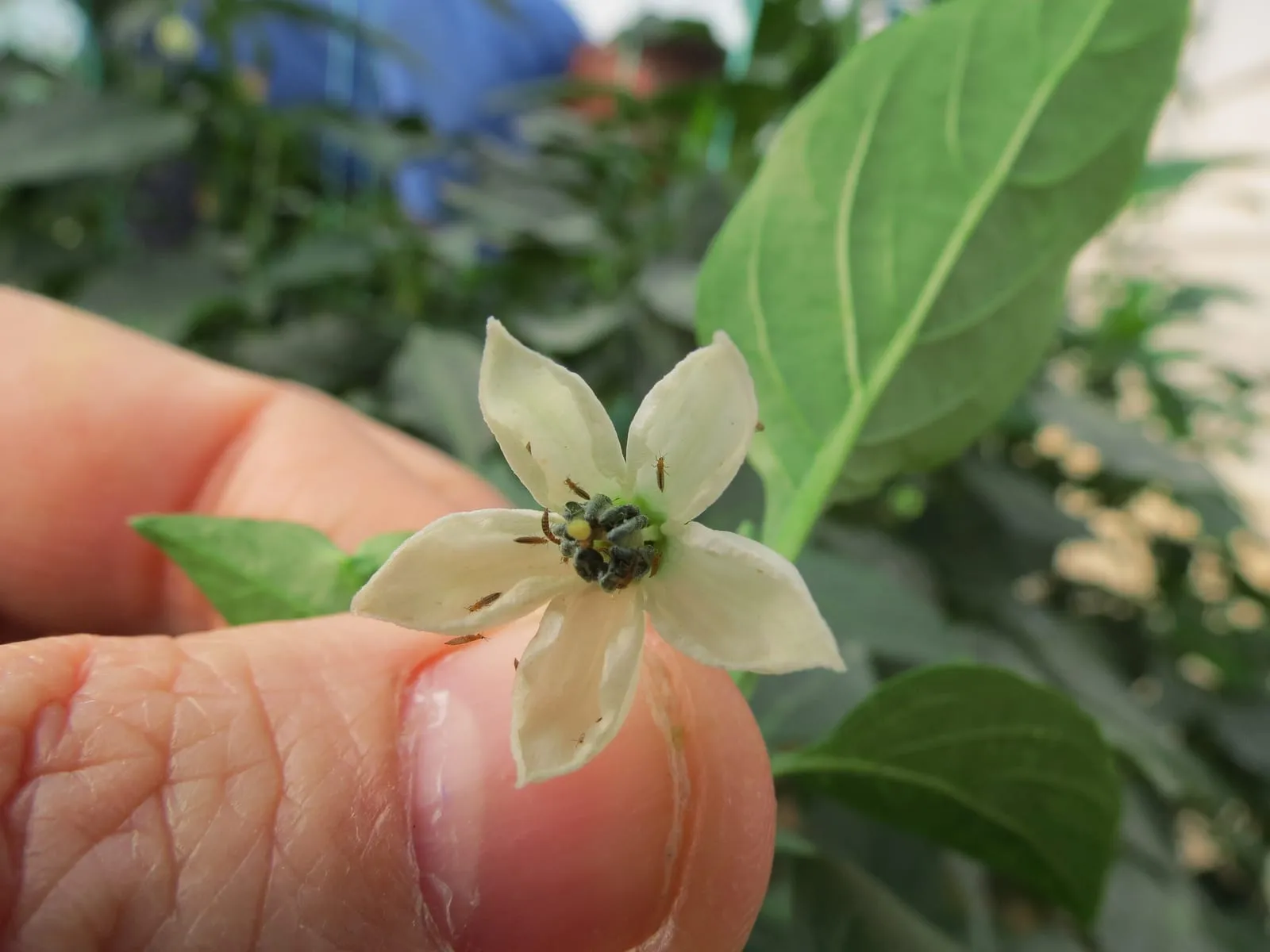
Thrips tabaci
Tiny slender insects that rasp leaf surfaces and suck plant juices. Most damaging on onion and garlic where they reduce bulb size and transmit Iris yellow spot virus.
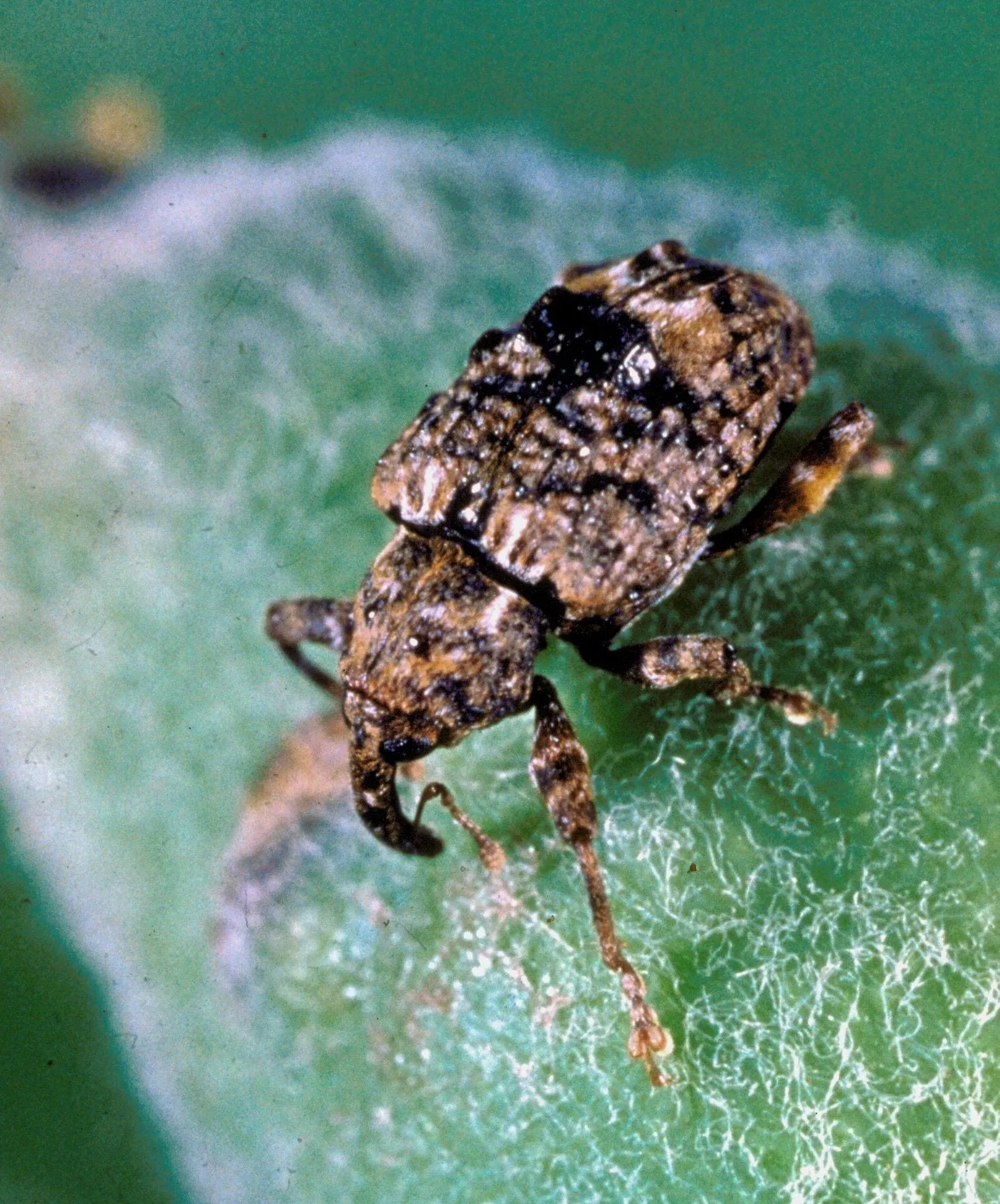
Conotrachelus nenuphar
Native weevil that lays eggs in young stone and pome fruit, causing characteristic crescent-shaped scars.
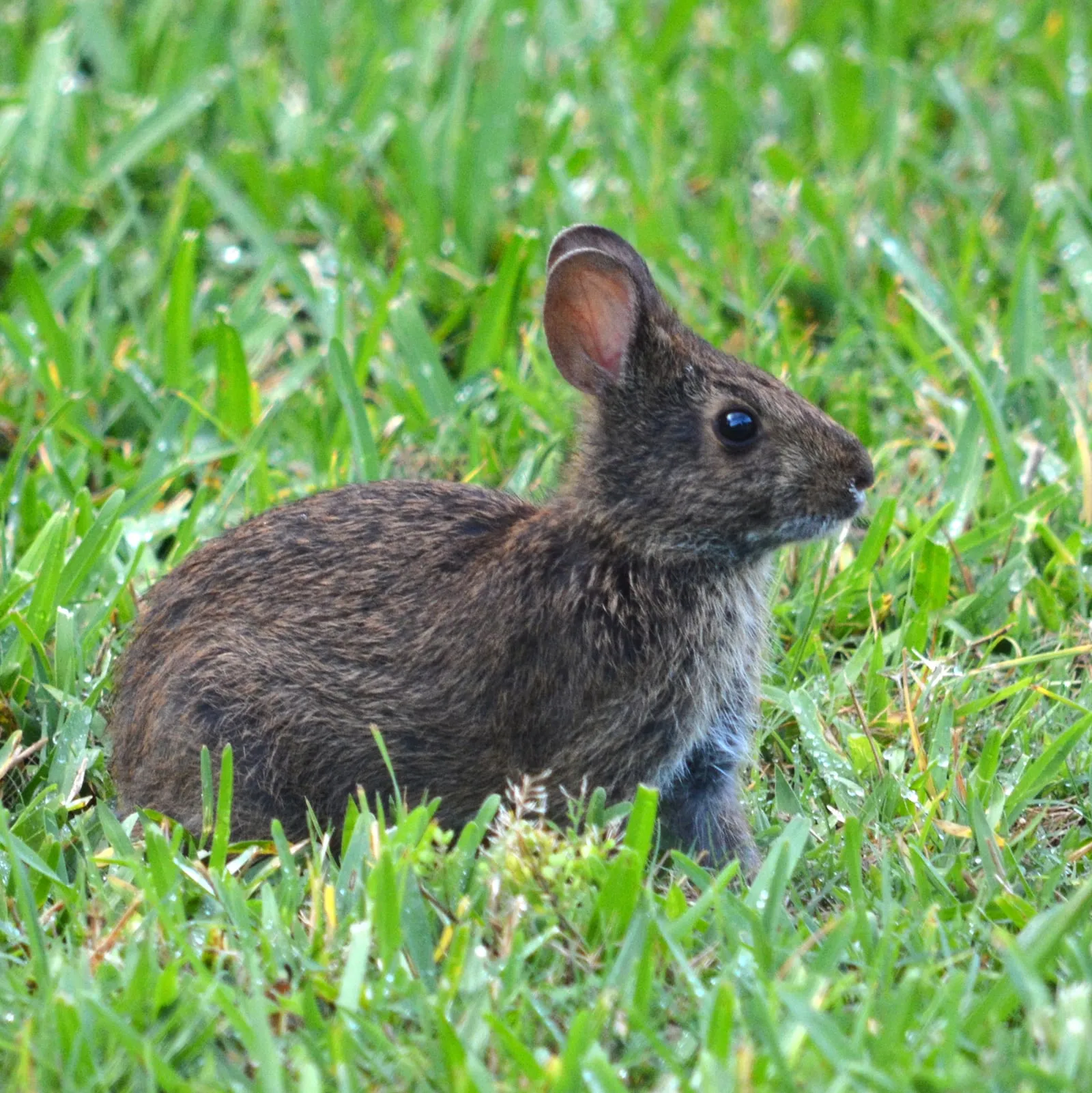
Sylvilagus and Lepus species
Cottontails and jackrabbits strip bark from young fruit trees in winter and graze tender garden vegetables year-round, especially seedlings.
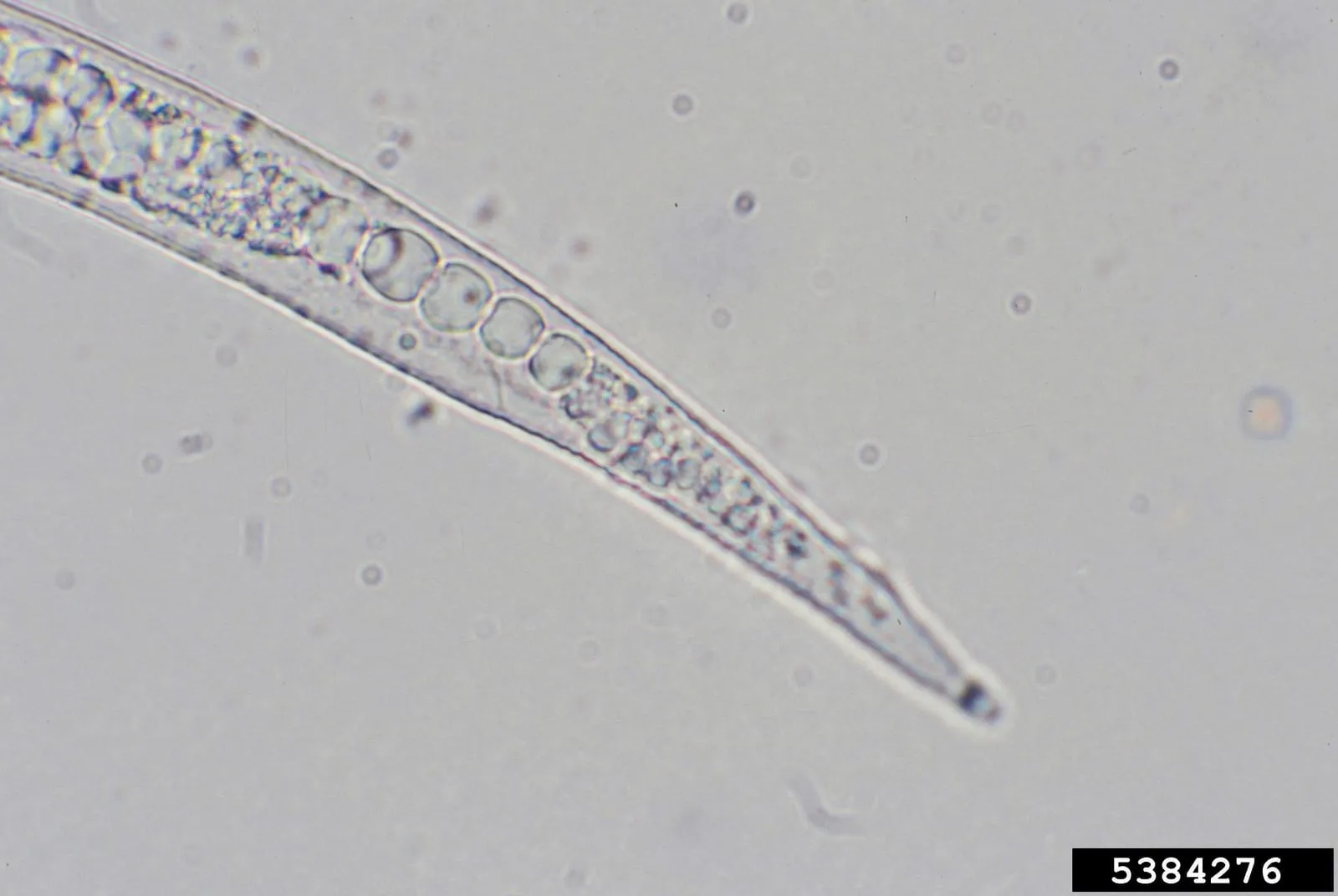
Meloidogyne species
Microscopic soil-dwelling worm that forms galls on roots, reducing vigor and yield.
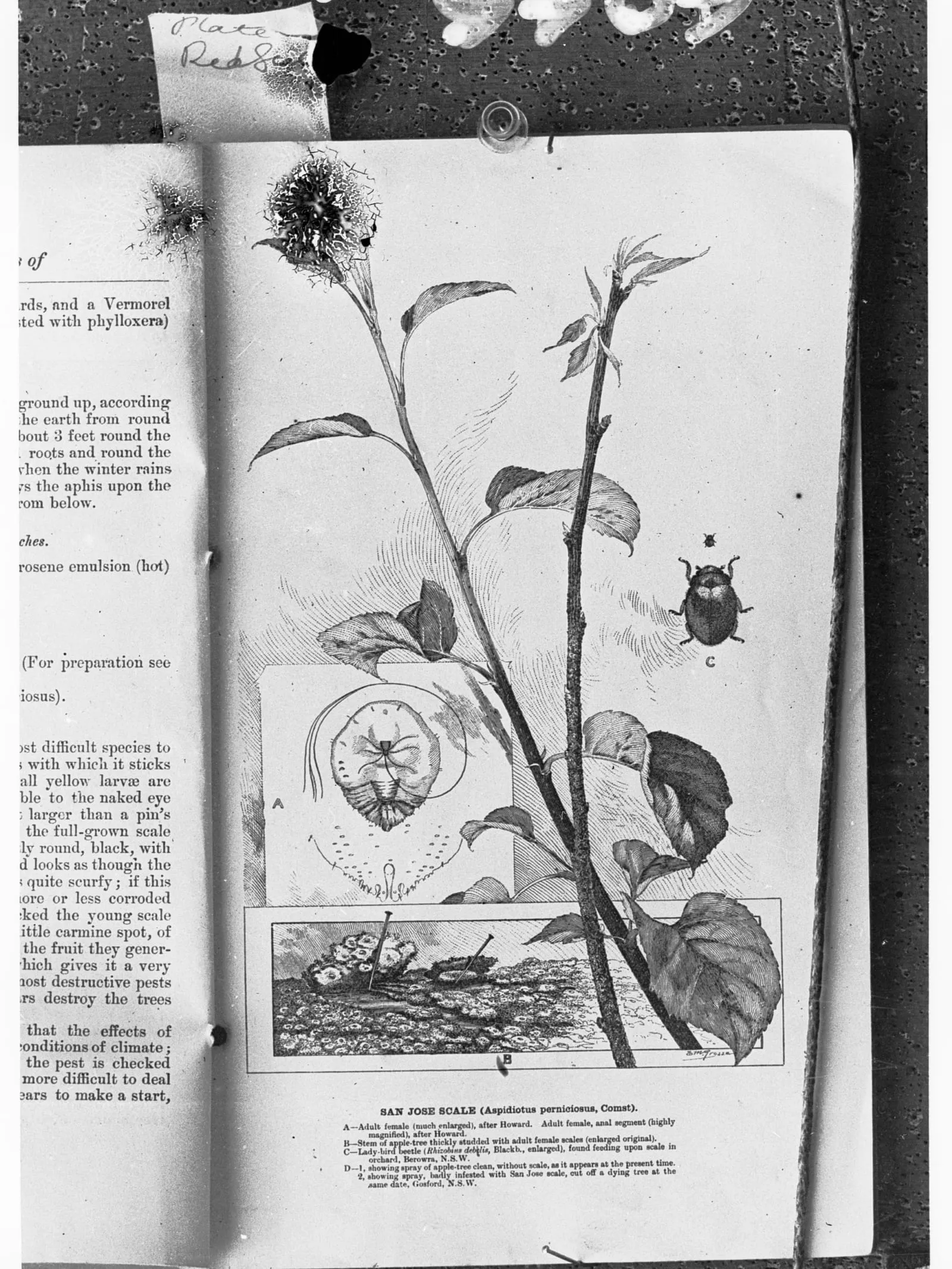
Quadraspidiotus perniciosus
Tiny armored scale insect that encrusts bark, branches, and fruit. Heavy infestations weaken trees and produce red haloed spots on fruit at harvest. Persistent year-over-year if not controlled.
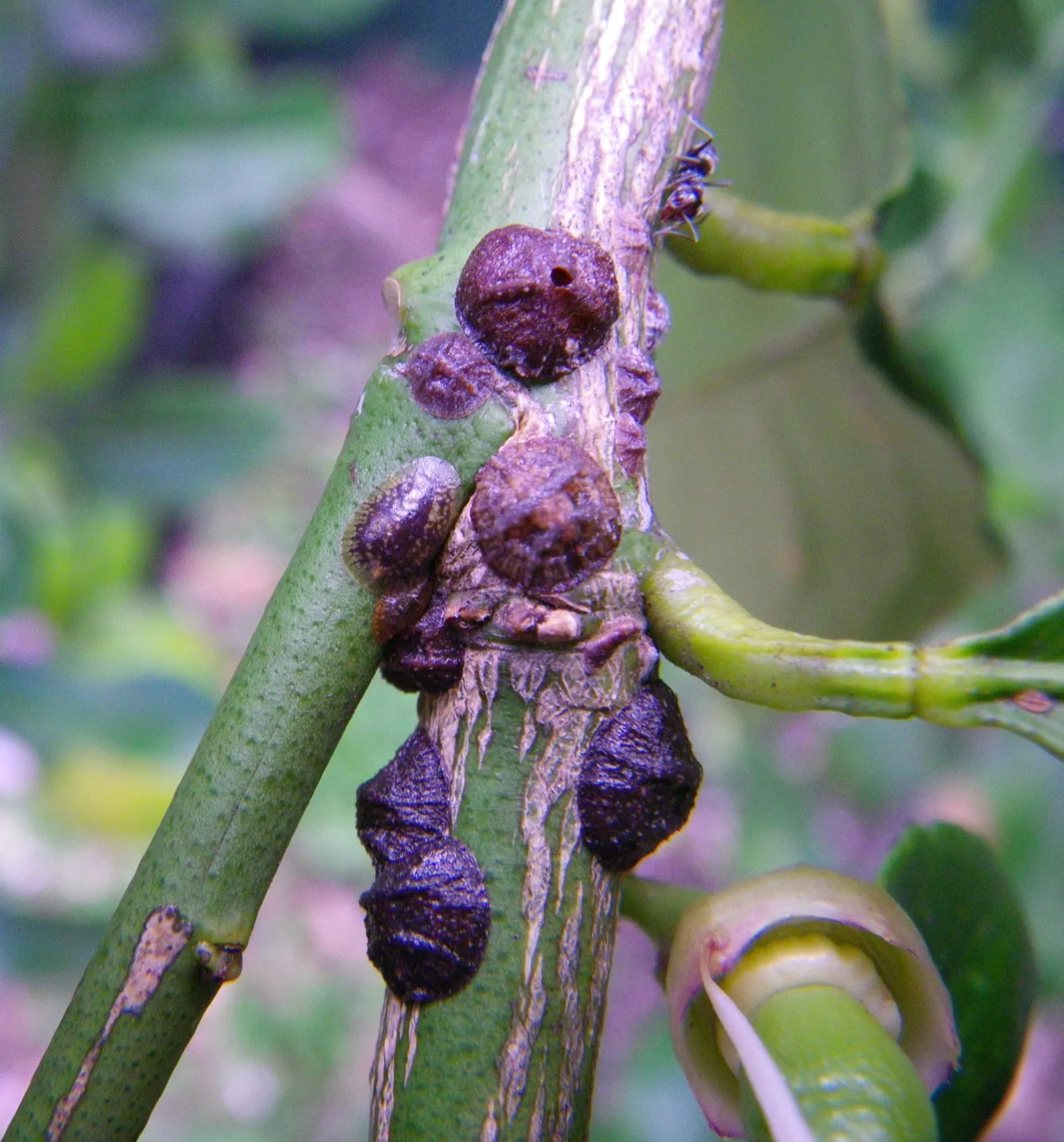
Coccoidea spp.
Sap-sucking insects that attach to bark, leaves, and fruit, secreting honeydew that fuels sooty mold. Heavy infestations weaken trees and cause leaf yellowing.
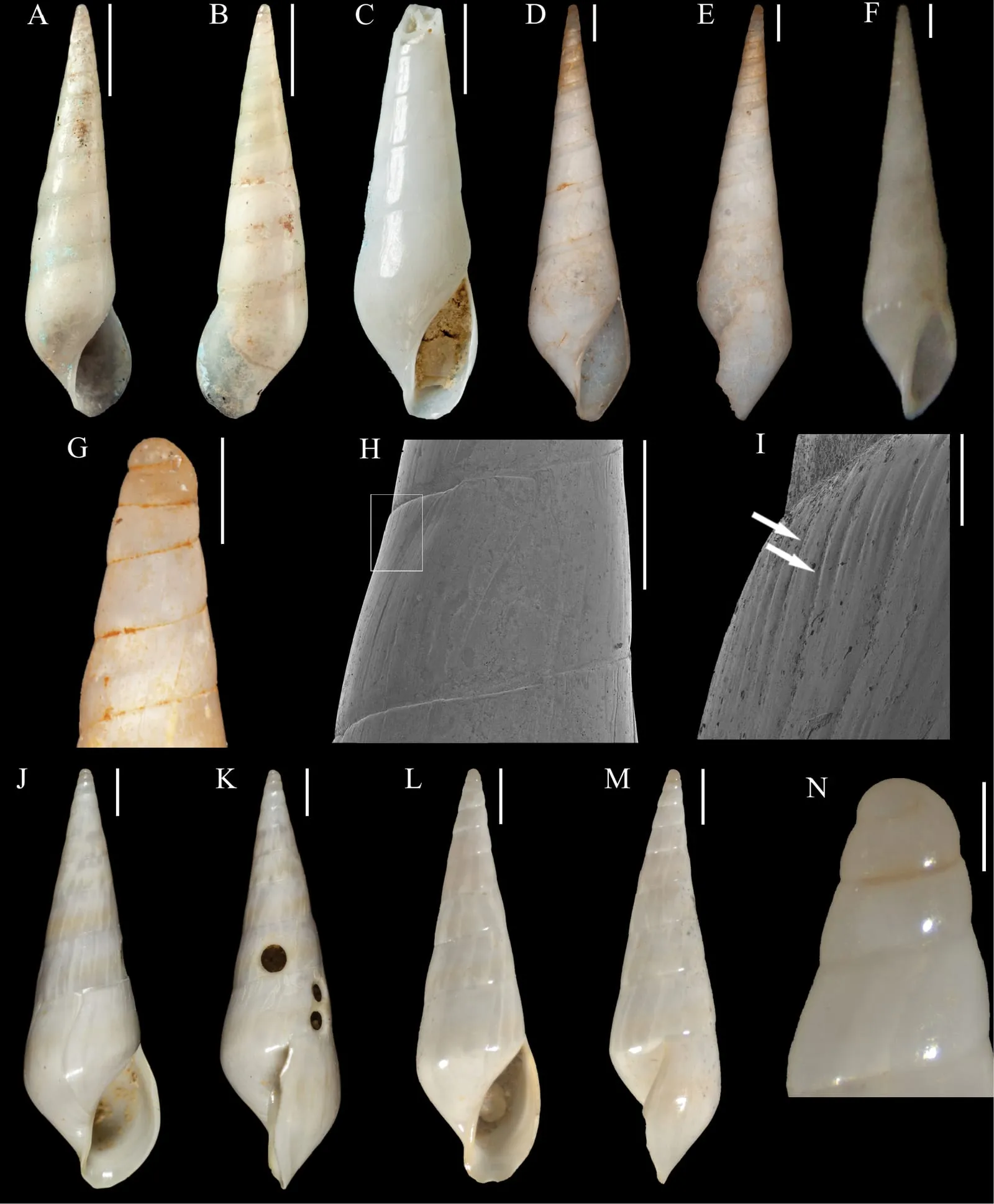
Multiple species (Gastropoda)
Soft-bodied mollusks that feed on tender leaves and seedlings primarily at night. Damaging especially in wet years and shaded mulched gardens.
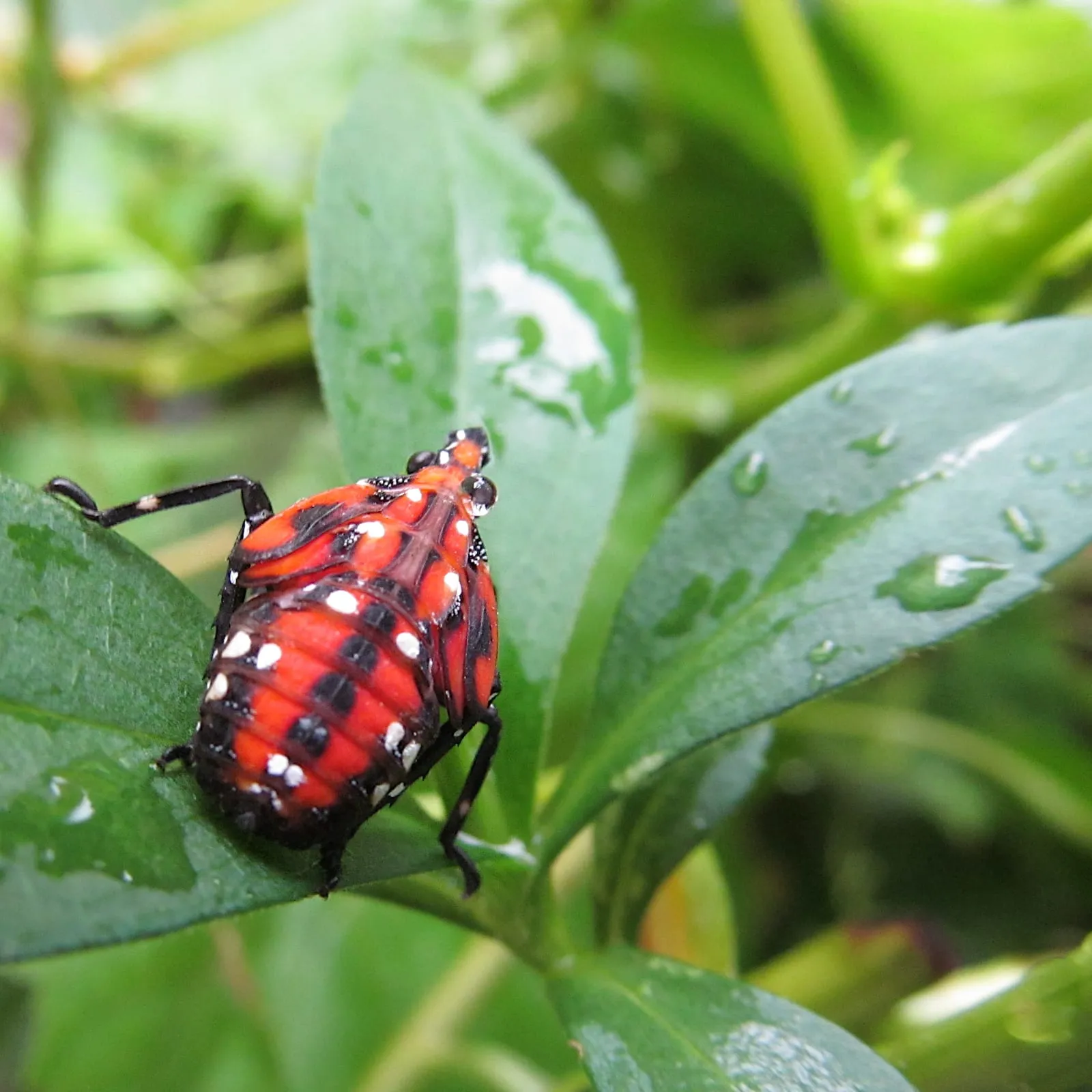
Lycorma delicatula
Invasive planthopper from Asia first detected in Pennsylvania 2014, now spreading through the Eastern US. Direct feeding weakens trees; honeydew supports sooty mold and reduces fruit quality.
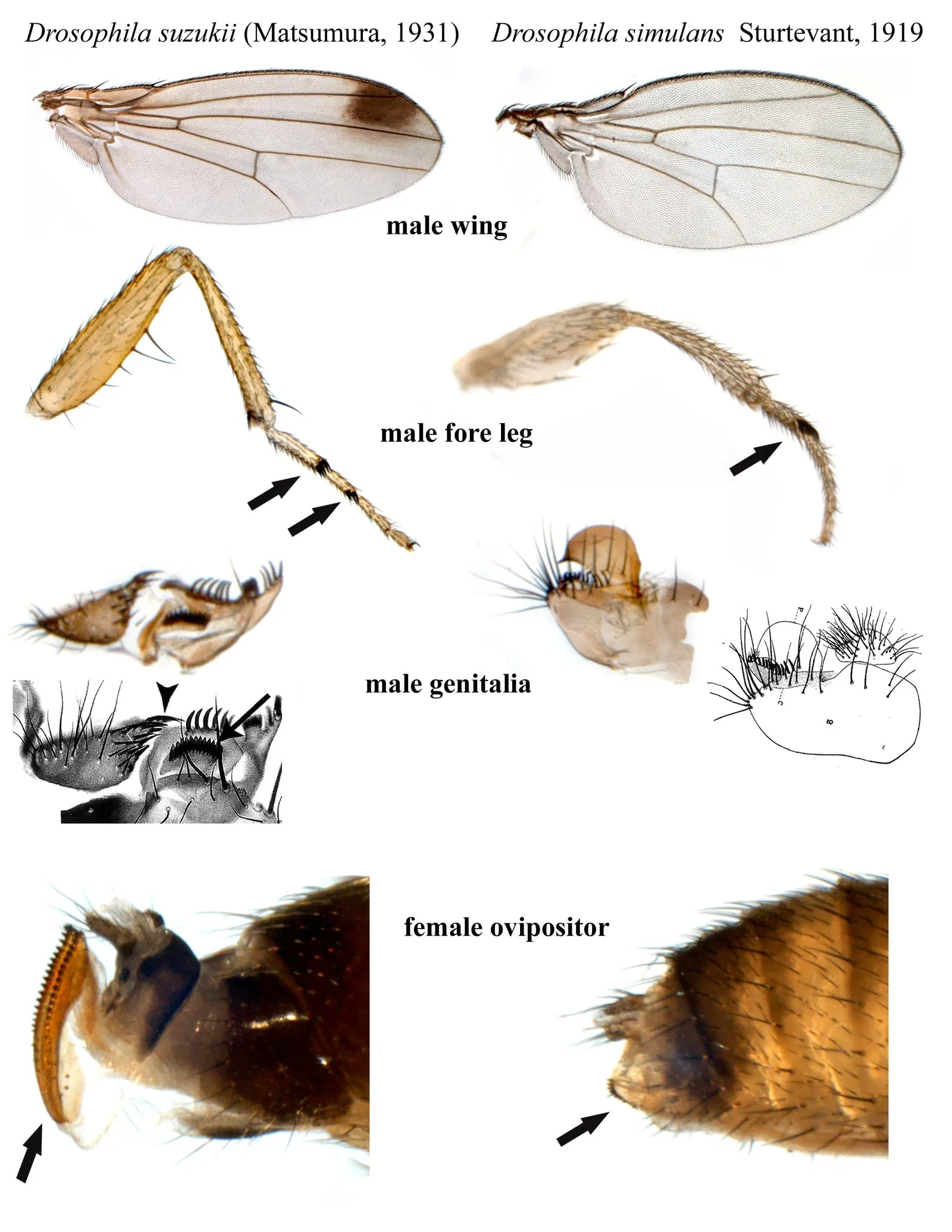
Drosophila suzukii
Invasive vinegar fly that attacks ripening soft fruit, unlike native Drosophila species which target overripe fruit. Now the dominant berry-and-cherry pest across the US.
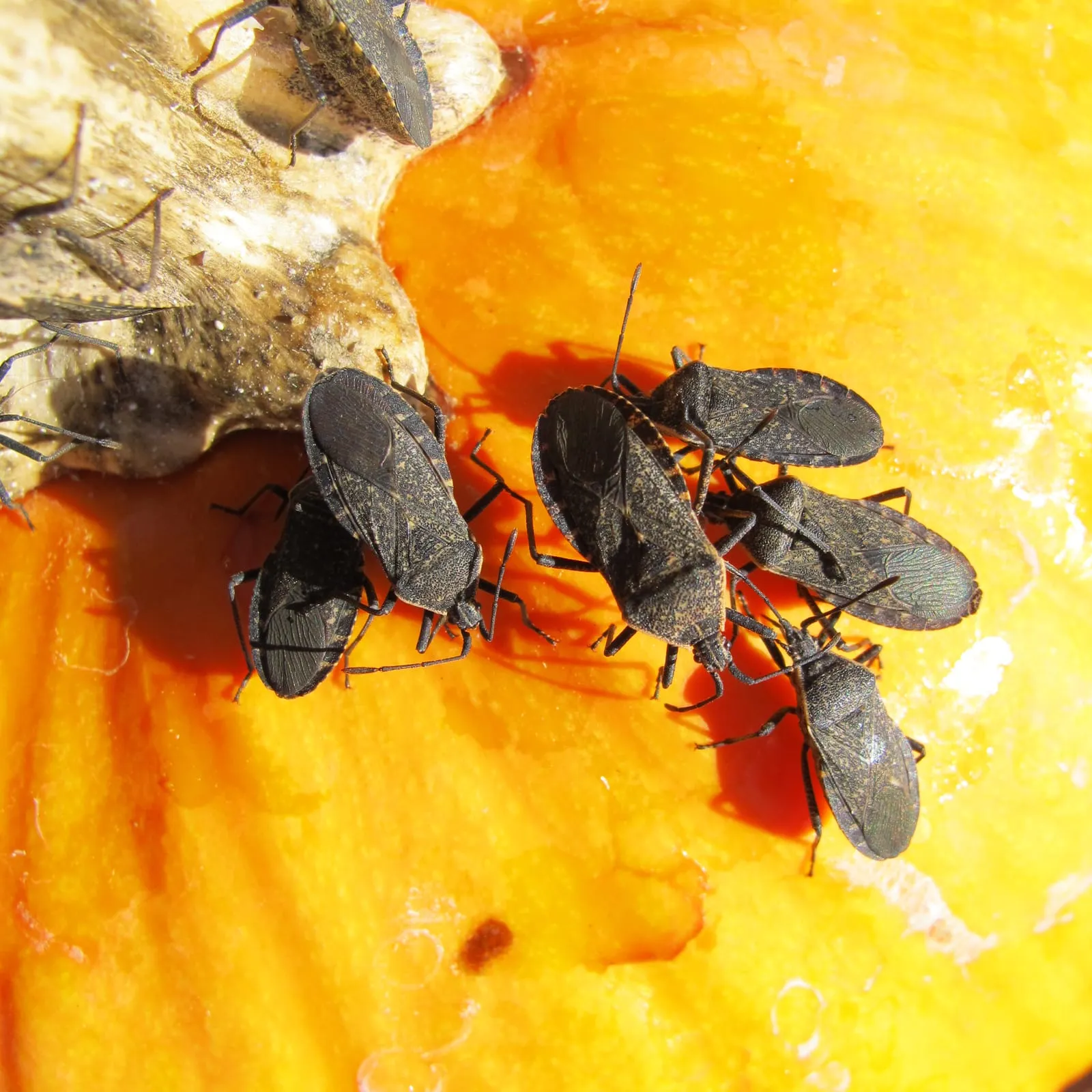
Anasa tristis
Brown shield-shaped bugs that feed on cucurbit foliage and fruit, causing wilting and fruit-quality damage. Transmit cucurbit yellow vine disease.
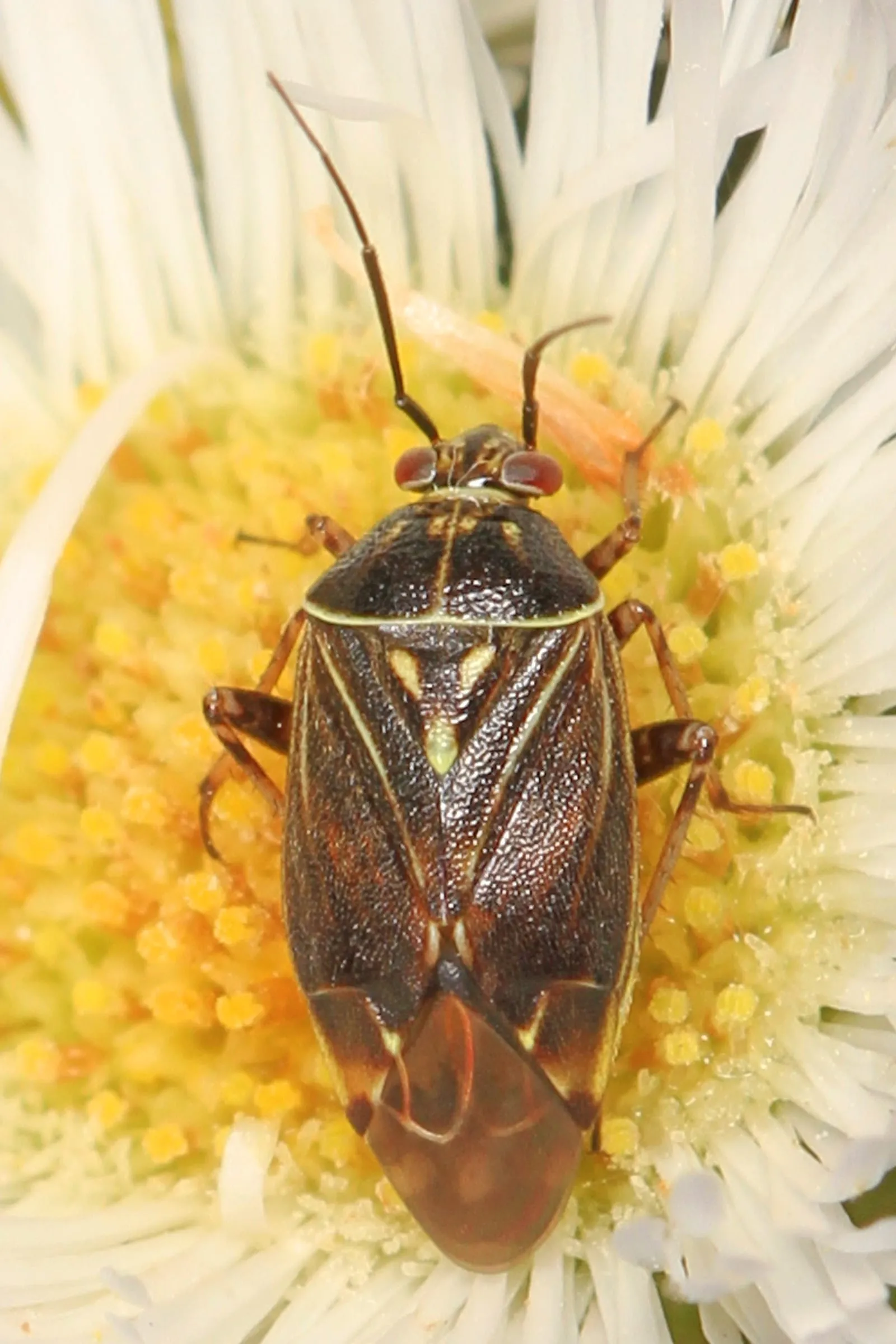
Lygus lineolaris
Mottled brown sucking bug that probes flower buds and developing fruit, causing 'cat-facing' deformities on tomato, peach, and strawberry. Wide host range and rapid generations.
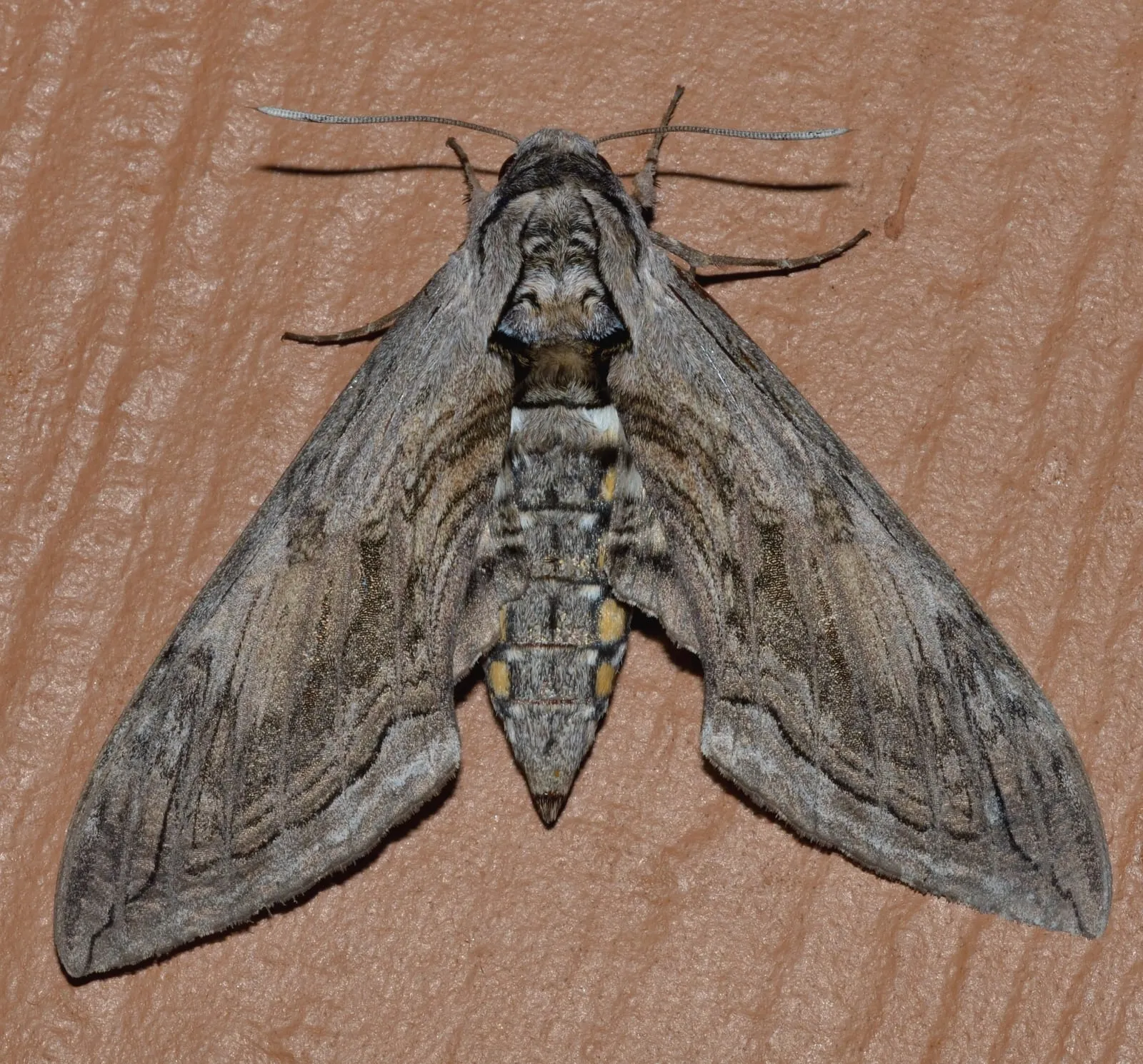
Manduca quinquemaculata
Large green caterpillar (up to 4 inches) that defoliates tomato and other Solanaceae plants rapidly. Mature larvae become five-spotted hawk moths.
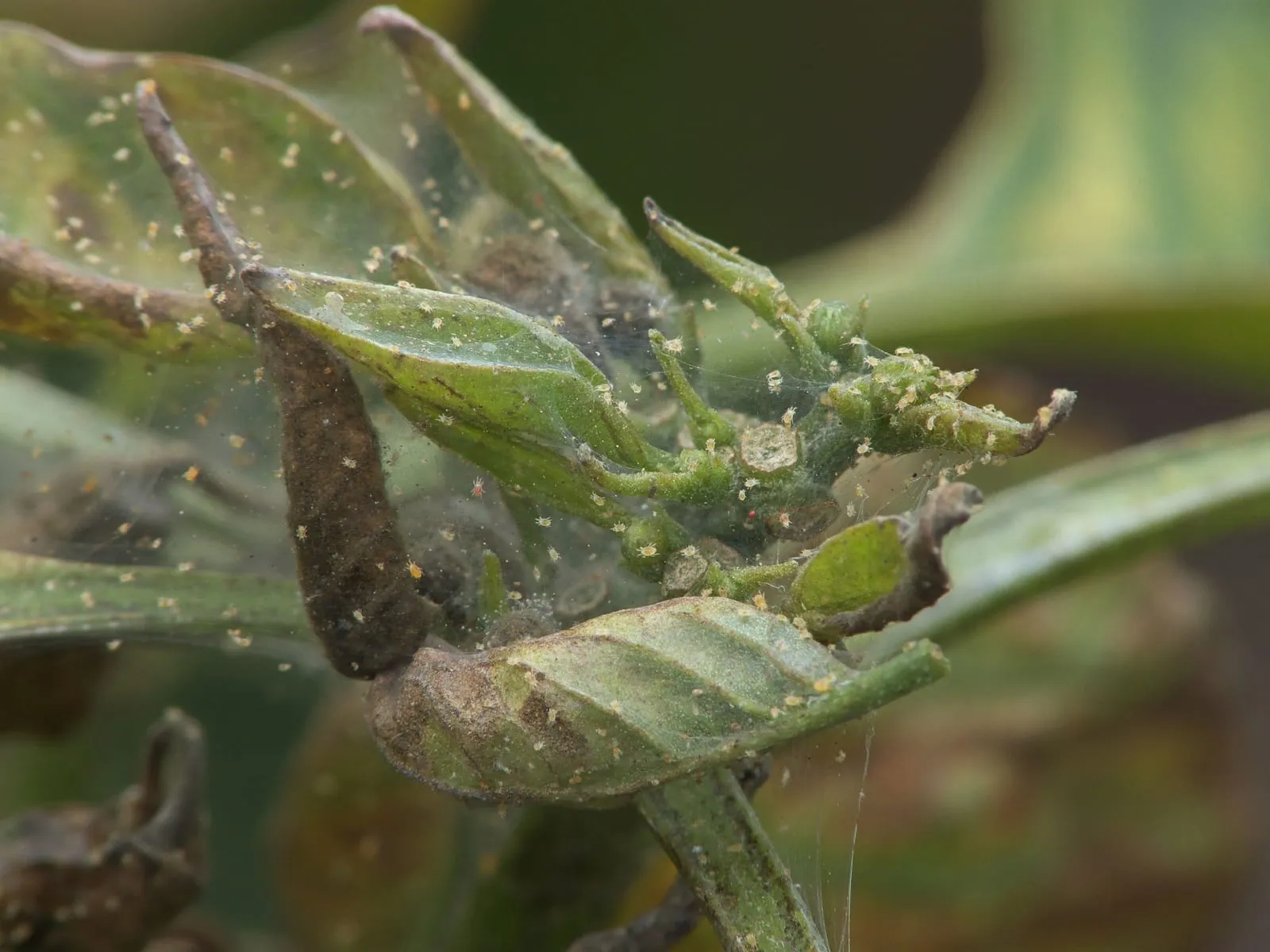
Tetranychus urticae
Tiny mite that feeds on leaf undersides, causing stippling and webbing during hot dry weather.
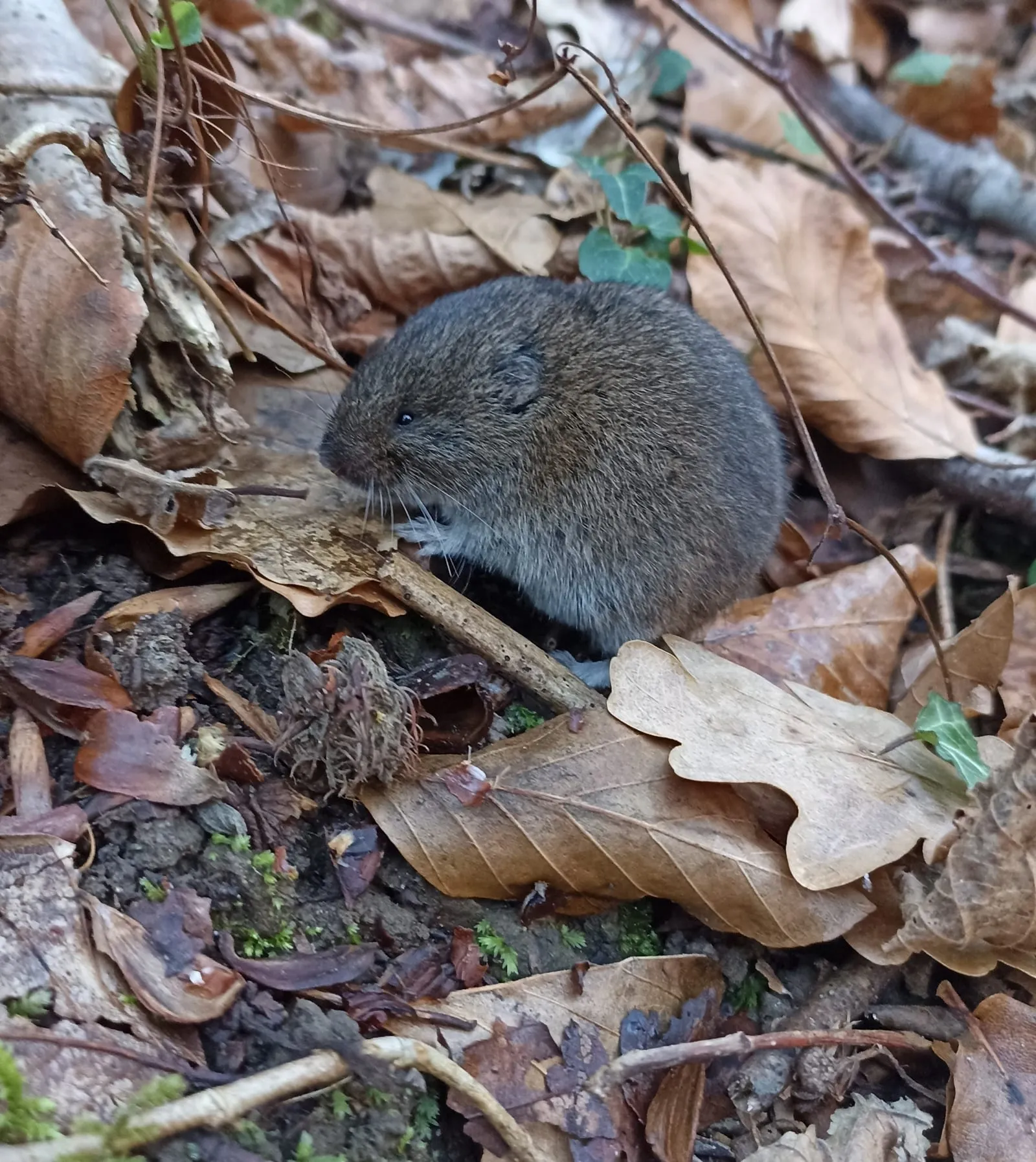
Microtus species
Field voles and meadow voles girdle young fruit-tree trunks under snow cover during winter and chew root crops. The leading cause of mysterious orchard losses.
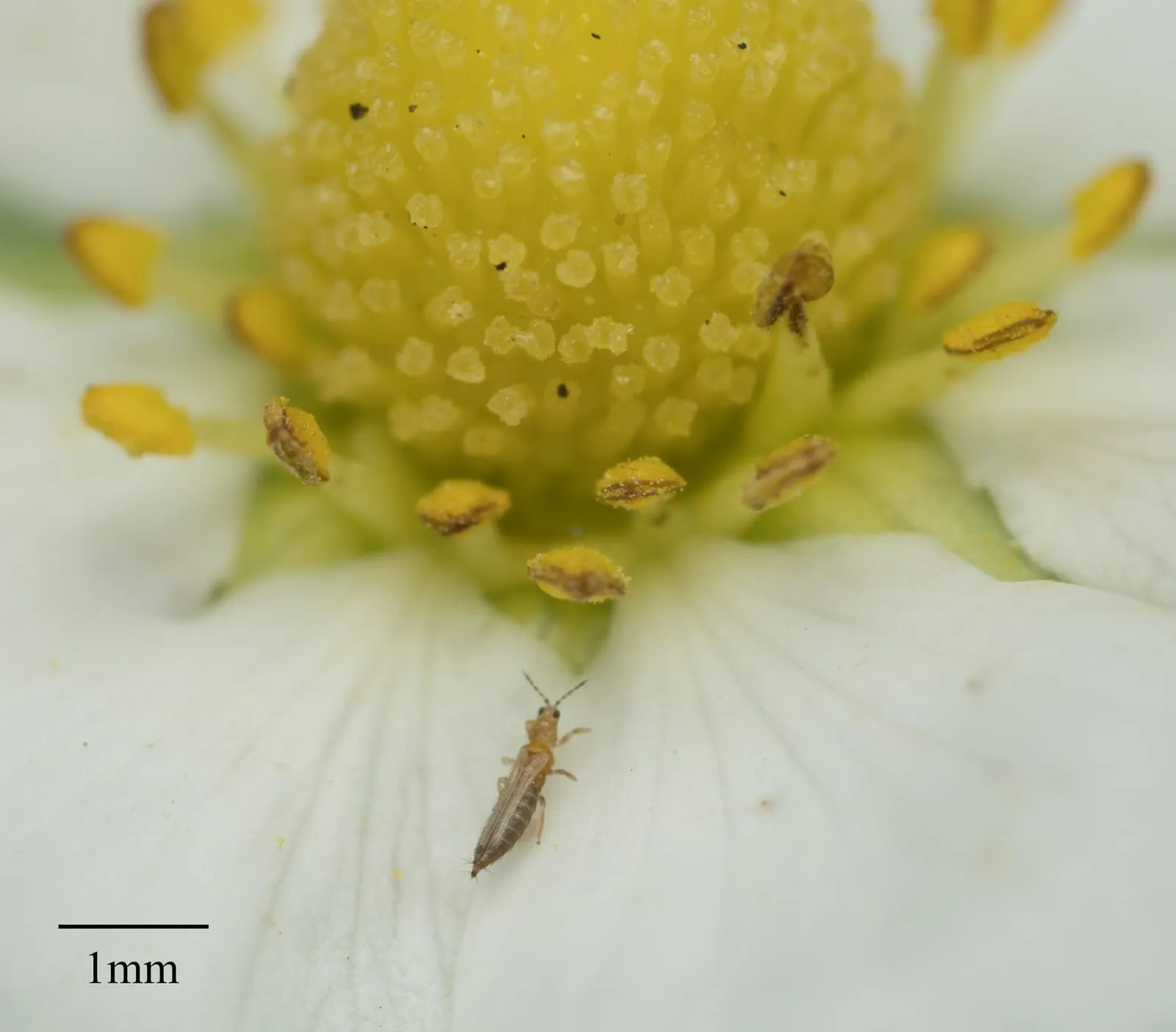
Frankliniella occidentalis
Tiny slender insect that rasps leaf and flower surfaces. The primary vector for Tomato Spotted Wilt Virus and Iris Yellow Spot Virus, which makes it more damaging through disease transmission than direct feeding.
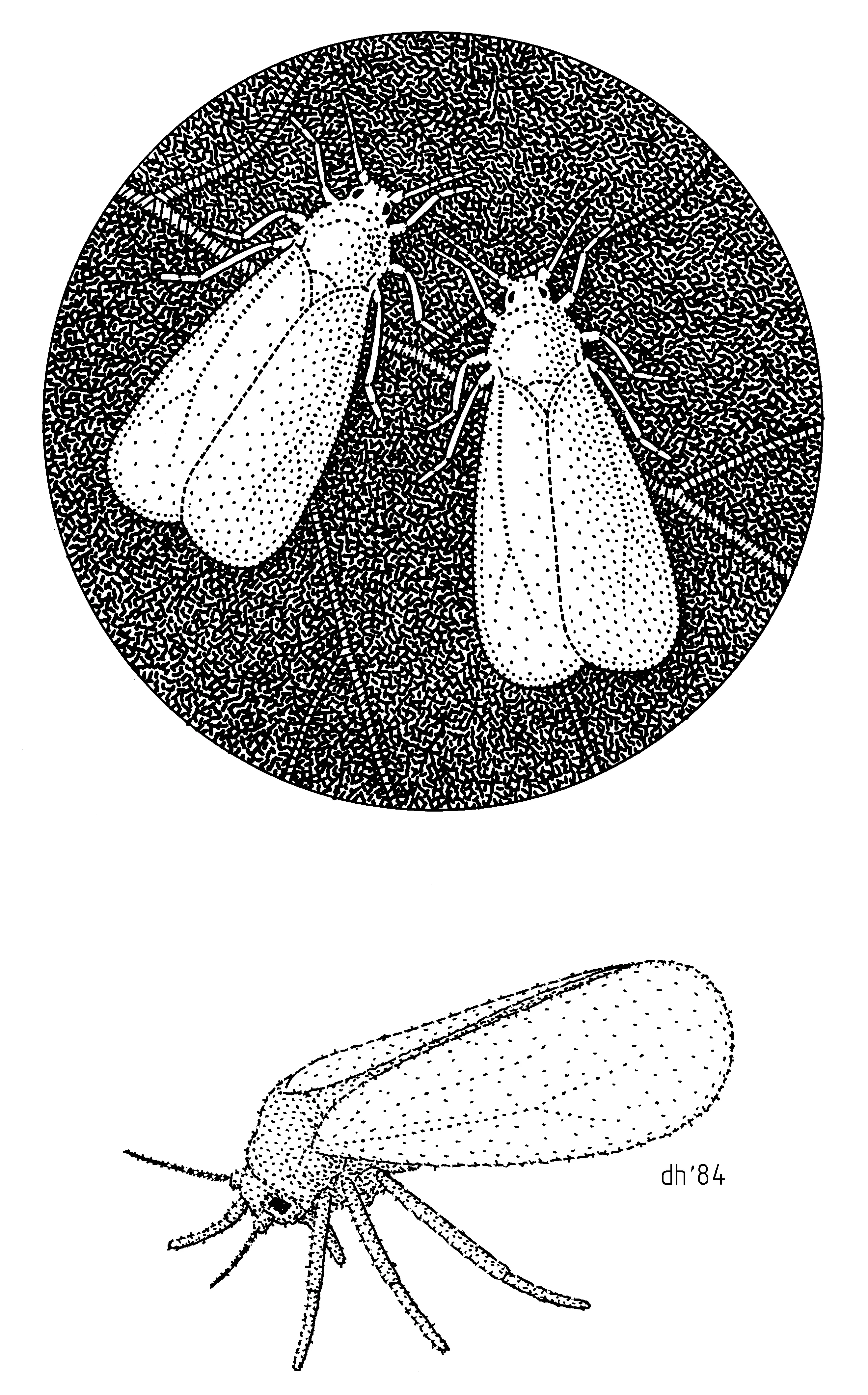
Multiple species (Aleyrodidae)
Tiny white moth-like flying insects that feed on plant sap and excrete honeydew. Transmit numerous viral diseases including tomato yellow leaf curl virus.
Multi-host pests
affect 2 to 4 crops
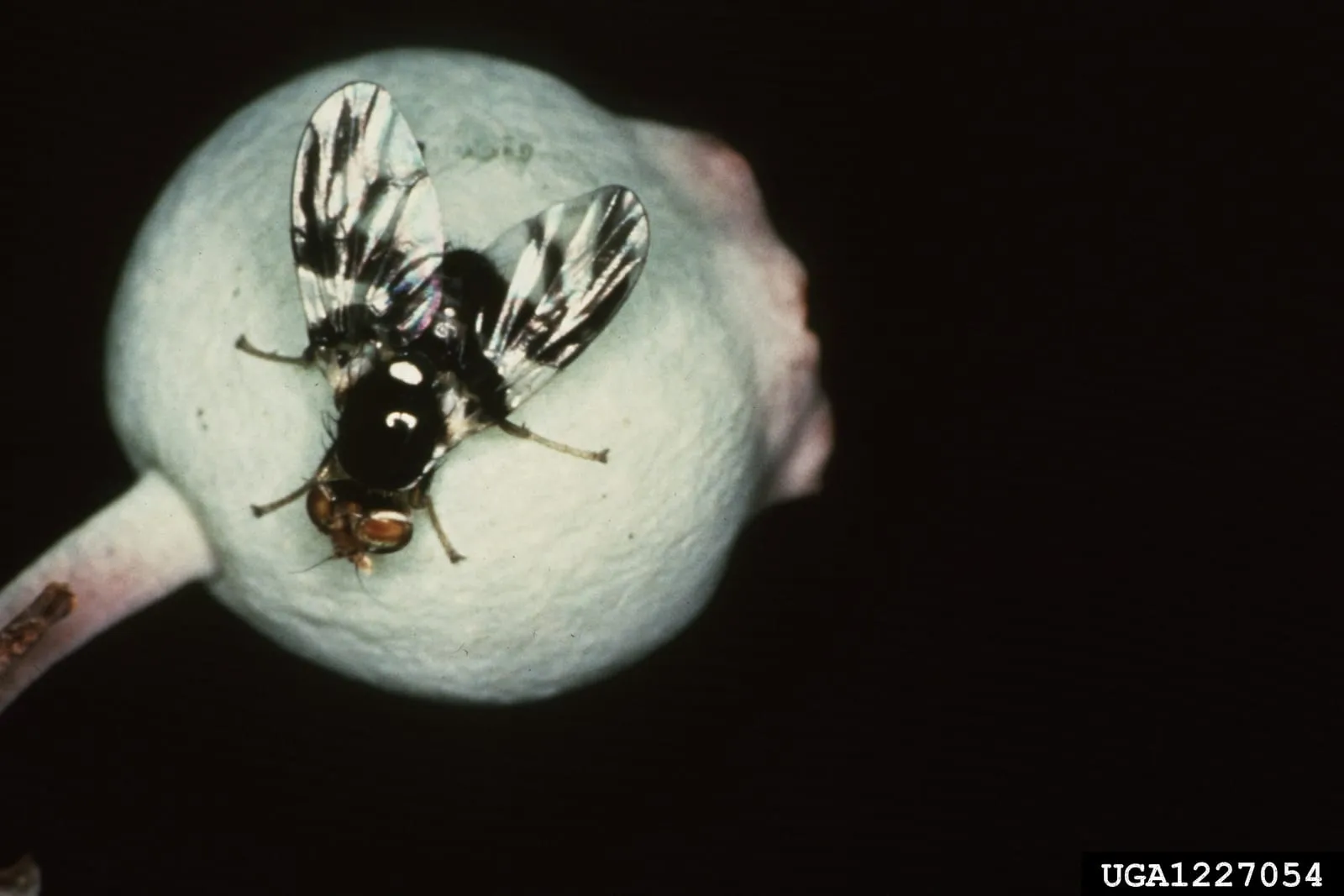
Rhagoletis mendax
Native fruit fly whose larvae develop inside blueberries, the primary fresh-market quality concern in eastern North America.
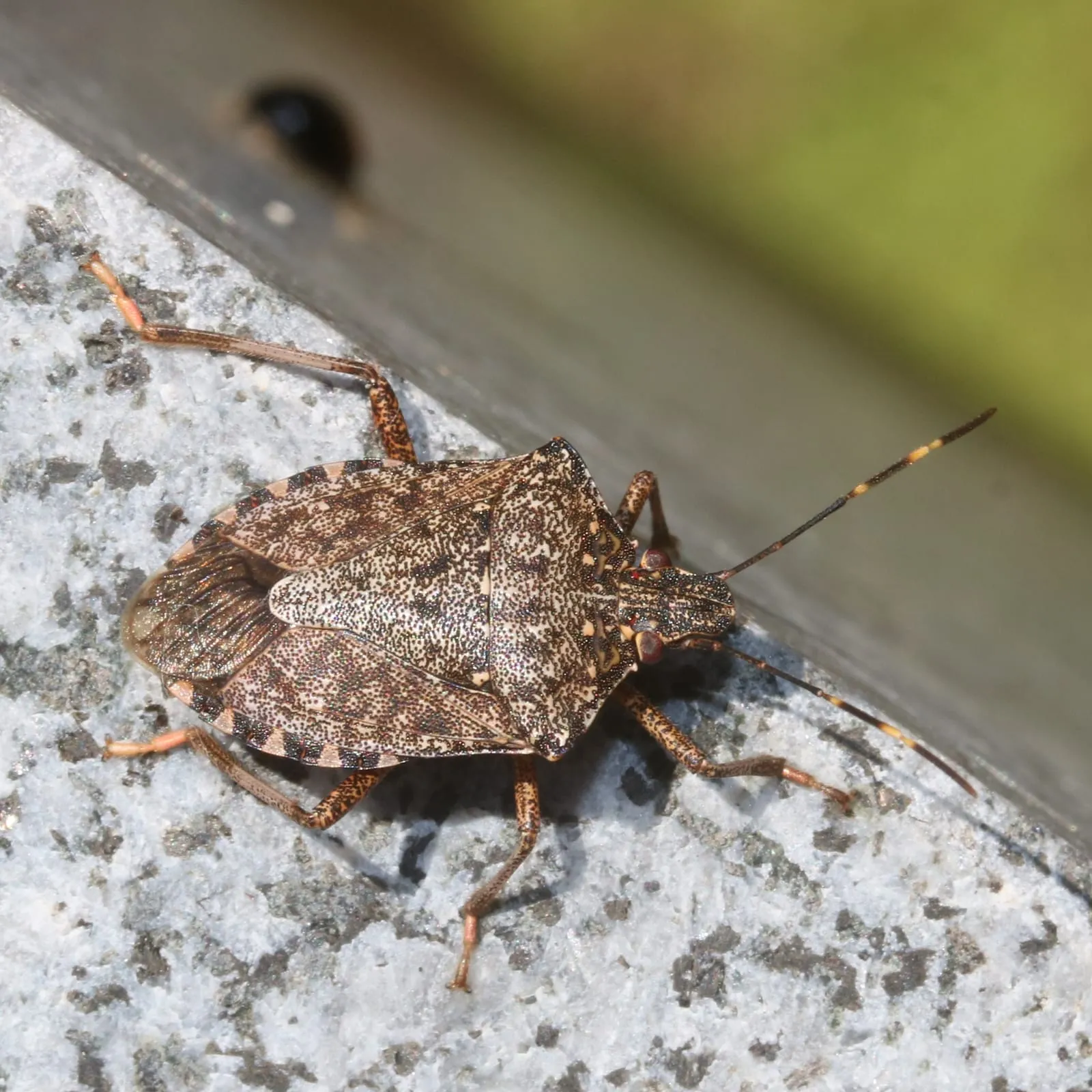
Halyomorpha halys
Invasive stink bug from Asia that pierces fruit, causing corky tissue and surface dimpling.
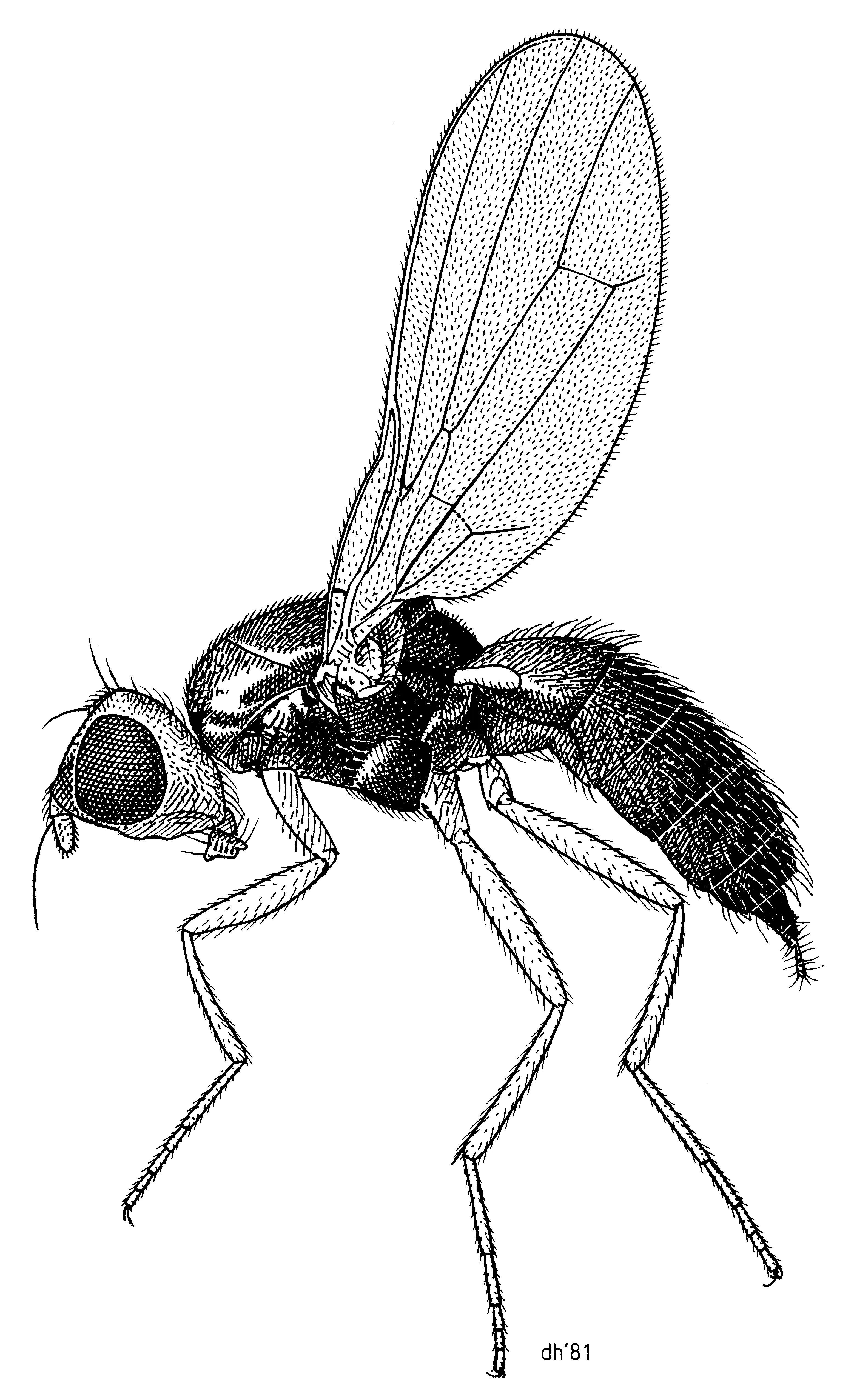
Psila rosae
Fly whose larvae tunnel into carrot and parsnip roots, leaving rust-colored scars and entry points for secondary rot.
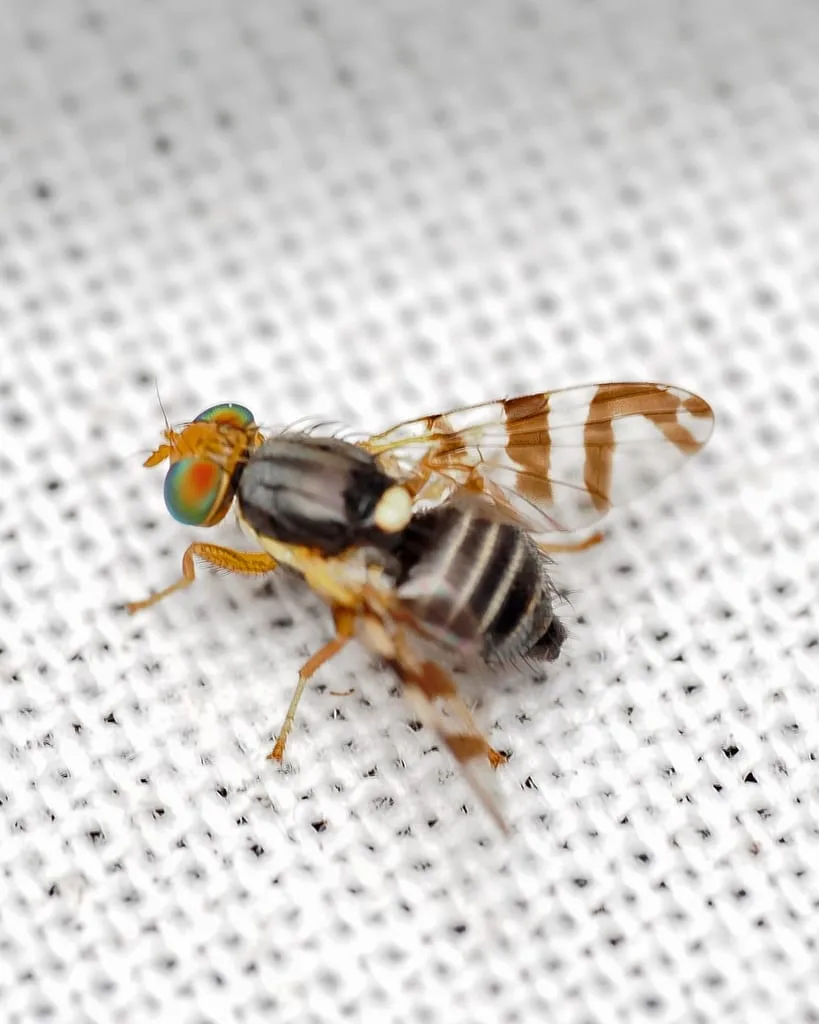
Rhagoletis cingulata
Native fly whose larvae develop in ripening cherries, the primary fresh-market quality concern.
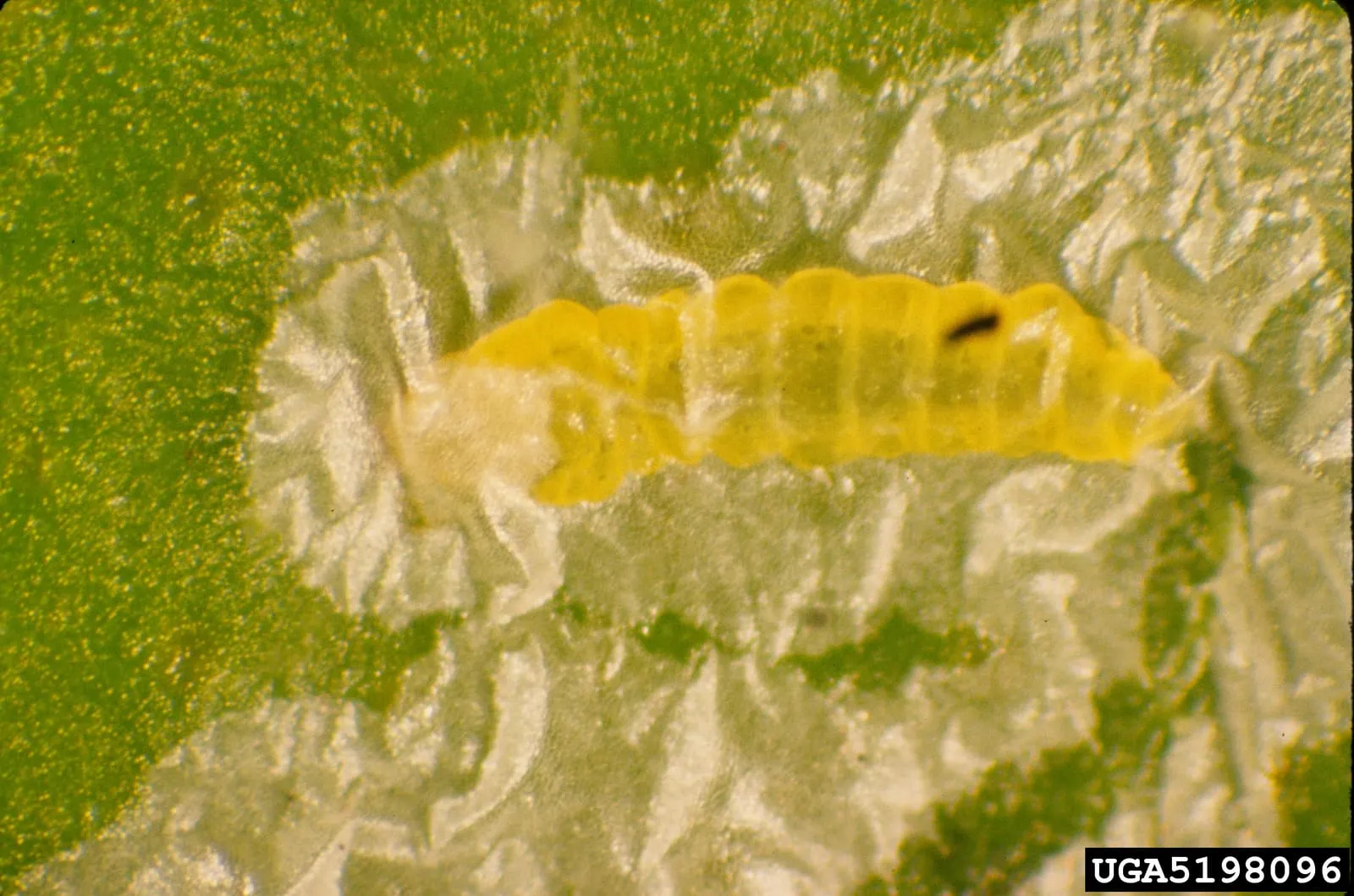
Phyllocnistis citrella
Tiny moth larvae tunnel inside young citrus leaves, leaving silvery serpentine trails. Damage is mostly cosmetic on mature trees but stunts new plantings.
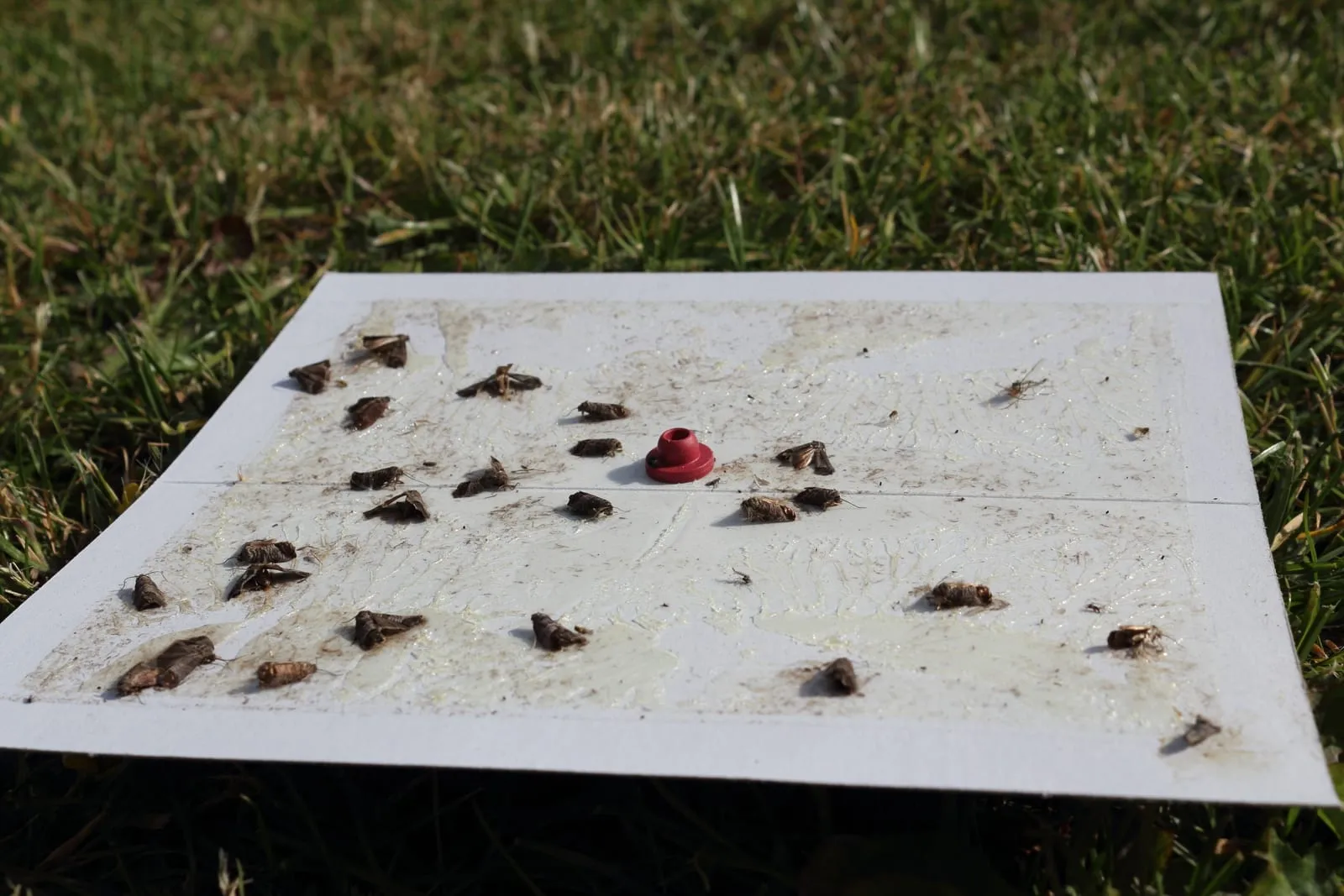
Cydia pomonella
The most damaging pest of apple worldwide. Larvae tunnel into developing fruit, ruining the crop.
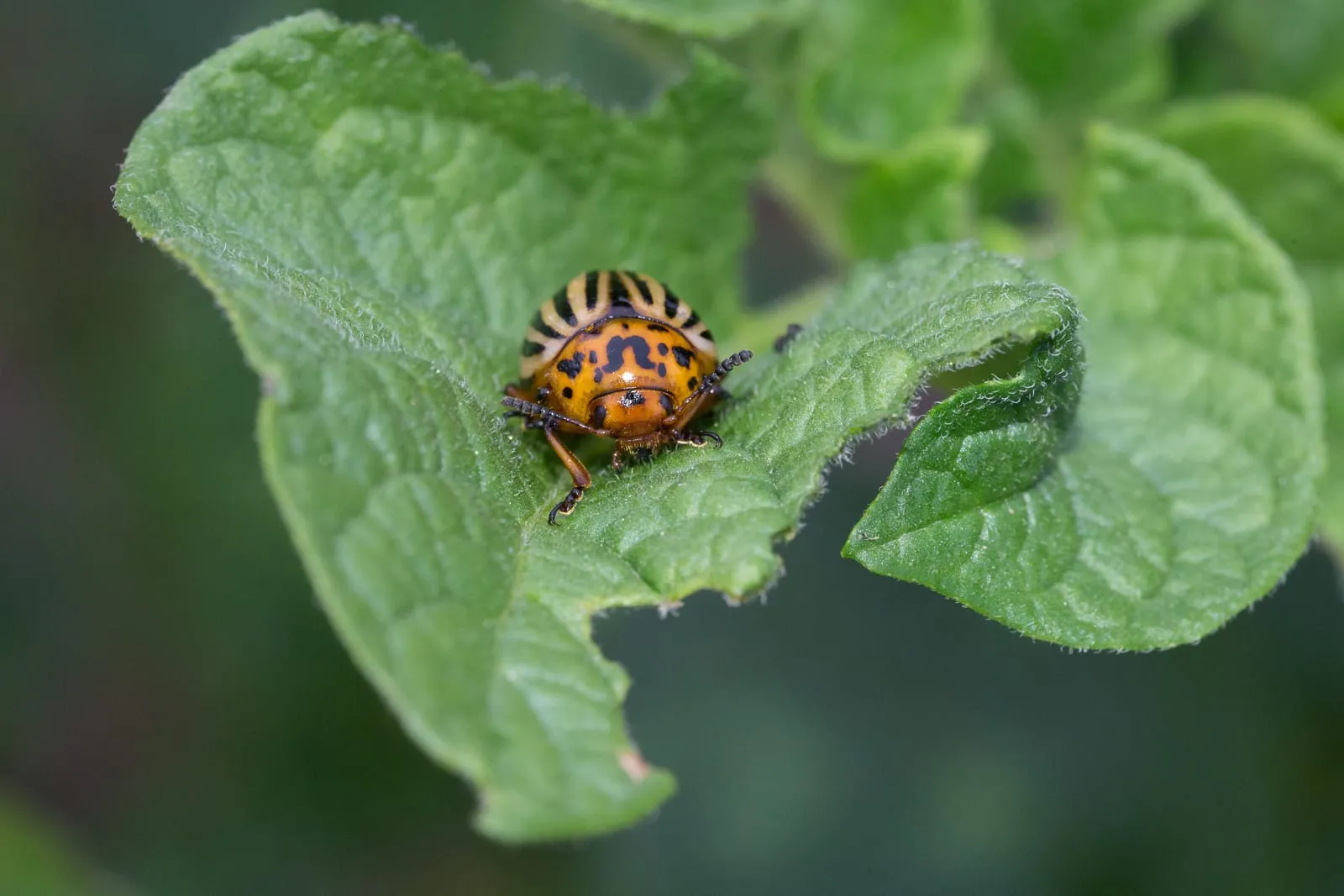
Leptinotarsa decemlineata
Yellow-and-black-striped beetle and red-orange humpbacked larvae that defoliate potato and eggplant. Capable of destroying a planting in days during peak feeding.
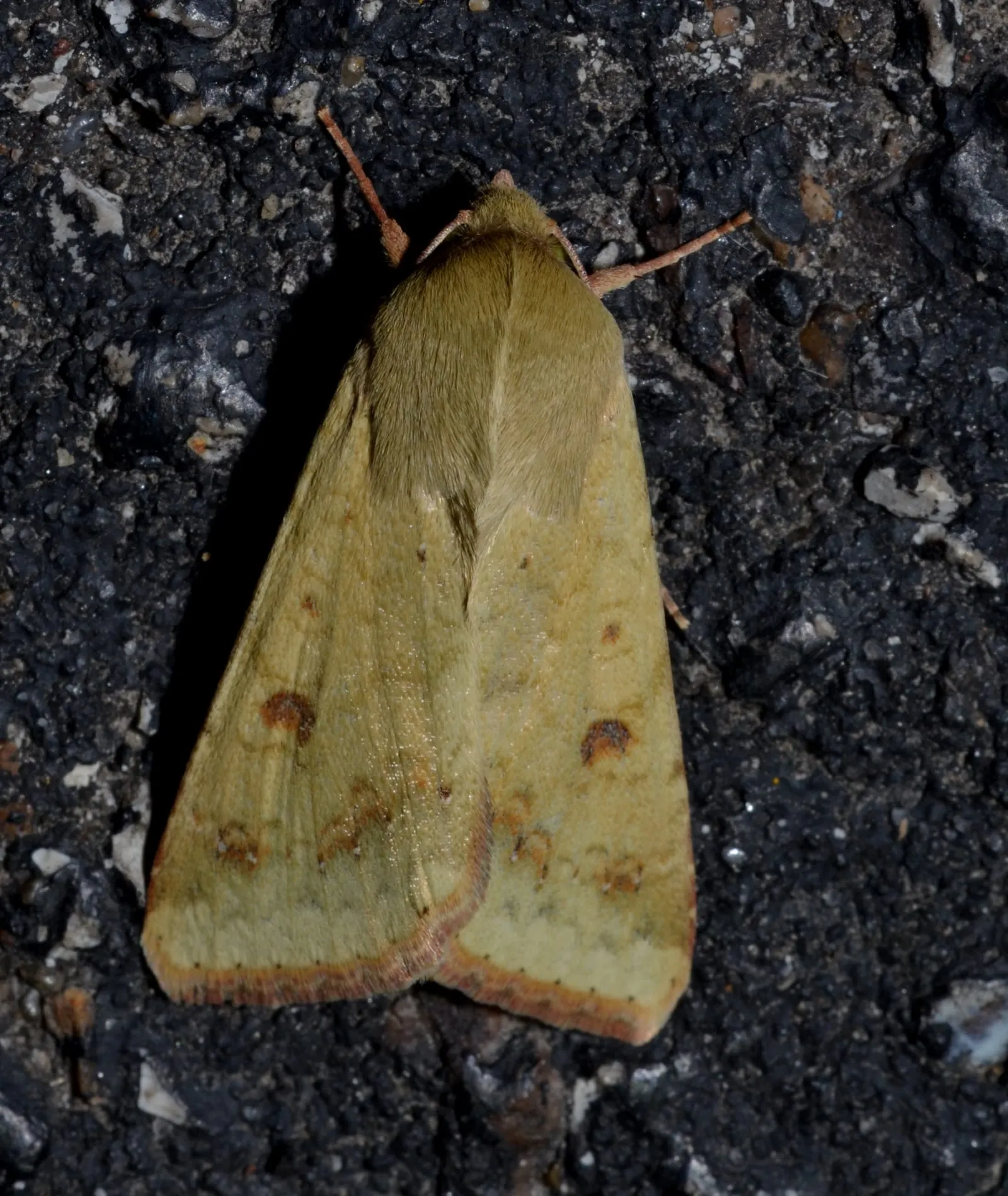
Helicoverpa zea
Caterpillar that bores into corn ear tips through the silk channel and into developing tomato fruit. Also called tomato fruitworm. The most damaging US sweet-corn pest.
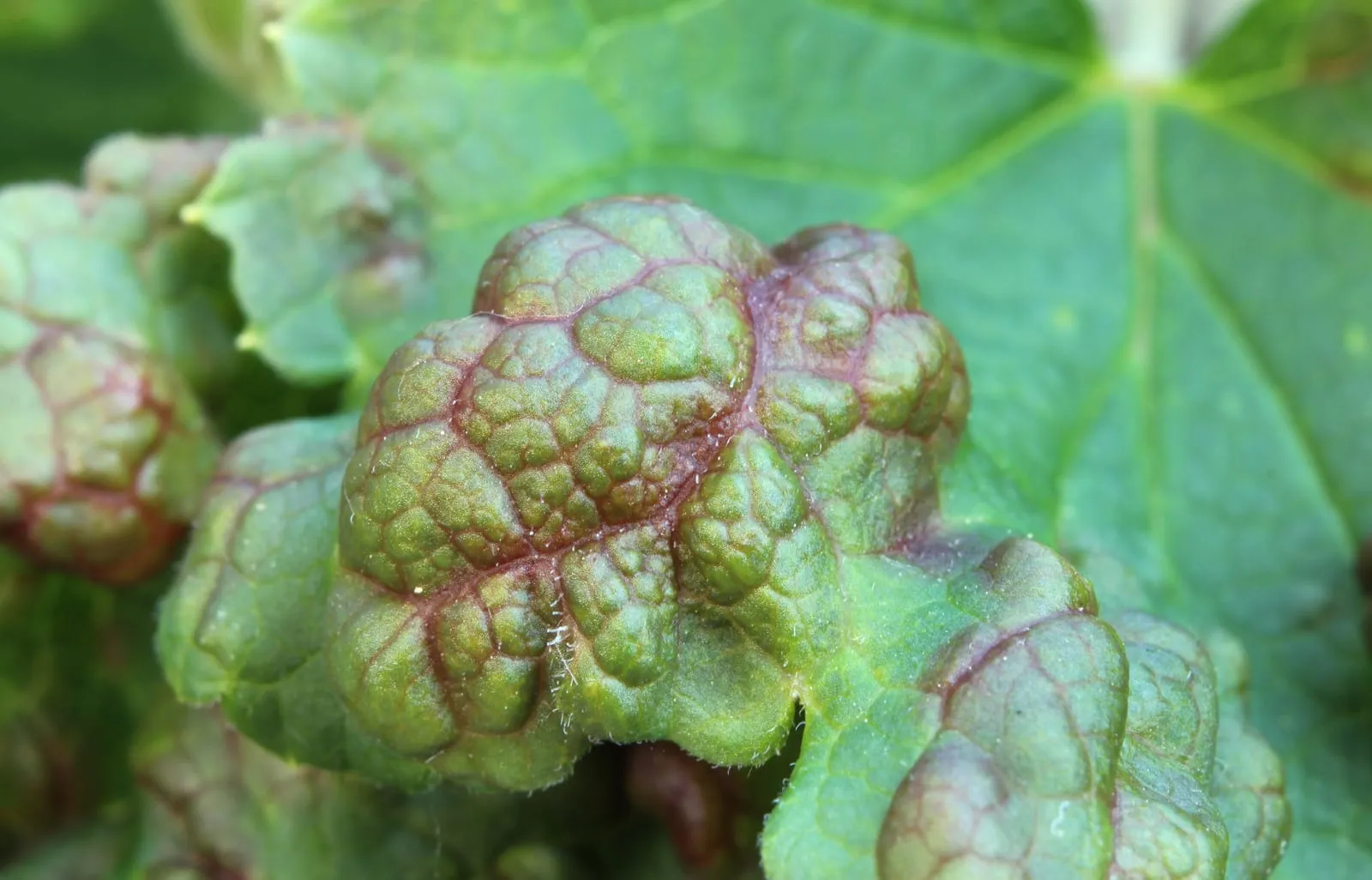
Cryptomyzus ribis
Sap-feeding aphid that causes characteristic red blistering on currant and gooseberry leaves in spring.
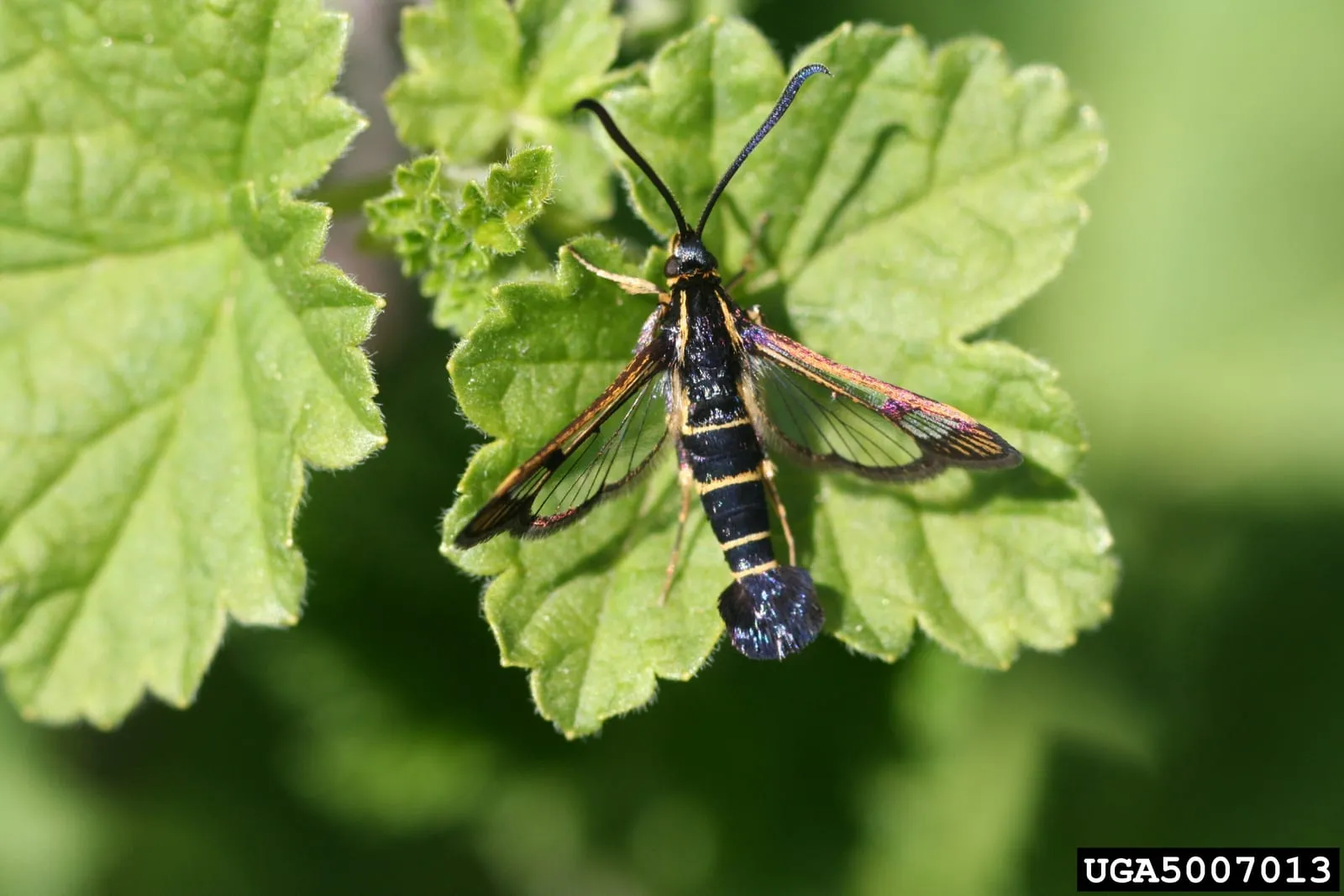
Synanthedon tipuliformis
Clearwing moth whose larvae tunnel inside currant and gooseberry canes, hollowing them out.
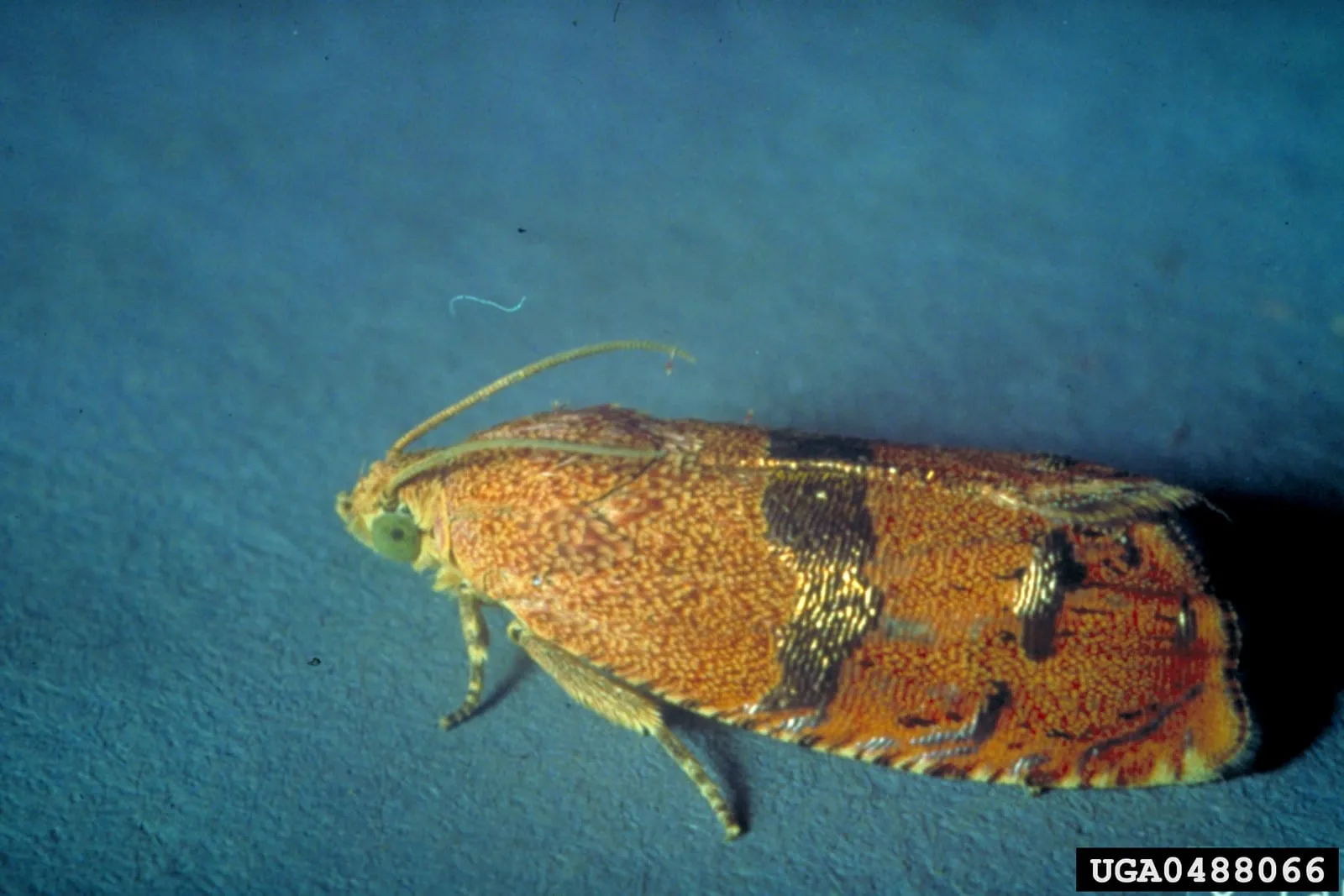
Cydia latiferreana
Moth whose larvae bore into developing hazelnuts and chestnuts, the primary direct-pest concern for nut quality in the Pacific Northwest and increasingly in the East.
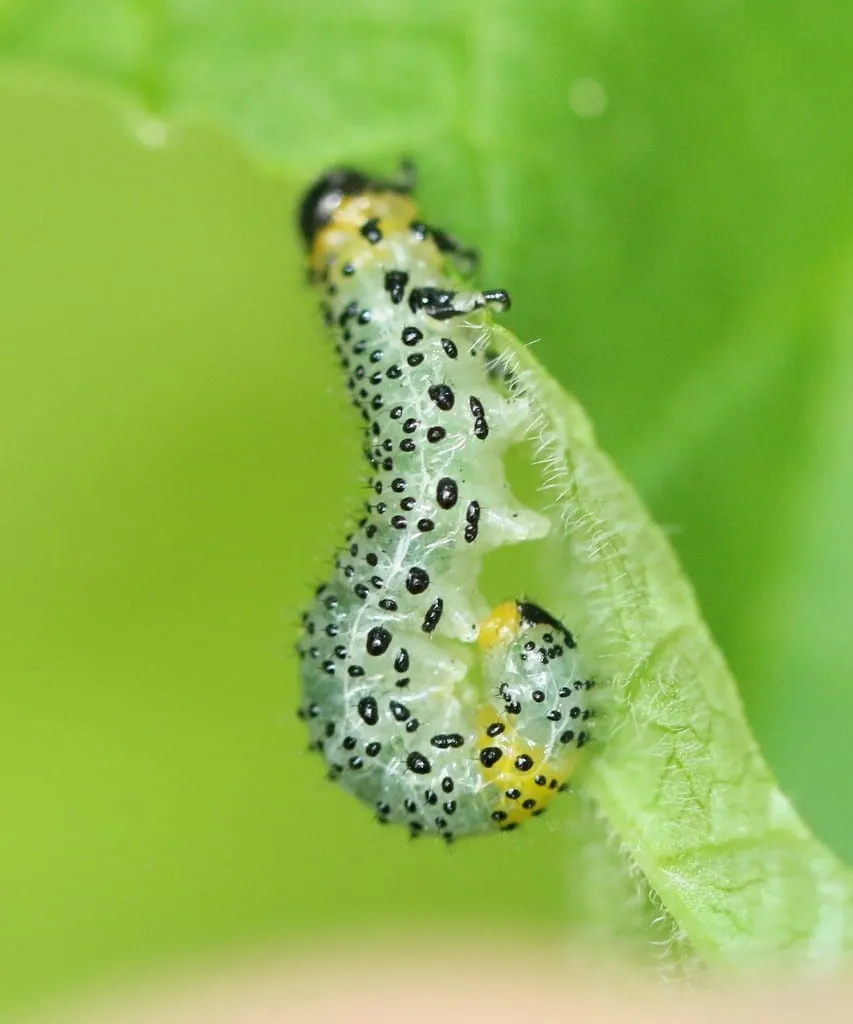
Nematus ribesii
Sawfly whose larvae can rapidly defoliate currant and gooseberry bushes, working from the inside of the bush outward.
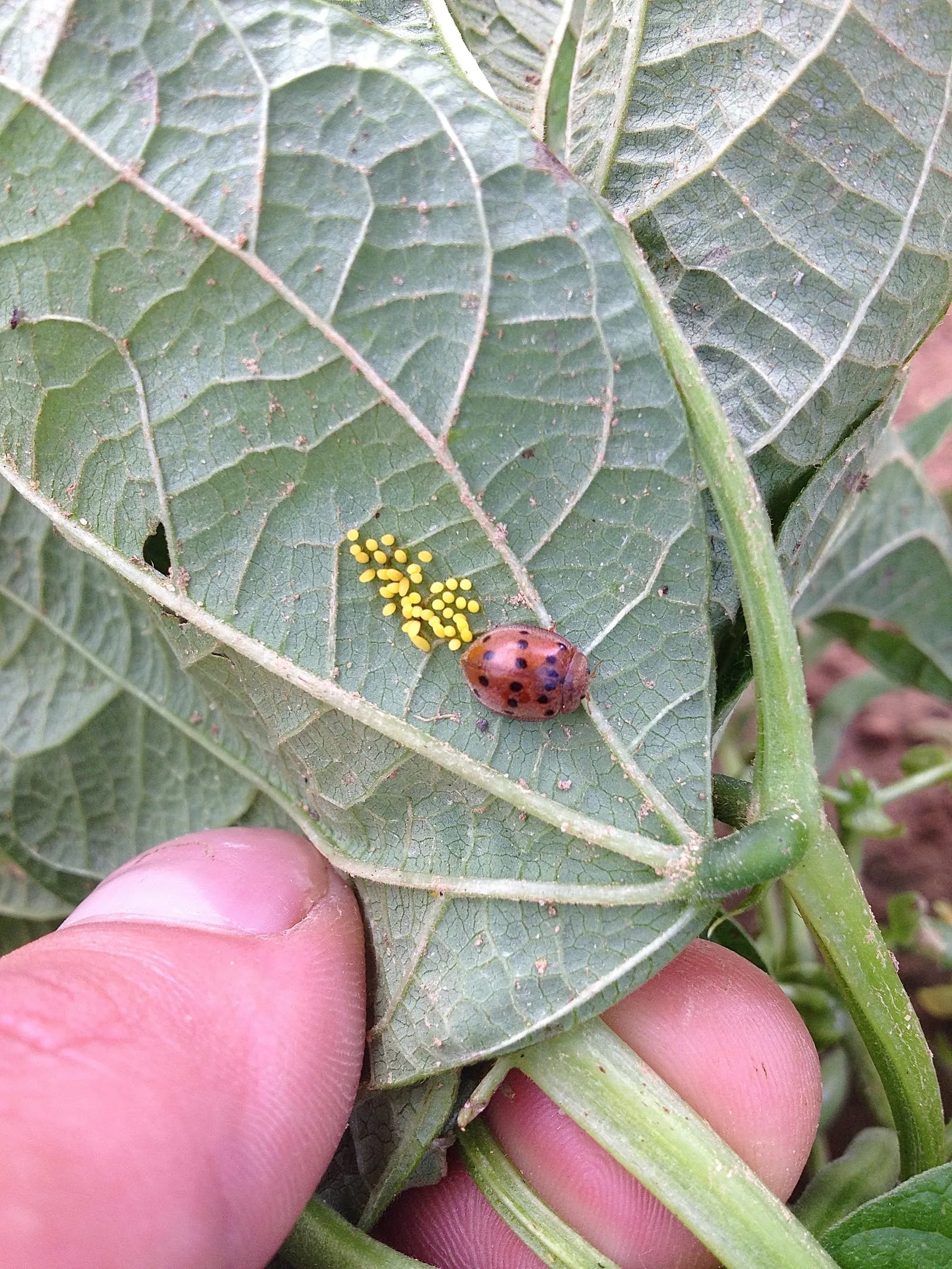
Epilachna varivestis
Coppery-orange ladybug-like adults and yellow spiny larvae that skeletonize bean foliage. The defining bean pest in the eastern US.

Delia antiqua
Fly whose larvae tunnel into onion bulbs and roots, causing rot and stunted plants. Three generations per year in most US zones.
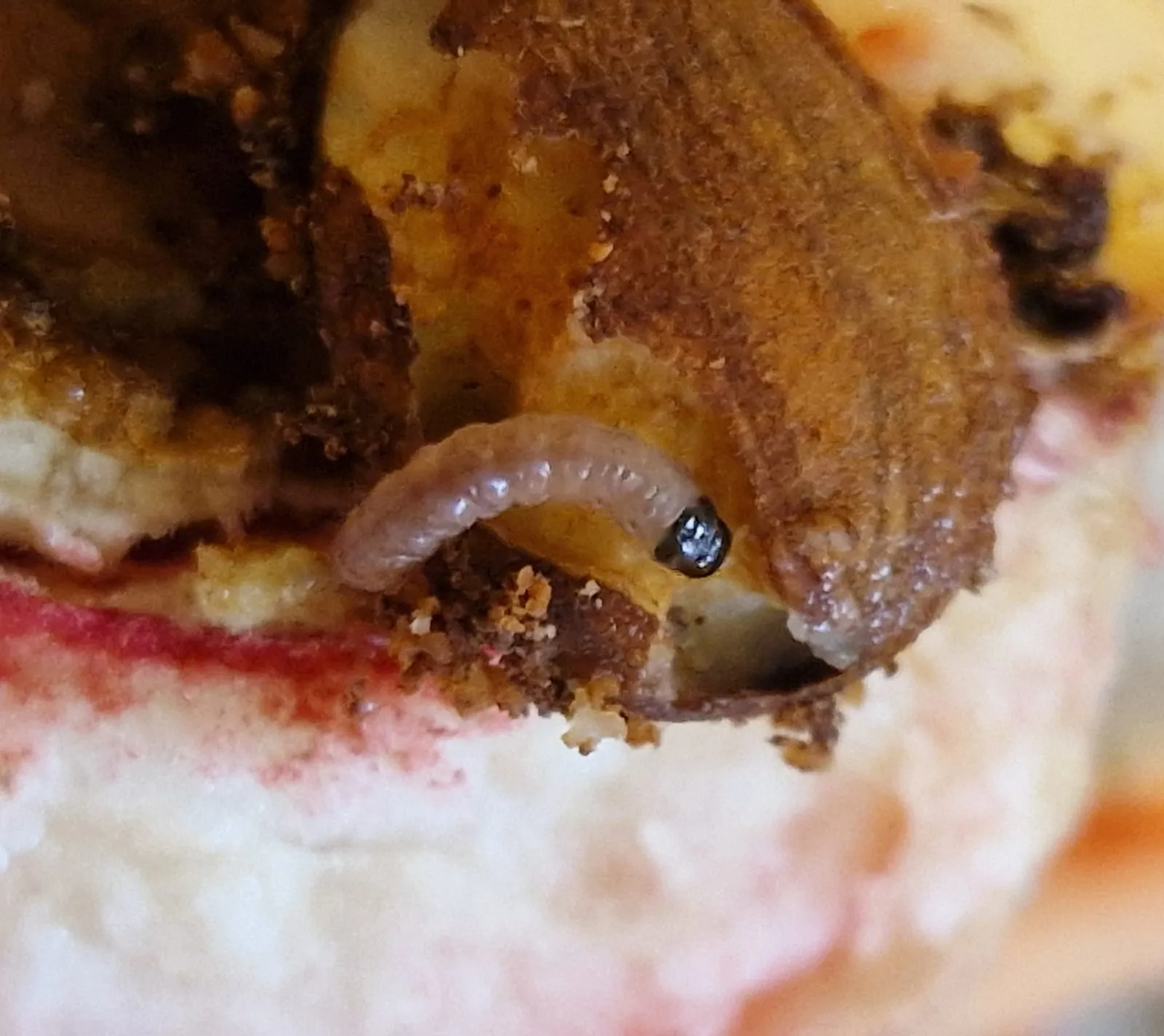
Grapholita molesta
Stone-fruit pest whose larvae tunnel into shoot tips and later into fruit.
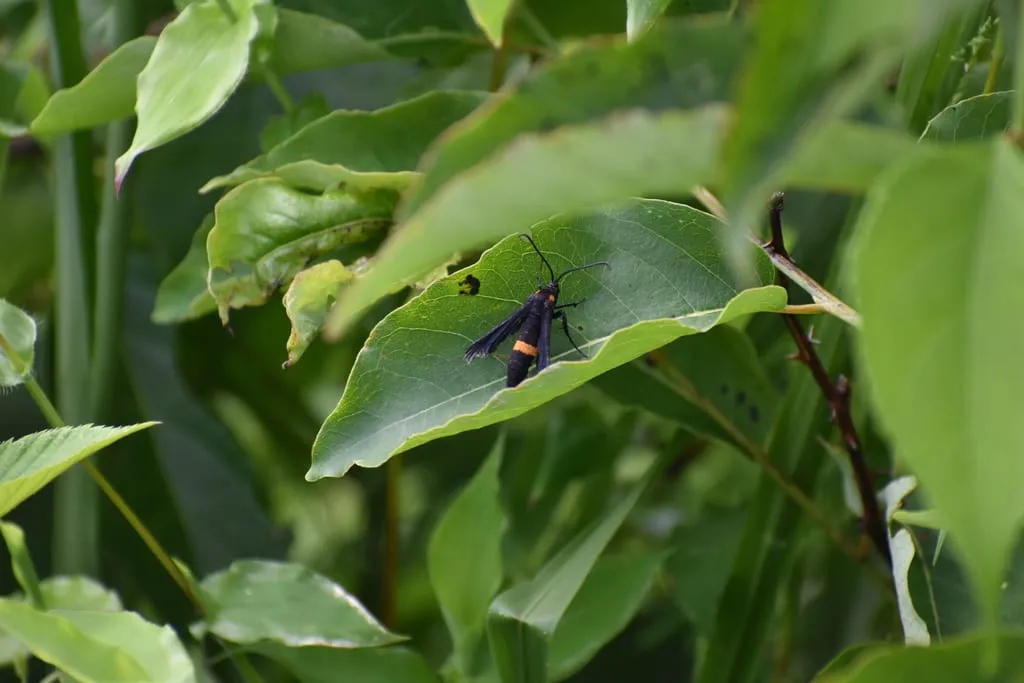
Sannina uroceriformis
Clearwing moth larvae bore into persimmon trunks at the soil line.
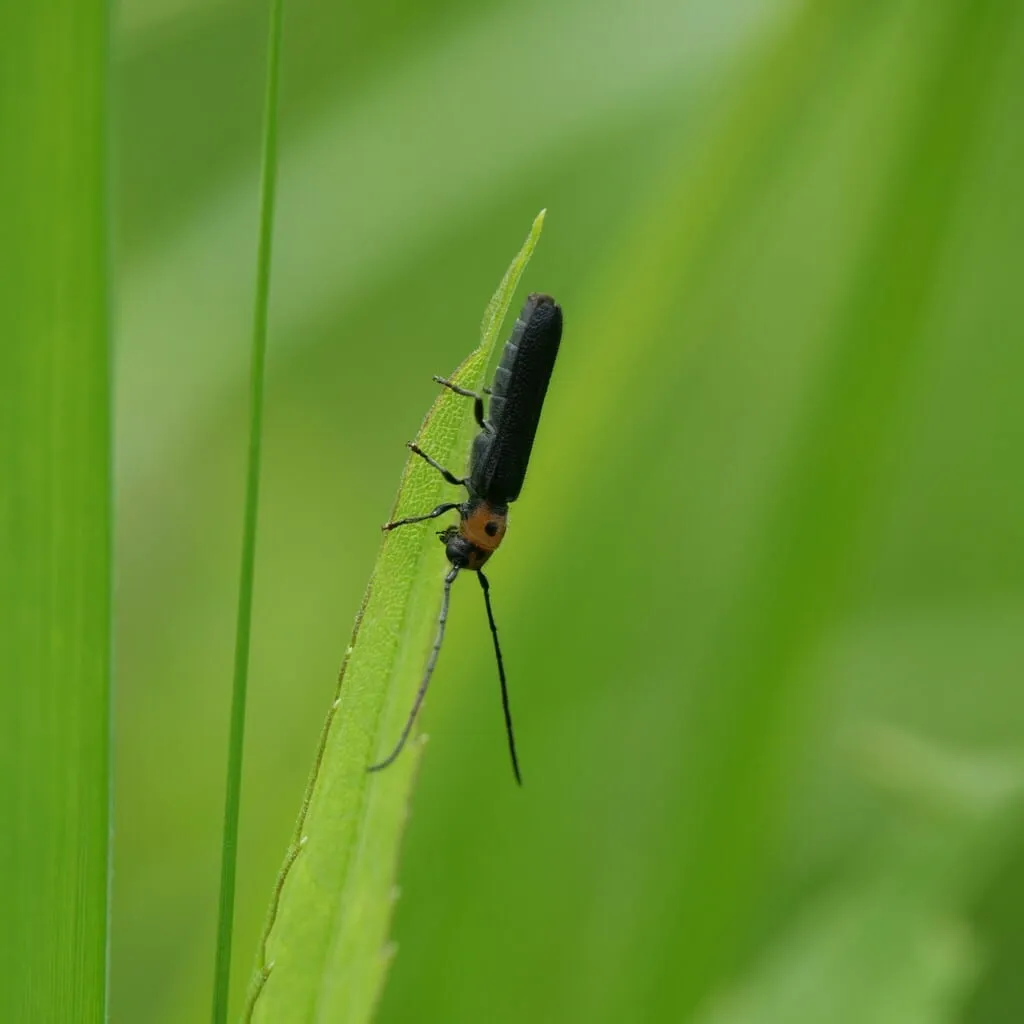
Oberea bimaculata
Long-horned beetle whose larvae girdle and tunnel into bramble canes, causing characteristic wilted shoot tips.
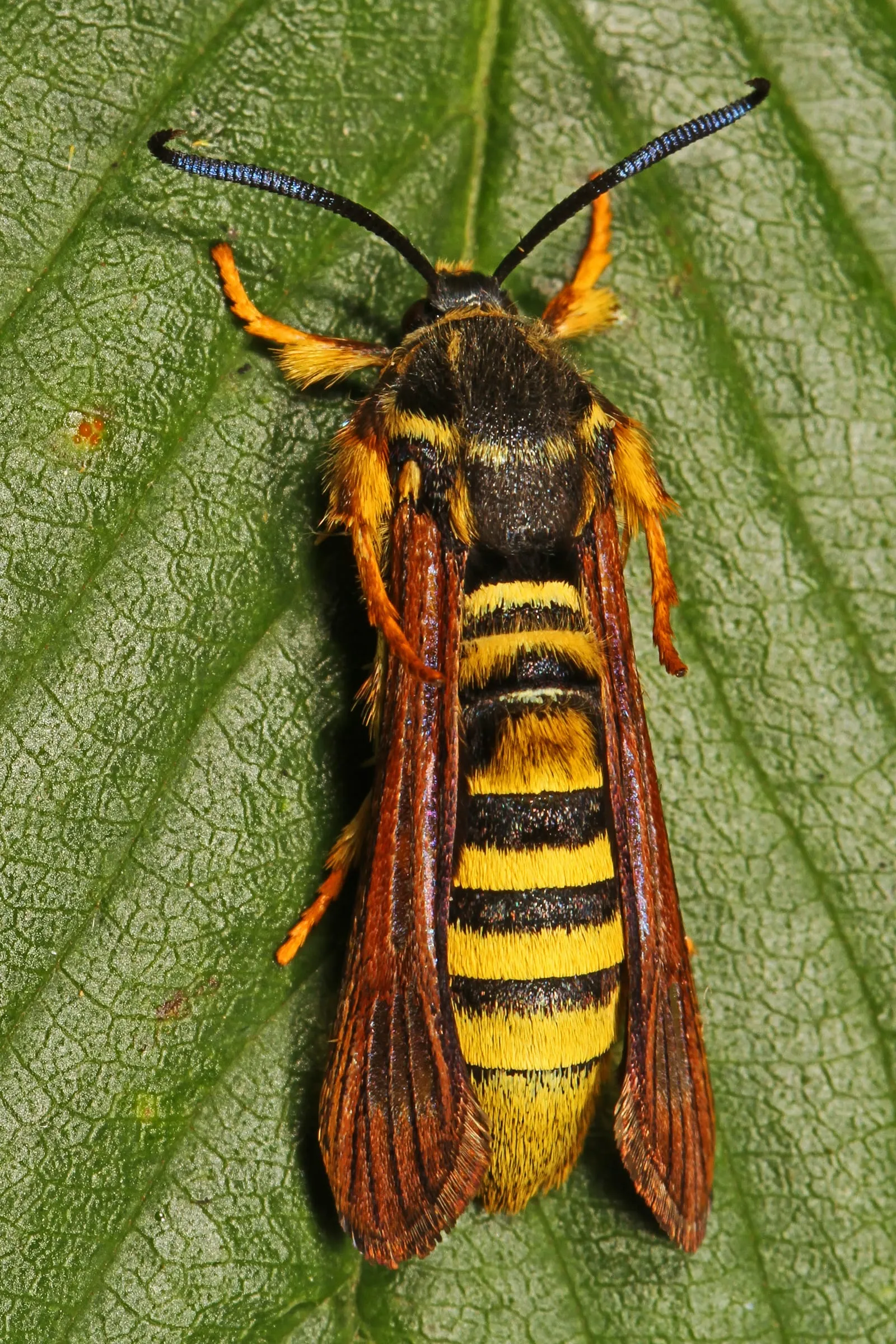
Pennisetia marginata
Clearwing moth whose larvae feed in the crown and lower canes of raspberries, often killing entire plants over two years.
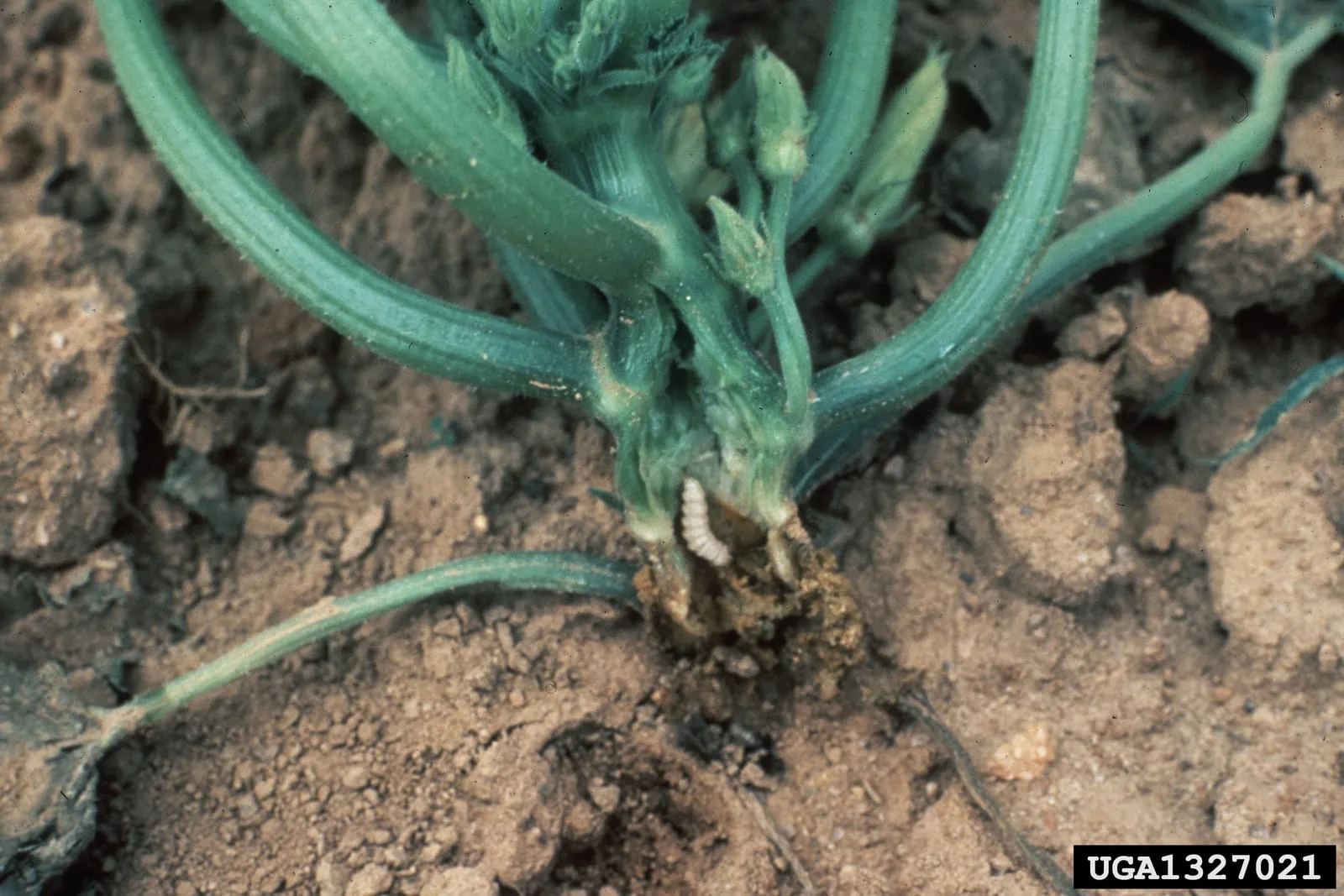
Melittia cucurbitae
Day-flying clearwing moth whose larvae bore into squash stems at the base and hollow them out, causing sudden wilting and plant death. The dominant squash killer east of the Rockies.
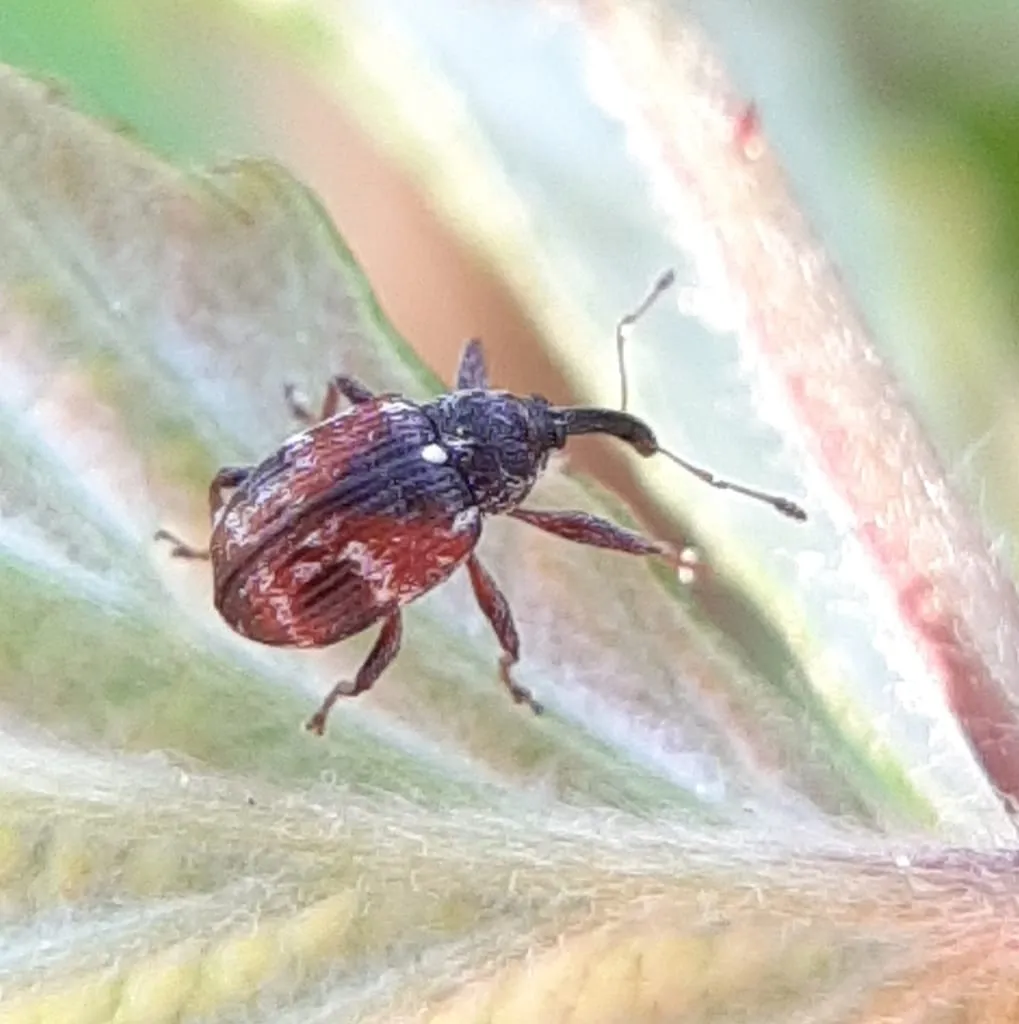
Anthonomus signatus
Weevil that lays eggs in strawberry flower buds and clips the pedicel, causing the buds to drop or hang.
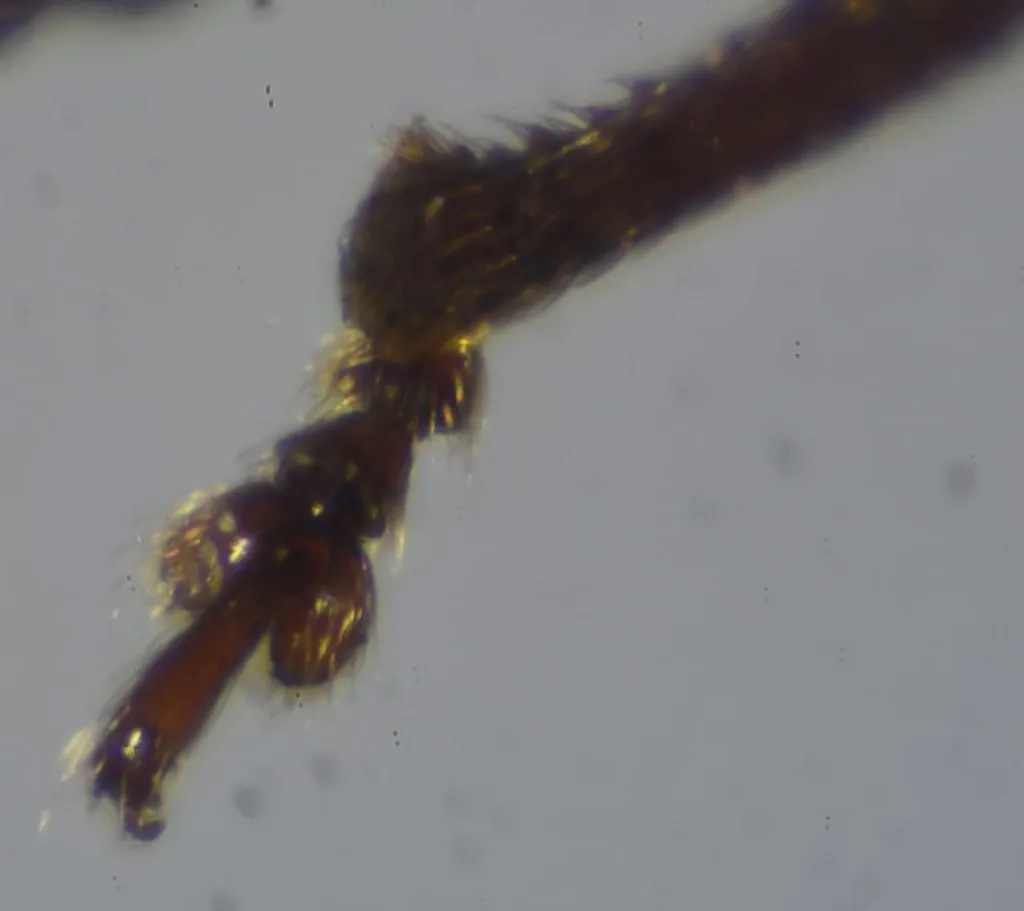
Otiorhynchus ovatus
Beetle whose larvae feed on strawberry roots and crowns, weakening or killing plants over time.
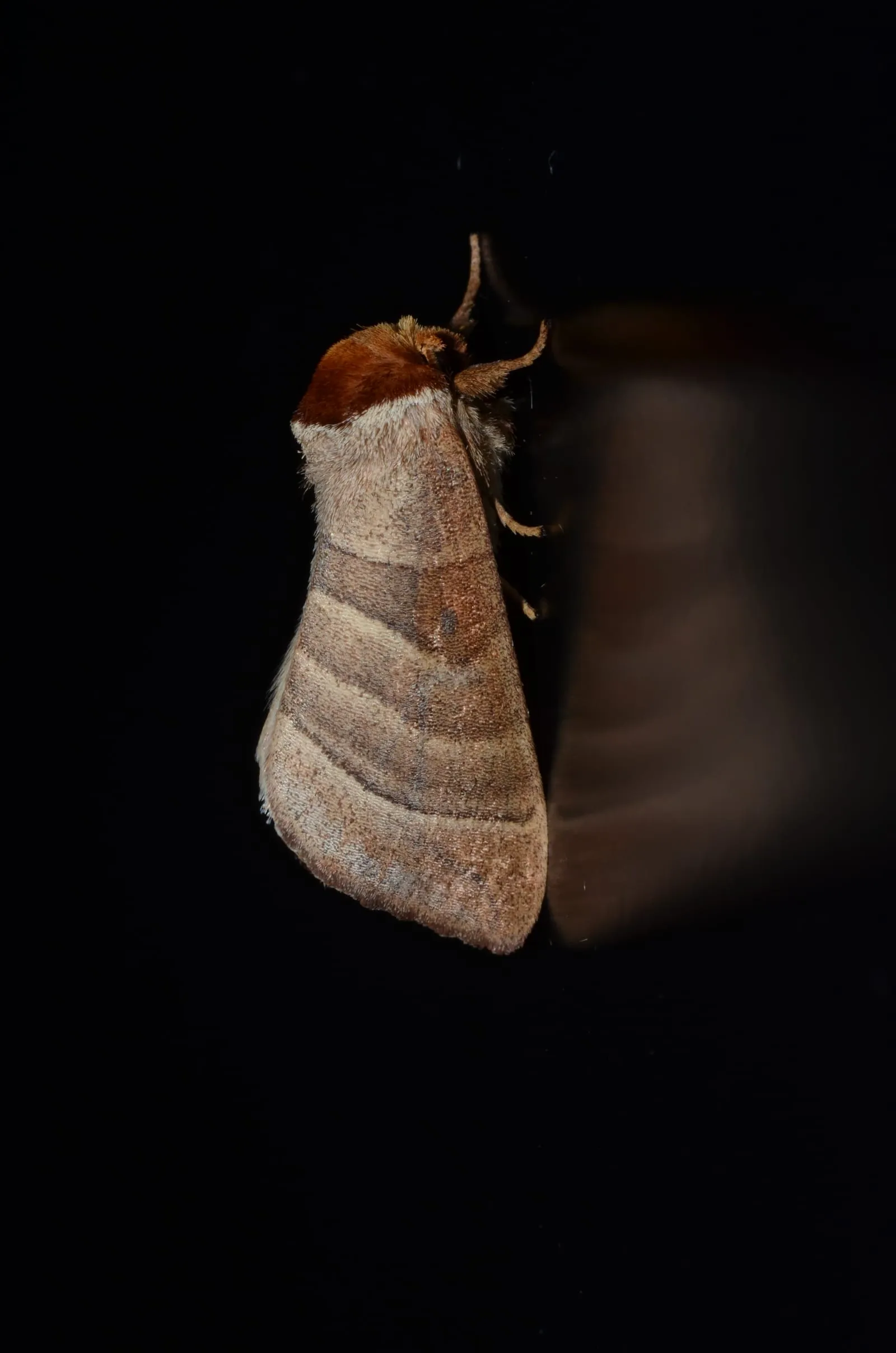
Datana integerrima
Gregarious caterpillar that feeds in dense colonies on walnut and pecan foliage, capable of defoliating entire branches in days.
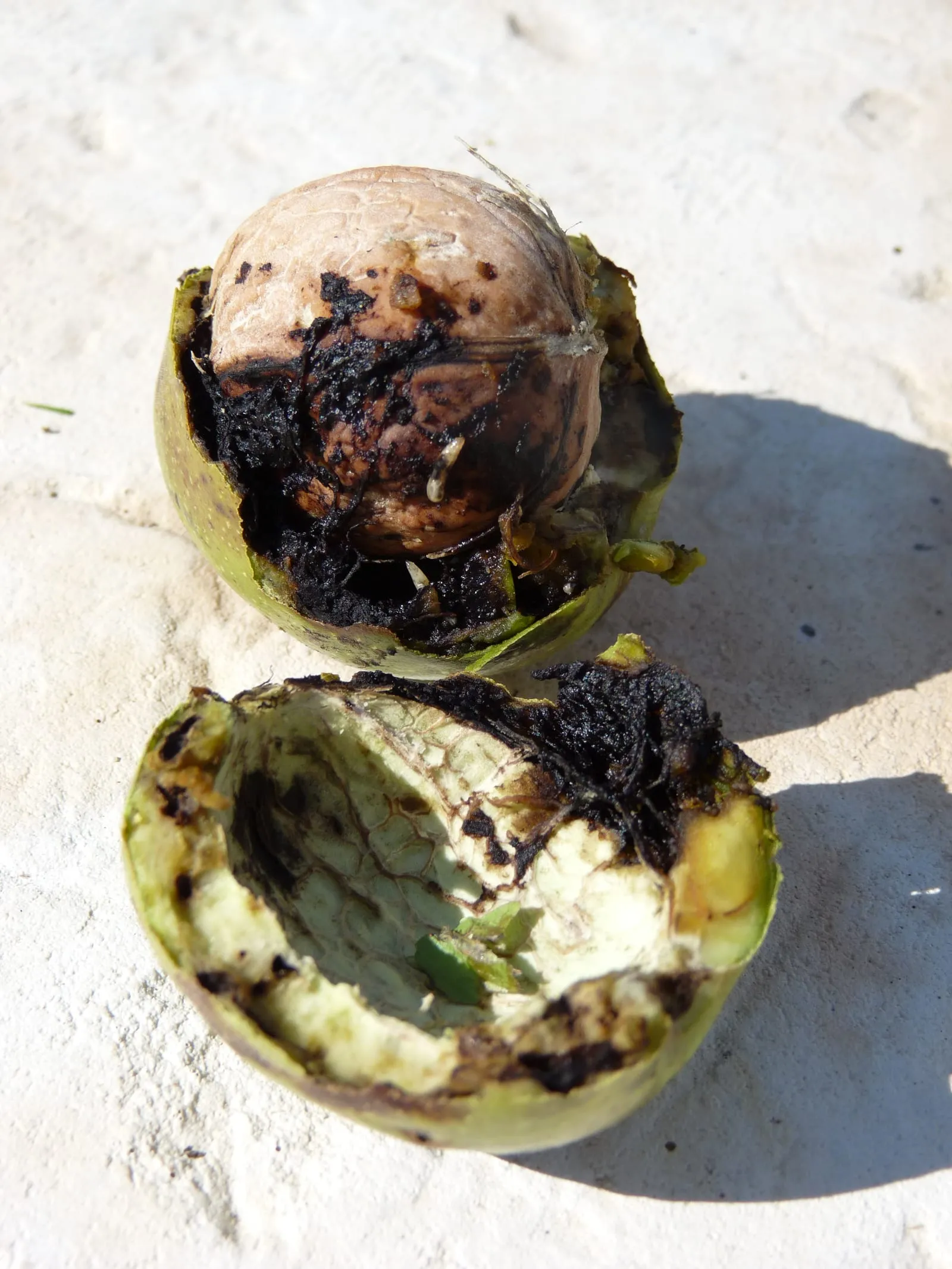
Rhagoletis completa
Tephritid fly whose larvae develop inside walnut husks, causing dark staining of the shell and reduced kernel quality.
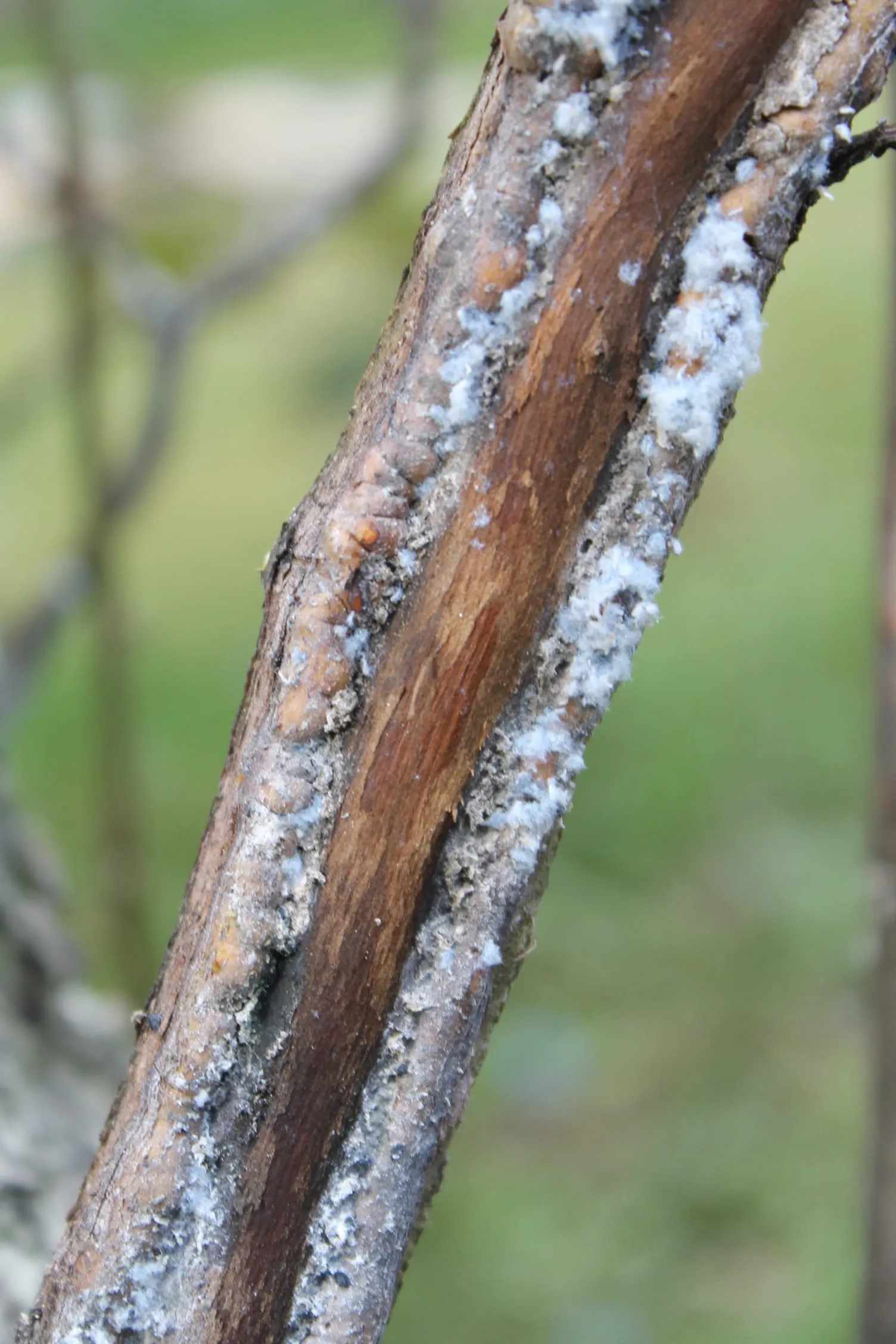
Eriosoma lanigerum
Aphid that feeds on apple roots and aerial wood, producing distinctive cottony white wax. Root colonies cause galls that reduce vigor; aerial colonies disfigure new growth.
Specialist pests
affect a single crop
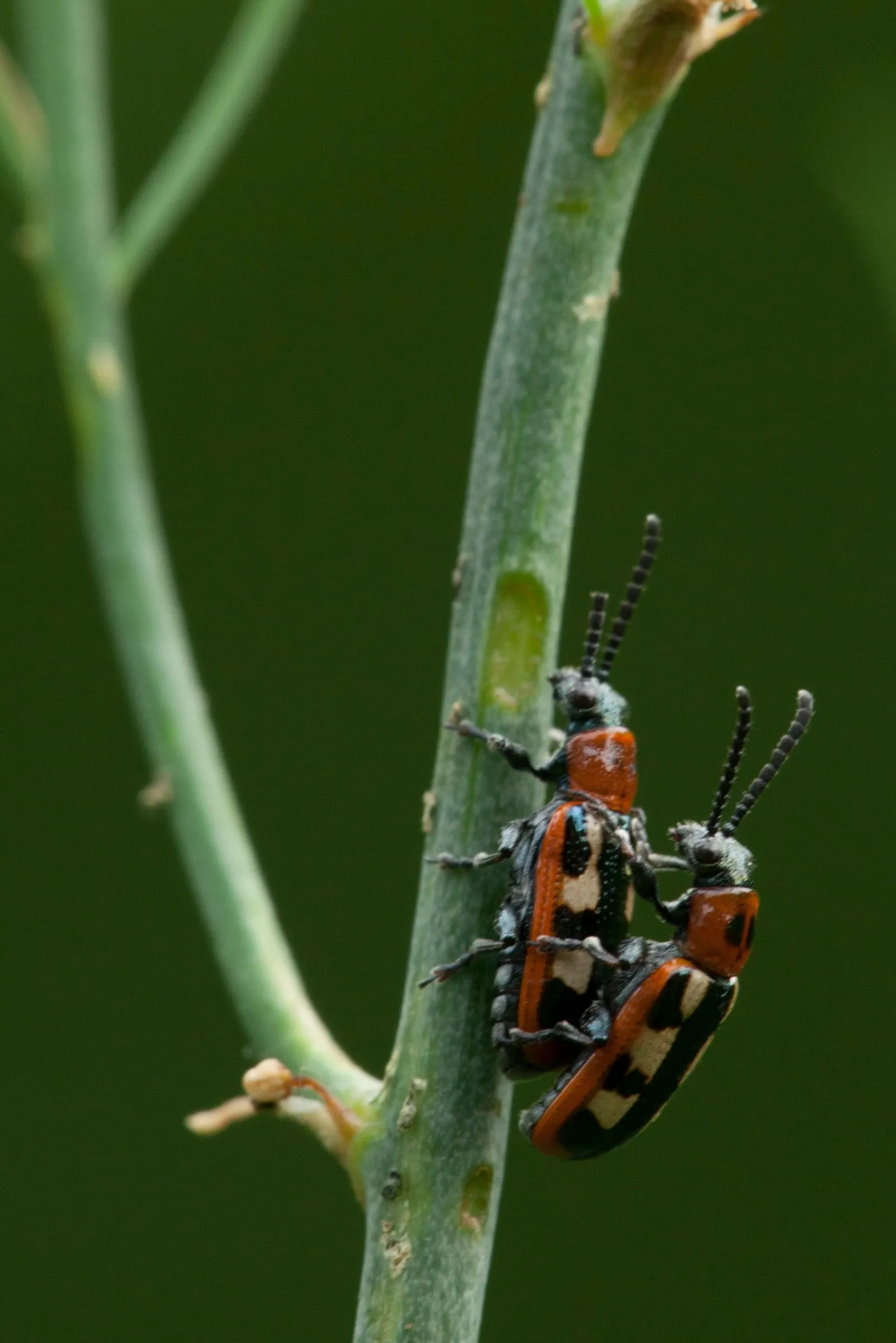
Crioceris asparagi
Blue-black beetle with cream spots that feeds on asparagus spears in spring and ferns in summer. Defoliates ferns reducing crown energy storage for next year.
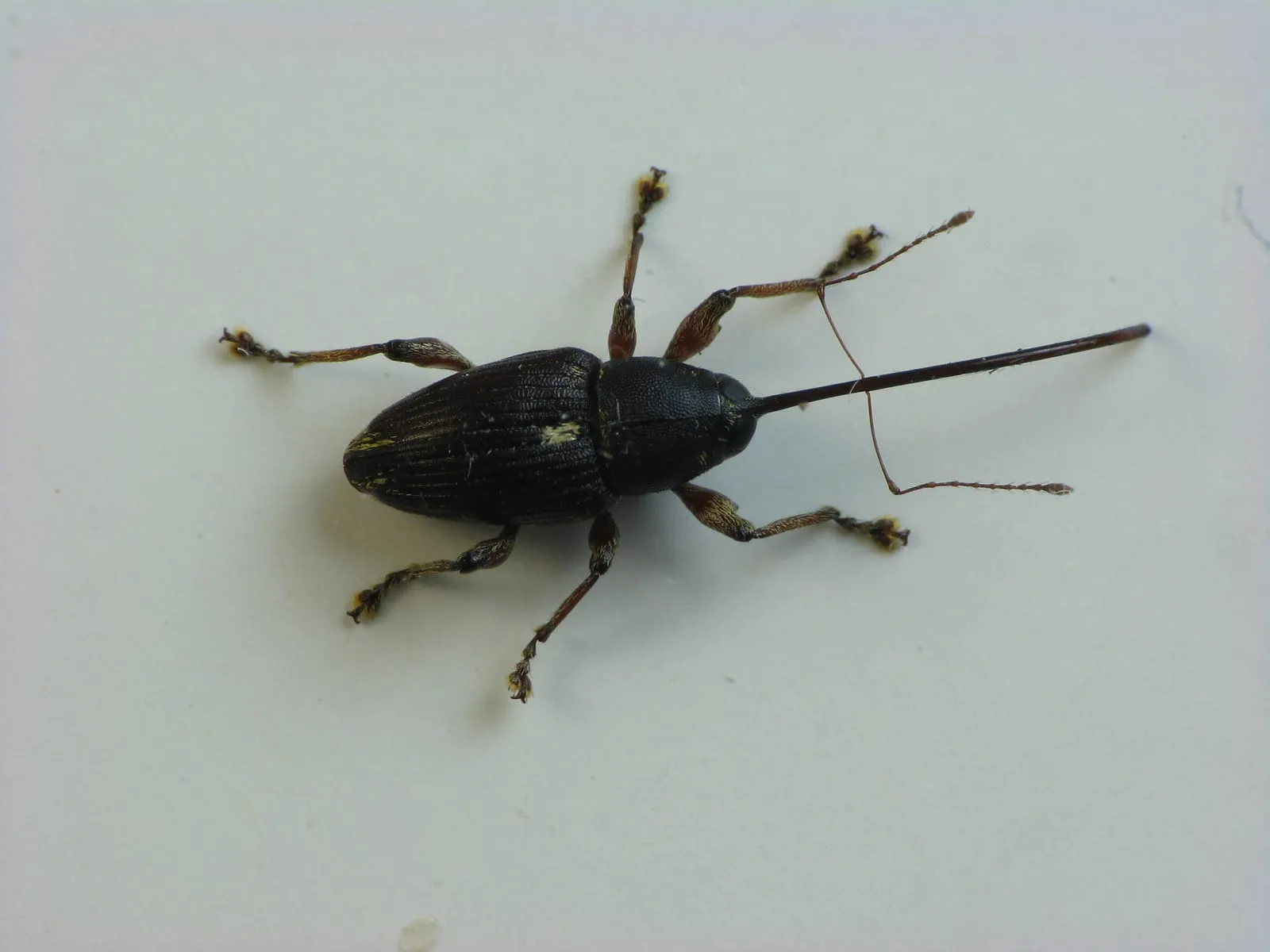
Curculio sayi and Curculio caryatrypes
Weevils whose larvae develop inside chestnut kernels, the leading cause of harvest loss in unmanaged plantings.
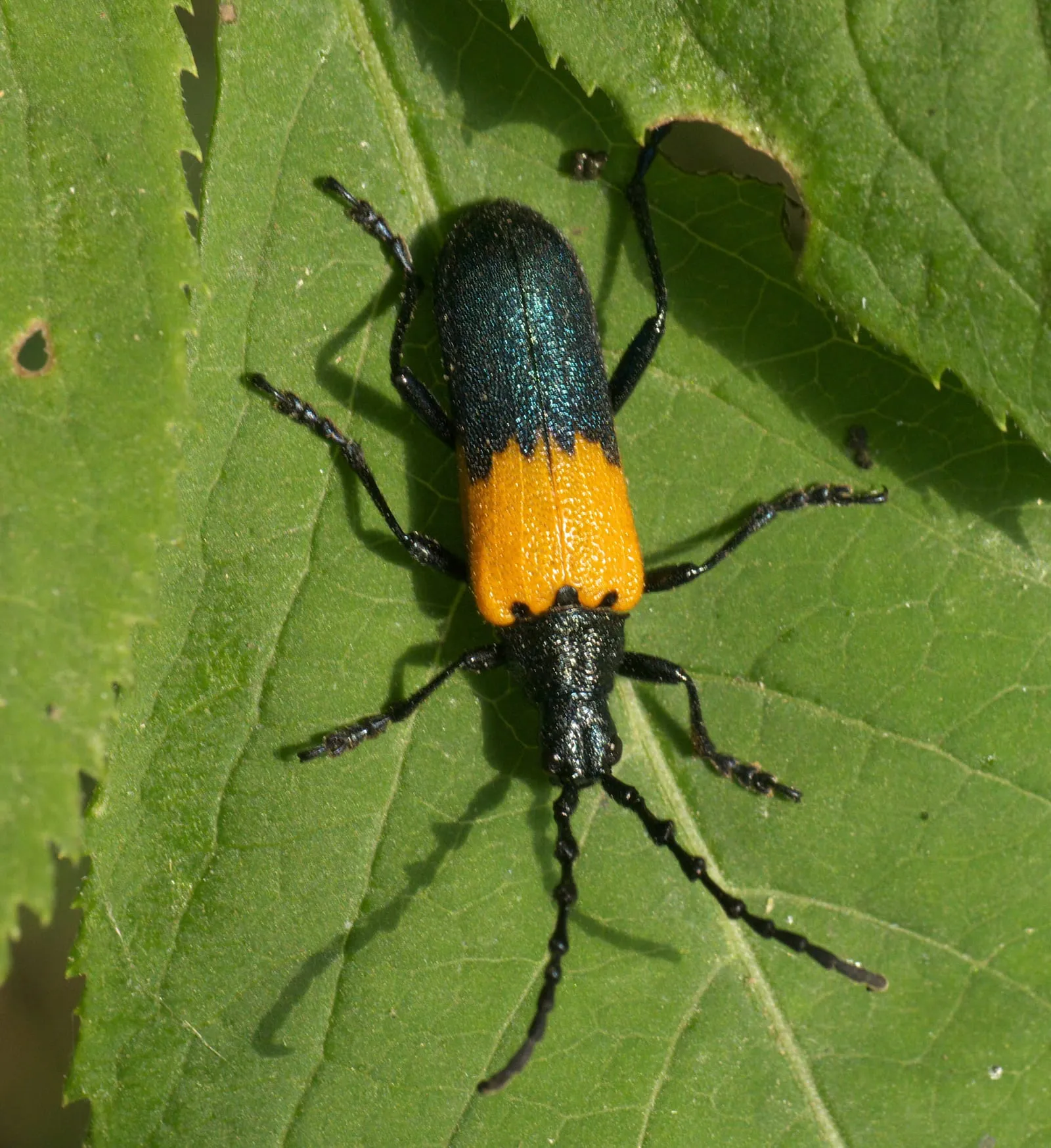
Desmocerus palliatus
Long-horned beetle whose larvae bore into elderberry stems and roots, weakening older canes.
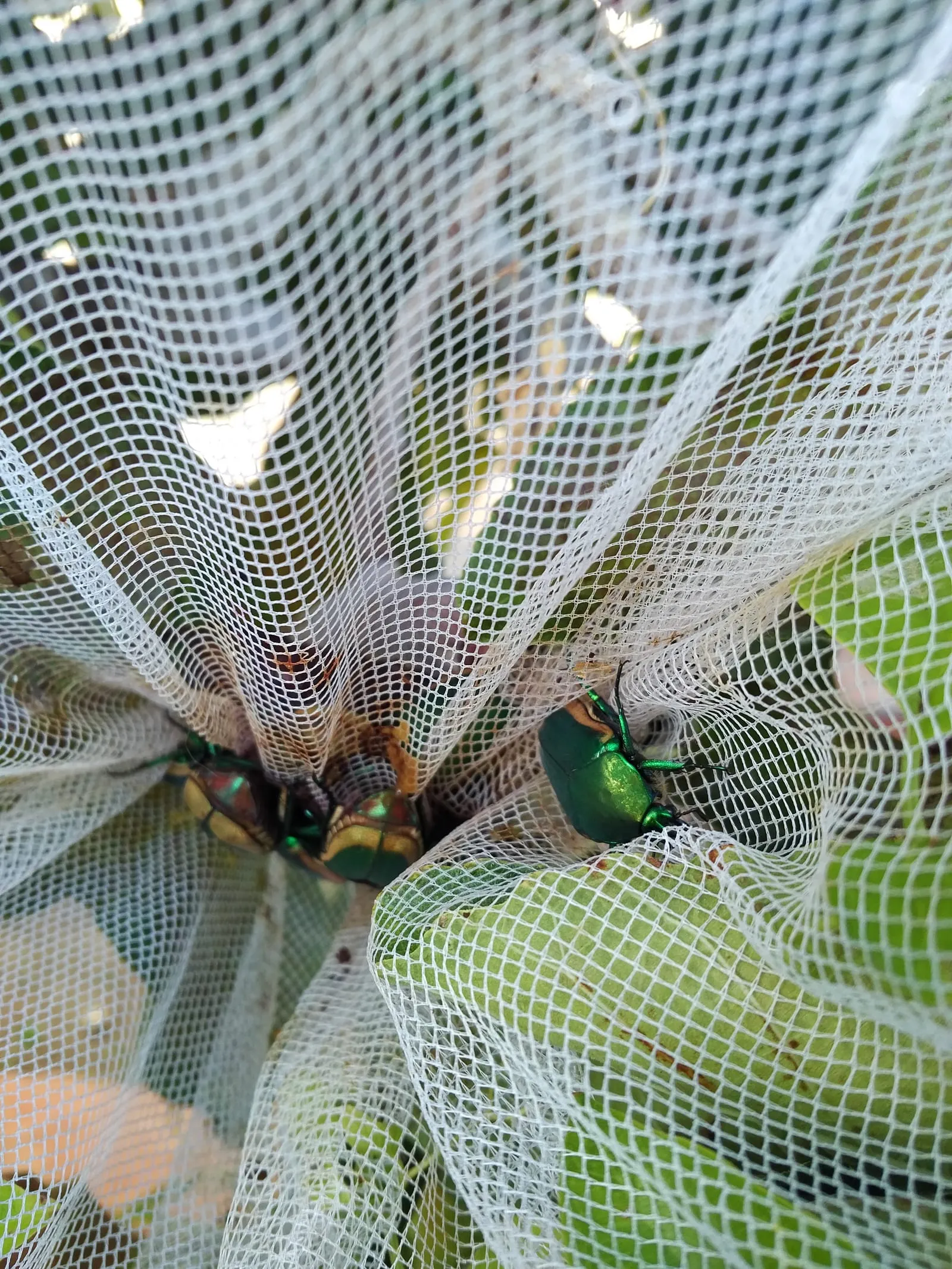
Cotinis mutabilis
Large green scarab beetle that feeds on ripe figs in the western US.
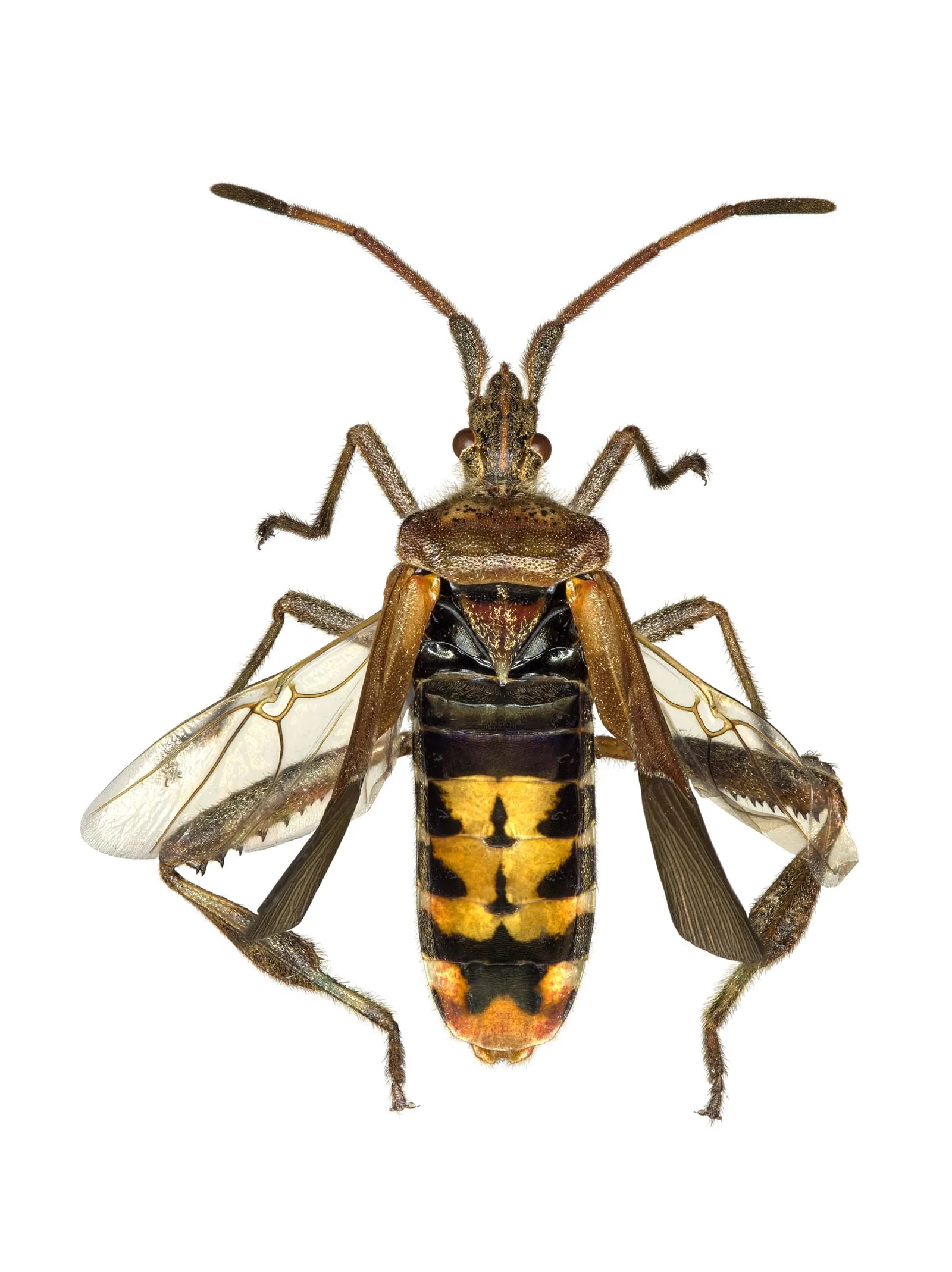
Leptoglossus species
Pomegranate's primary pest in the southwestern US, piercing fruit and causing spoilage.
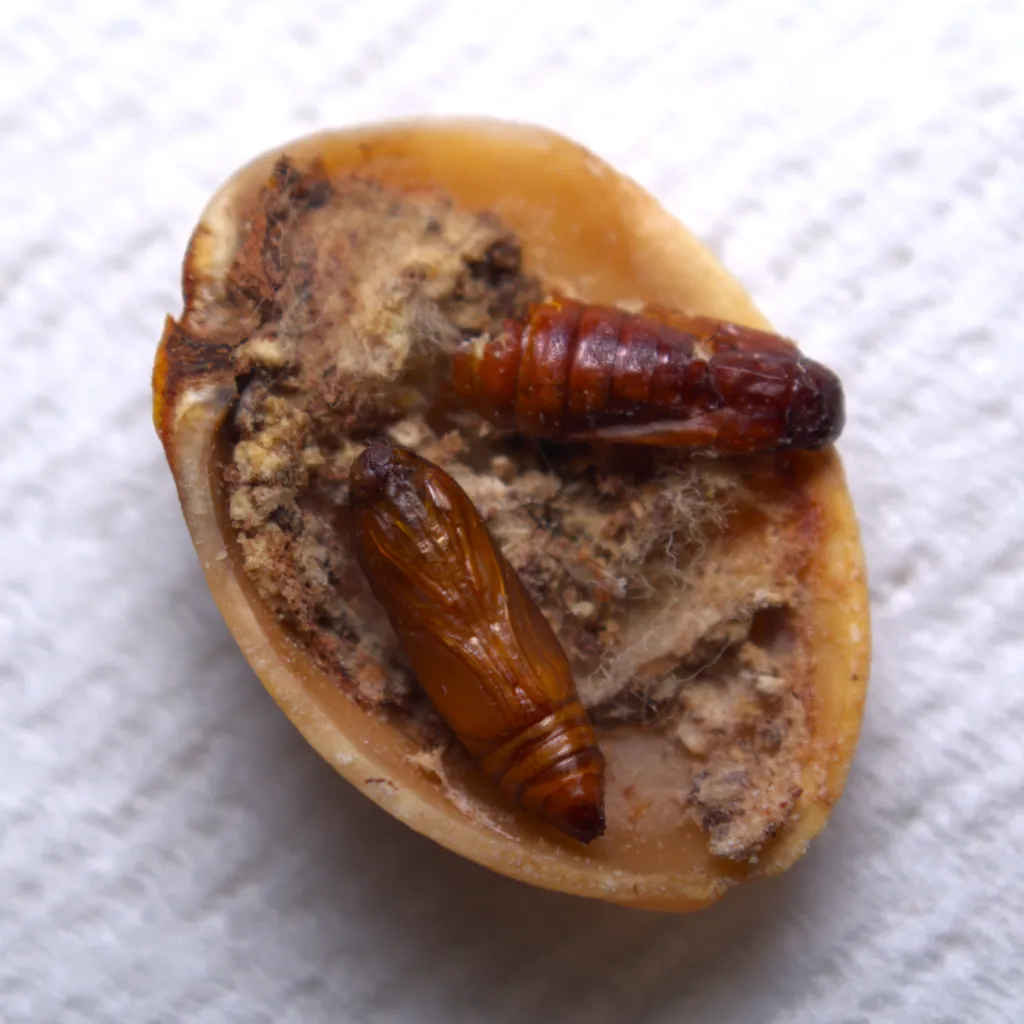
Amyelois transitella
Moth whose larvae infest mummified almonds and continue feeding into the new crop. The dominant almond pest in California, also a vector for Aspergillus aflatoxin contamination.
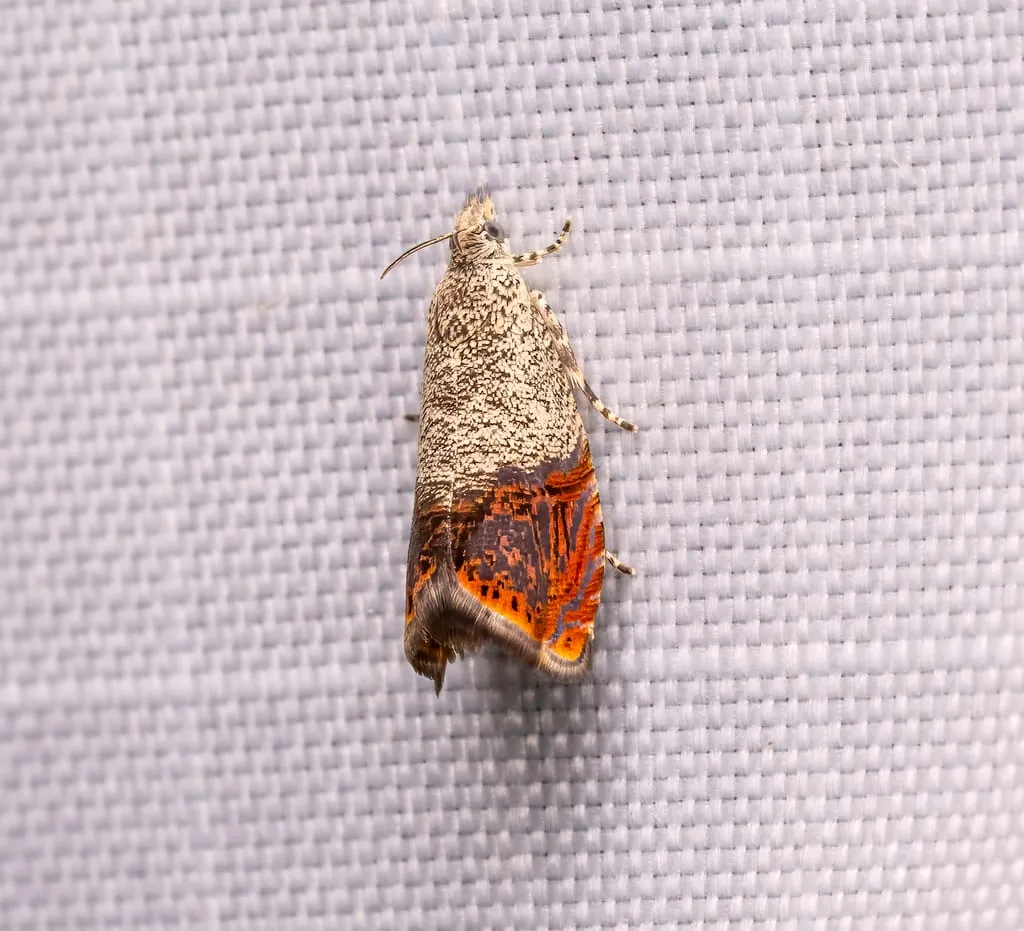
Talponia plummeriana
Tiny moth whose larvae bore into pawpaw flower stems, causing fruit drop.
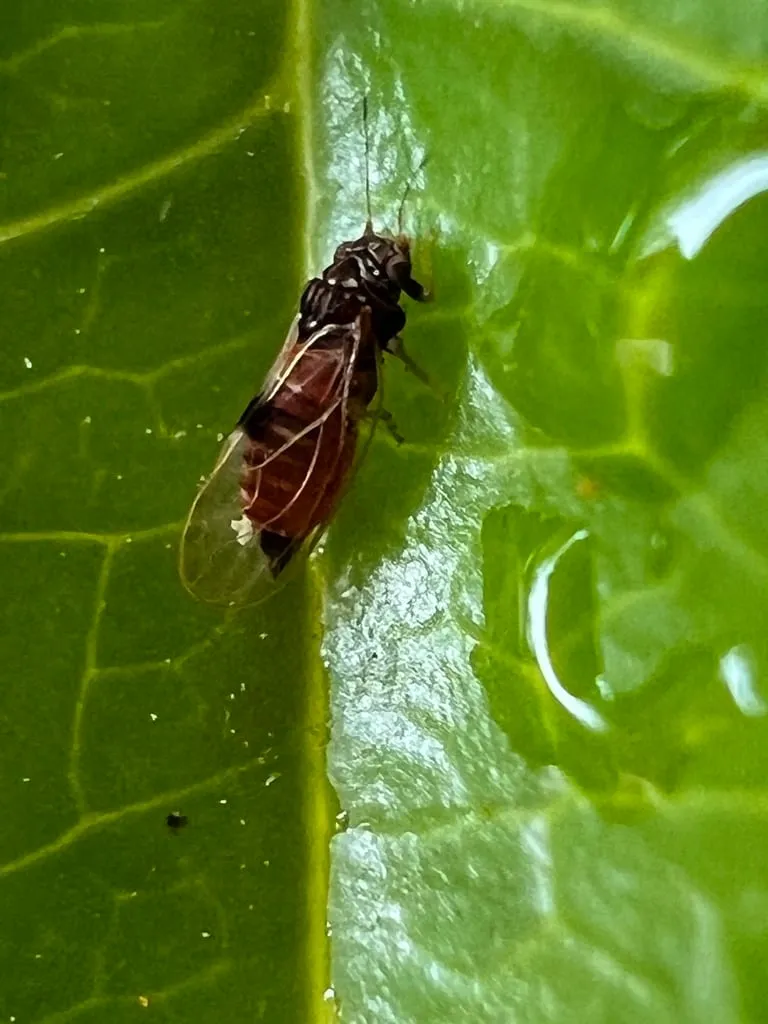
Cacopsylla pyricola
Pear's primary pest, sucking sap and producing honeydew that supports sooty mold.
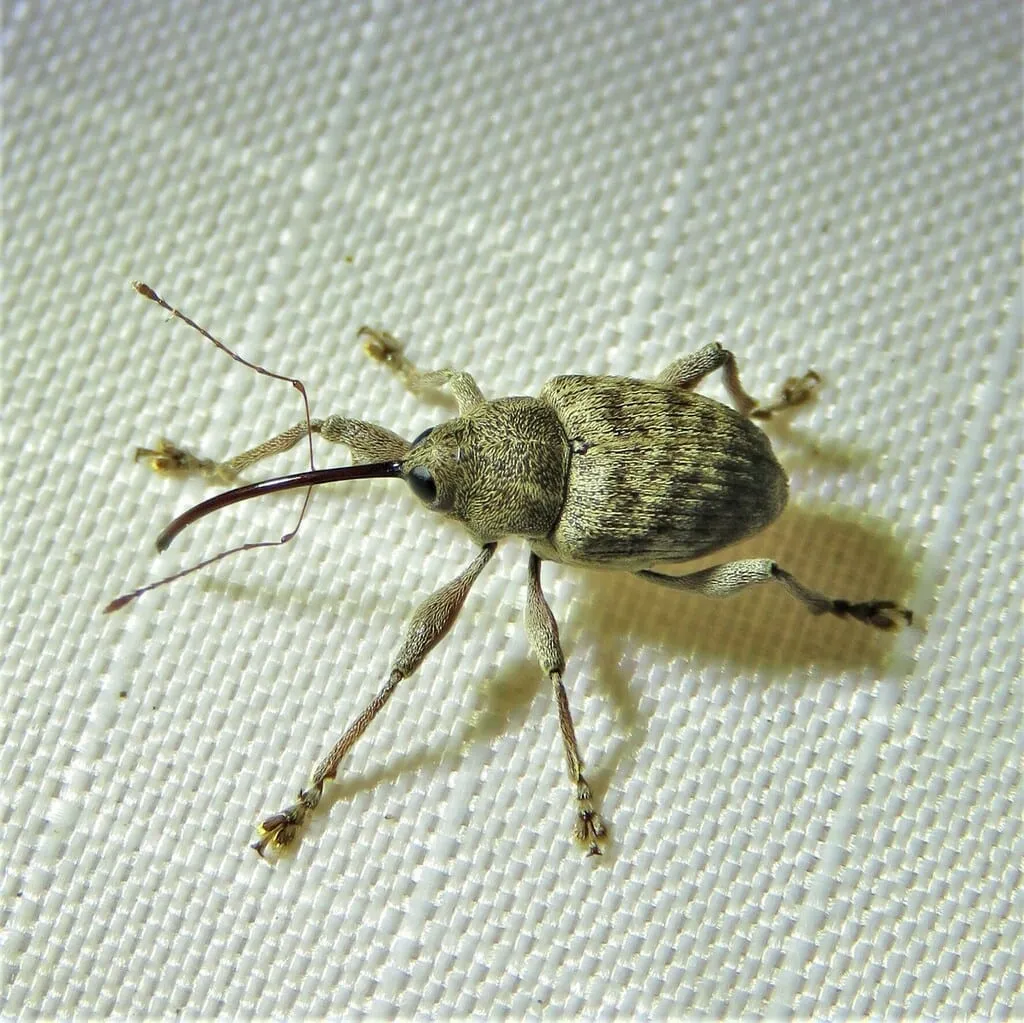
Curculio caryae
The most damaging pecan pest east of the Rockies. Adults emerge from soil in late summer, feed on developing nuts, and lay eggs inside ripening kernels.