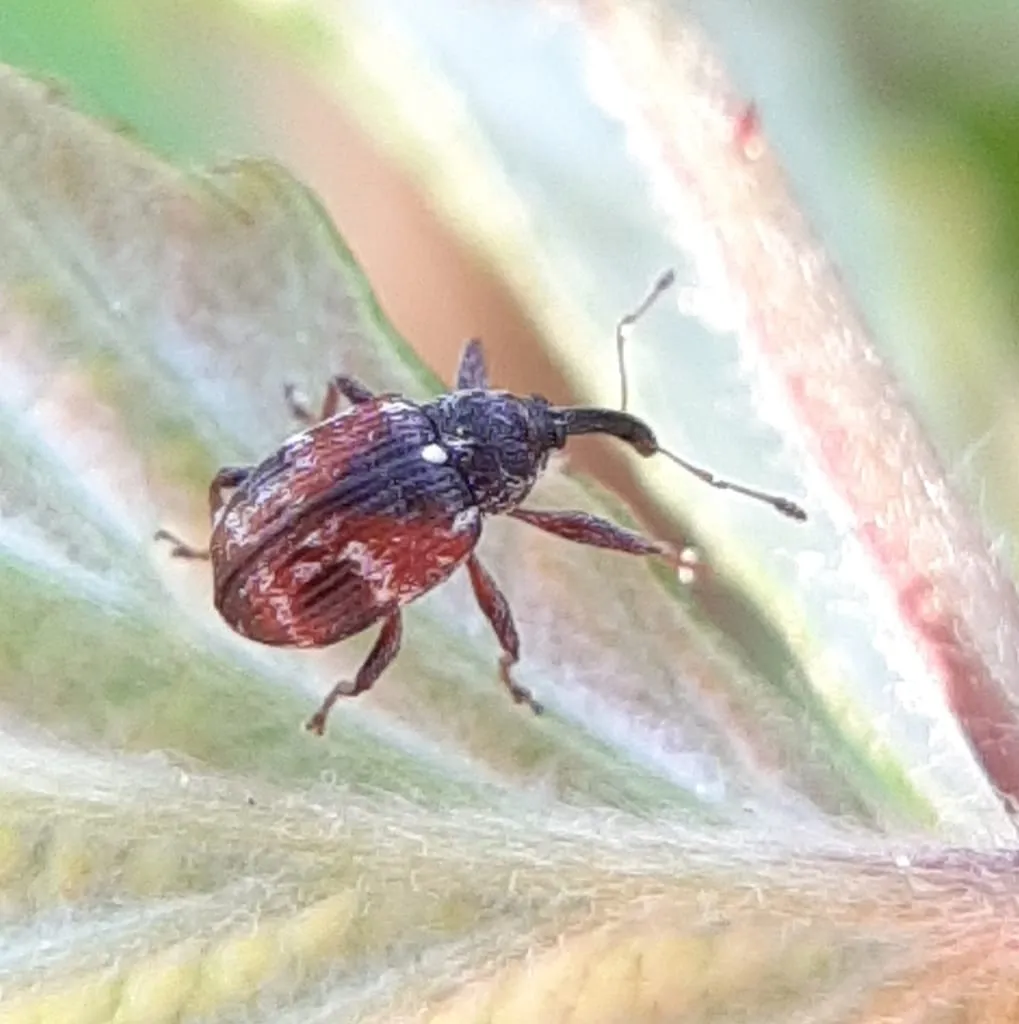
Pest
Strawberry Bud Weevil (Clipper)
Anthonomus signatus
Weevil that lays eggs in strawberry flower buds and clips the pedicel, causing the buds to drop or hang.
- Scientific name
- Anthonomus signatus
- Hosts
- 2
- Identification signs
- 3
- Controls
- 4
Biology and lifecycle
The strawberry bud weevil (Anthonomus signatus) is a small snout weevil that overwinters as an adult in leaf litter and woodland edges. Adults become active in early spring as temperatures warm and strawberry buds begin to swell. Females chew into developing flower buds to deposit a single egg, then sever the pedicel partially or fully. The clipped bud hangs or drops but will not set fruit. A single adult can clip 20 to 30 buds over the course of its egg-laying period, making even modest populations consequential in early-flowering varieties.
The damage window is narrow: most clipping occurs in the two to three weeks before first bloom, when buds are present but flowers have not yet opened. That tight window is also the most cost-effective time for intervention if monitoring warrants it. Evening scouting, when adults are active on buds at dusk, gives the clearest picture of actual pressure levels before committing to a spray.
IPM-friendly approaches address the pest without disrupting beneficial insects. Removing wild strawberry plants at field margins eliminates alternate hosts that harbor adults before the crop reaches bud stage. Later-flowering varieties reduce exposure because populations have less time to clip before bloom is effectively over. Preserving or establishing hedgerow habitat supports parasitoid wasps that attack weevil larvae inside clipped buds, a natural suppression mechanism that strengthens over multiple seasons.
Targeted pyrethroid or spinosad applications at early bloom are effective when monitoring shows meaningful adult counts. Timing is critical: applications after petal fall miss the damage window and disrupt pollinators without meaningful benefit. Threshold-based decisions, not calendar spraying, are the standard recommendation across most university extension IPM programs for this pest.
Signs to watch for
- ▸ Severed flower buds dangling from pedicels
- ▸ Reduced fruit set in early-flowering varieties
- ▸ Adult weevils on buds at dusk
IPM controls
- ✓ Targeted spray at early bloom if monitoring shows pressure
- ✓ Remove wild strawberry hosts at field edges
- ✓ Encourage parasitoid wasps
- ✓ Plant later-flowering varieties
Affected crops
Image: "Anthonomus signatus", by Will Linnard, via iNaturalist, licensed under CC-BY Source.
Related