Pest
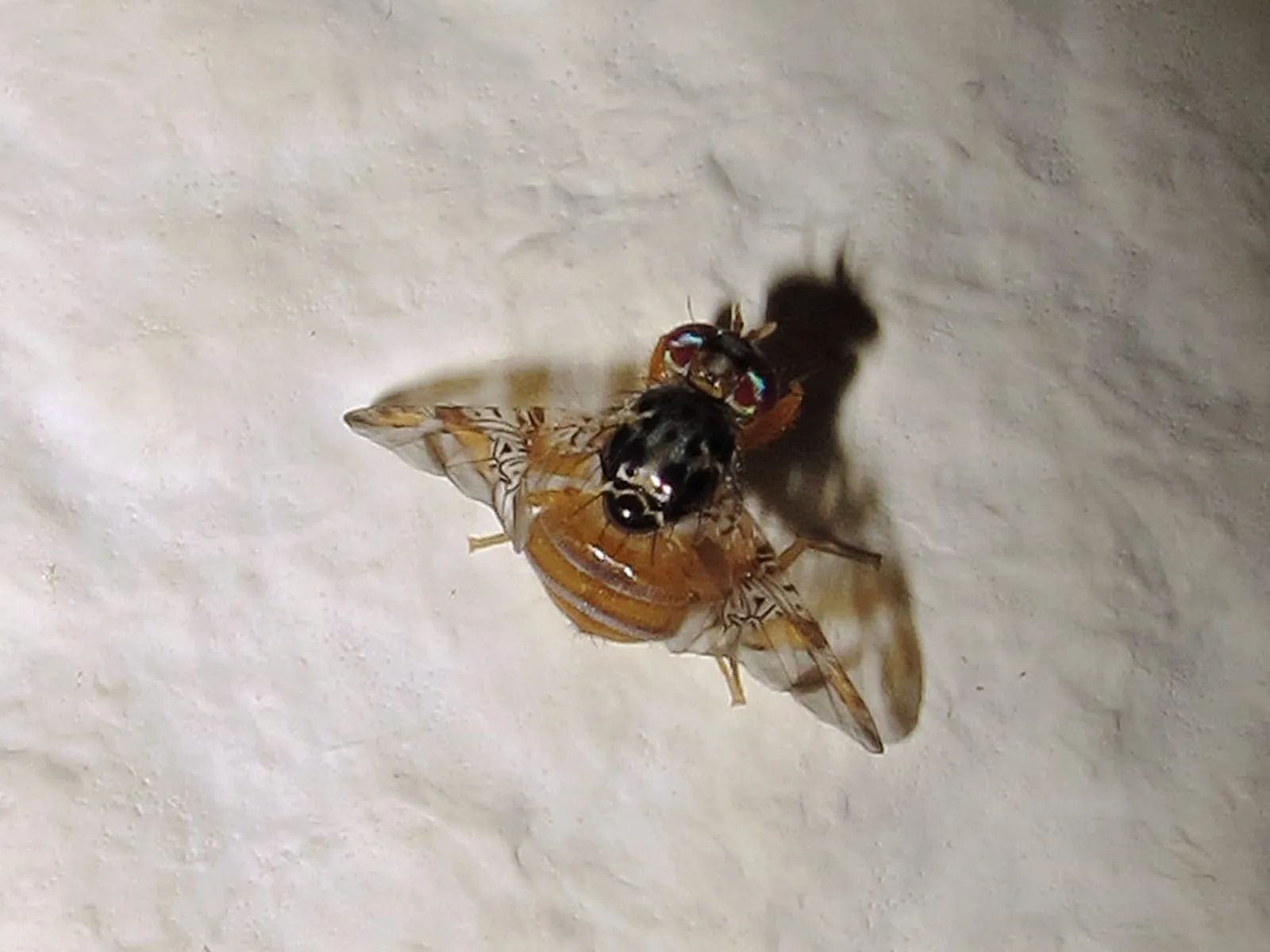
Mediterranean Fruit Fly
Ceratitis capitata
Quarantine pest in many regions. Adult females puncture ripening fruit to lay eggs; larvae tunnel through the flesh, causing premature drop and rot.
- Scientific name
- Ceratitis capitata
- Hosts
- 9
- Identification signs
- 4
- Controls
- 4
Biology and lifecycle
The Mediterranean fruit fly (Ceratitis capitata) ranks among the most destructive quarantine pests affecting tropical and subtropical fruit production worldwide. Adults are roughly housefly-sized, identifiable by yellow-brown thorax banding and clear wings marked with yellow, brown, and black patterns. Females are the primary damage vector: a sharp ovipositor allows them to puncture the skin of ripening fruit and deposit eggs just beneath the surface.
Eggs hatch within 2 to 4 days under warm conditions. The larvae (white maggots, reaching 6 to 10 mm at maturity) feed through the flesh for 6 to 11 days, tunneling paths that invite secondary bacterial and fungal rot. Infested fruit softens, shows sunken puncture sites, and drops before reaching usable maturity. A single female can produce 300 to 800 eggs over her lifespan; at optimal temperatures near 25 to 30°C, a full generation can complete in as few as 21 days, allowing multiple overlapping generations per season.
The most cost-effective control window opens before oviposition, meaning before fruit reaches color break. Individual fruit bagging with paper sleeves or fine mesh creates a physical barrier that eliminates infestation without any chemical inputs and is practical for small plantings. Cue-lure or methyl-eugenol traps provide early-warning monitoring for larger plantings; rising trap captures indicate when further intervention is warranted. Where bait sprays are necessary, spinosad-based formulations applied to small foliage patches (rather than whole-tree coverage) attract and kill adults while reducing non-target exposure. In jurisdictions with active quarantine programs, local agricultural authority requirements govern timing, product selection, and reporting obligations.
Signs to watch for
- ▸ puncture marks on fruit skin
- ▸ soft sunken patches
- ▸ white maggots inside flesh
- ▸ premature fruit drop
IPM controls
- ✓ Bag fruit individually with paper or fine mesh sleeves before color break
- ✓ Sanitation: collect and destroy all dropped and overripe fruit weekly
- ✓ Cue-lure or methyl-eugenol traps for monitoring
- ✓ Spinosad-based bait sprays; coordinate with local quarantine programs where active
Affected crops
Image: "Ceratitis capitata - mosca mediterranea de la fruta (9550667380)", by jacilluch, via Wikimedia Commons, licensed under CC-BY Source.
.jpg)
Related