Pest
Deer Browse
Odocoileus species
Whitetail and mule deer browse can devastate orchards and gardens, particularly in winter when food is scarce. Antler rub on young trunks kills saplings outright.
- Scientific name
- Odocoileus species
- Hosts
- 34
- Identification signs
- 4
- Controls
- 5
Biology and lifecycle
Deer (Odocoileus virginianus in the East, O. hemionus in the West) are year-round browsing pressure on orchards and gardens, with damage concentrated in two windows. Winter browsing runs November through March, when natural forage is exhausted. Because deer lack upper incisors, they tear rather than cut, leaving ragged wound margins that are diagnostic. Fruit tree shoots, berry cane tips, and leafy greens are preferred targets; the browse line typically ends near 5 feet, the standing reach of an adult.
The second damage window opens in late August and runs through October, when bucks strip bark from young trunks during antler rubbing. A sapling with a trunk under 2 inches in diameter can be girdled in a single session, killing the tree outright. This injury is more consequential than browse damage because the tree itself is lost, not just the current season's growth.
Physical exclusion is the only reliably effective long-term control. An 8-foot perimeter fence, installed before planting, is the standard; deer will test anything shorter over time. Individual tree tubes or wire cages around young trunks prevent antler rub during the establishment years and cost far less than replacing killed saplings.
Repellents (Plantskydd, Liquid Fence, Bobbex) provide meaningful short-term deterrence when applied before deer establish a browsing routine in an area. Rotating products every two to three weeks reduces habituation. Reapplication after rain is required, and repellents alone are insufficient in high-pressure settings. Motion-activated sprinklers add deterrence without chemical use and are practical for smaller plots.
Signs to watch for
- ▸ Ragged torn leaf edges (deer have no upper incisors and tear rather than cut)
- ▸ Stripped bark on young trunks especially after September antler-rub season
- ▸ Browse line on lower 5 ft of established trees and shrubs
- ▸ Heart-shaped hoof prints in soft soil
IPM controls
- ✓ 8-foot perimeter fence (the only reliable physical control)
- ✓ Tree tubes or trunk wraps on saplings against antler rub
- ✓ Repellent rotation (Plantskydd, Liquid Fence, Bobbex) — switch products every 2-3 weeks
- ✓ Plant deer-resistant aromatic herbs (mint, thyme, sage) at orchard edges
- ✓ Motion-activated sprinklers and lights deter habituation
Affected crops
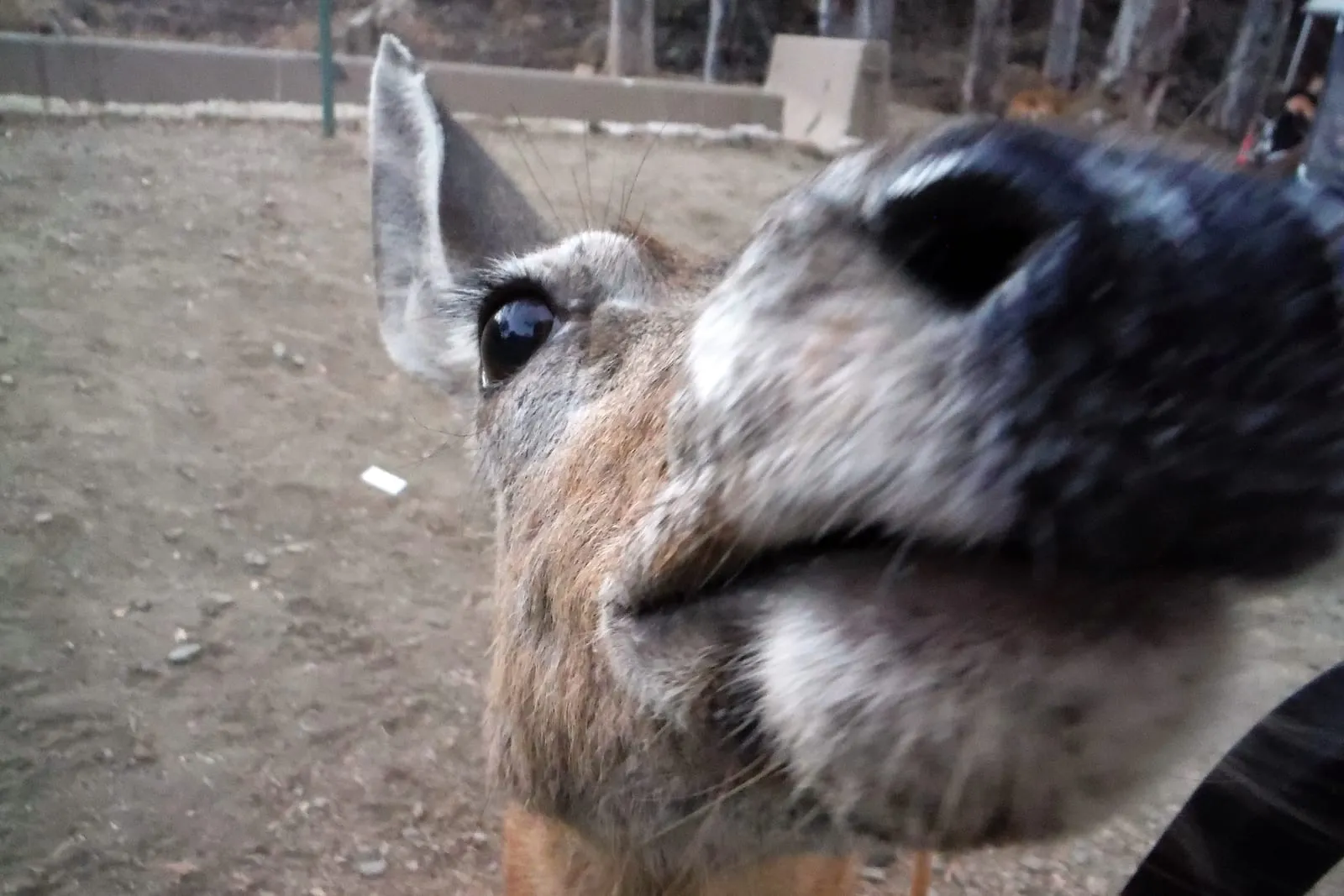
Image: "Mule Deer (Odocoileus hemionus) sniff", by Kiloueka, via Wikimedia Commons, licensed under CC0 Source.
_sniff.jpg)
Related