Pest
Corn Earworm
Helicoverpa zea
Caterpillar that bores into corn ear tips through the silk channel and into developing tomato fruit. Also called tomato fruitworm. The most damaging US sweet-corn pest.
- Scientific name
- Helicoverpa zea
- Hosts
- 2
- Identification signs
- 3
- Controls
- 5
Biology and lifecycle
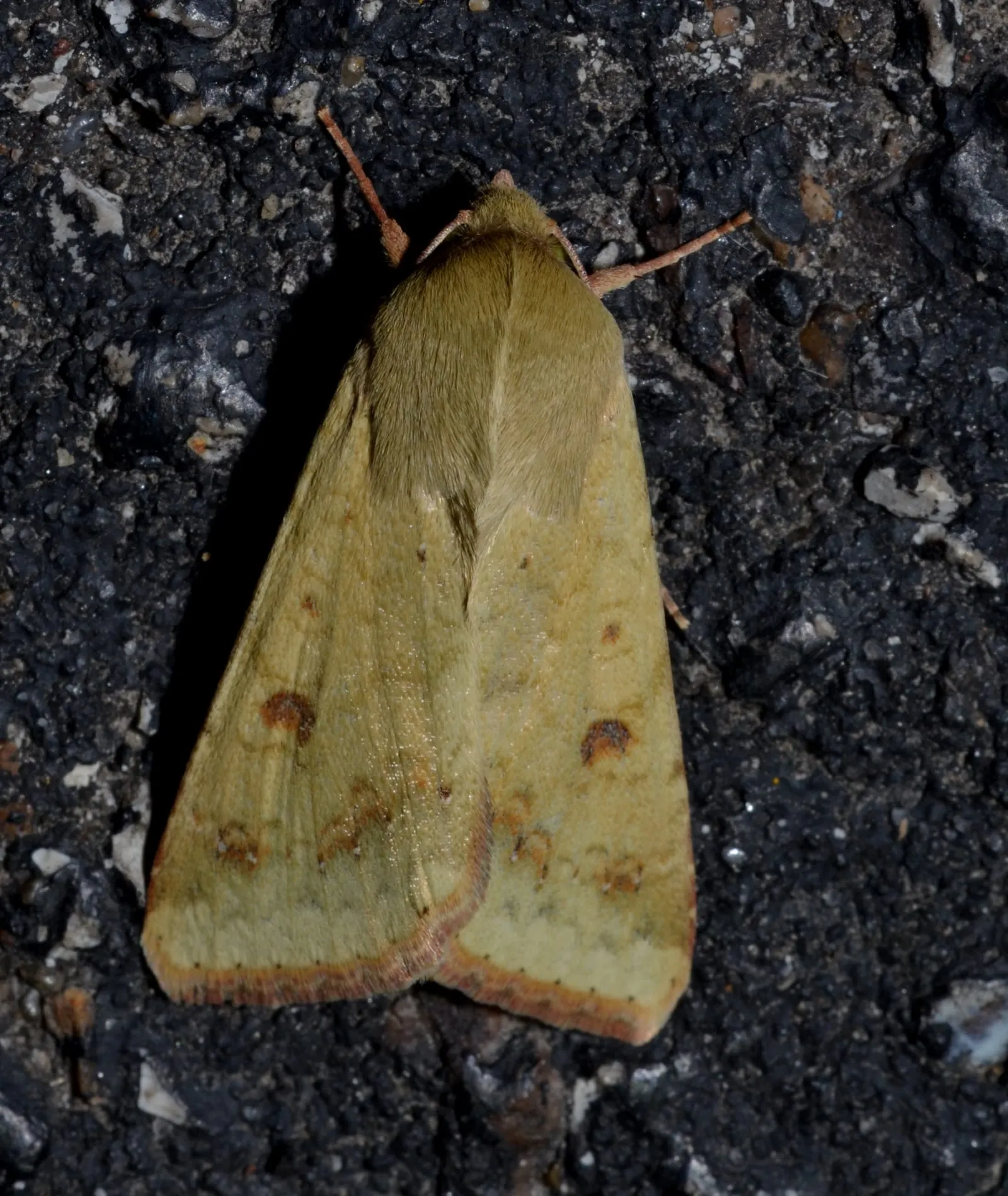
Corn earworm (Helicoverpa zea) is the most economically damaging pest of sweet corn in the United States, and shifts host to tomato when corn is absent or past silking. The adult is a mottled brownish-tan moth with a roughly 40 mm wingspan. Moths overwinter as pupae in southern states and migrate northward on prevailing winds each season, reaching northern growing regions by midsummer. In the Deep South, three to five generations complete annually; in northern zones, one to two.
The pest's destructive career plays out entirely in the larval stage. Females lay single eggs directly on fresh corn silks. Newly hatched caterpillars follow the silk channel into the ear tip, feeding on developing kernels and accumulating frass as they grow. Caterpillar color varies widely (green, brown, pink, or nearly black) and is not a useful identifier; the frass and tunneled tip kernels are the reliable signs. By the time larvae are large enough to notice, they are sheltered inside the husk and effectively beyond reach of foliar sprays.
The critical control window is the silk stage: the four to six days after silks first emerge and before they brown and dry. Applying Bacillus thuringiensis (Bt) or spinosad mixed with a small amount of mineral oil directly into the silk channel kills young larvae before they penetrate the ear. Pheromone traps can signal the start of adult flight and sharpen application timing. Trichogramma egg parasitoids, commercially available and broadly compatible with organic programs, reduce larval establishment without pesticide inputs. Planting tight-husked varieties (Country Gentleman, Silver Queen) provides structural resistance that complements any control program. For home gardeners, tolerating tip damage and cutting the affected portion away before eating is often the most practical approach.
Signs to watch for
- ▸ Damaged corn ear tips with frass and tunneled kernels
- ▸ Caterpillars (varied colors: green, brown, pink, black) inside corn ears
- ▸ Holes in tomato fruit, often near the stem
IPM controls
- ✓ Apply mineral oil with Bt or spinosad to silks 4-6 days after silking begins
- ✓ Plant tight-husked varieties (Country Gentleman, Silver Queen)
- ✓ Pheromone traps for flight monitoring and early-warning
- ✓ Encourage Trichogramma egg parasitoids
- ✓ Tolerate damage on tip kernels for home use; cut and discard
Affected crops
Image: "Helicoverpa zea – Corn Earworm Moth (14644789087)", by Andy Reago & Chrissy McClarren, via Wikimedia Commons, licensed under CC-BY Source.
.jpg)
Related