Pest
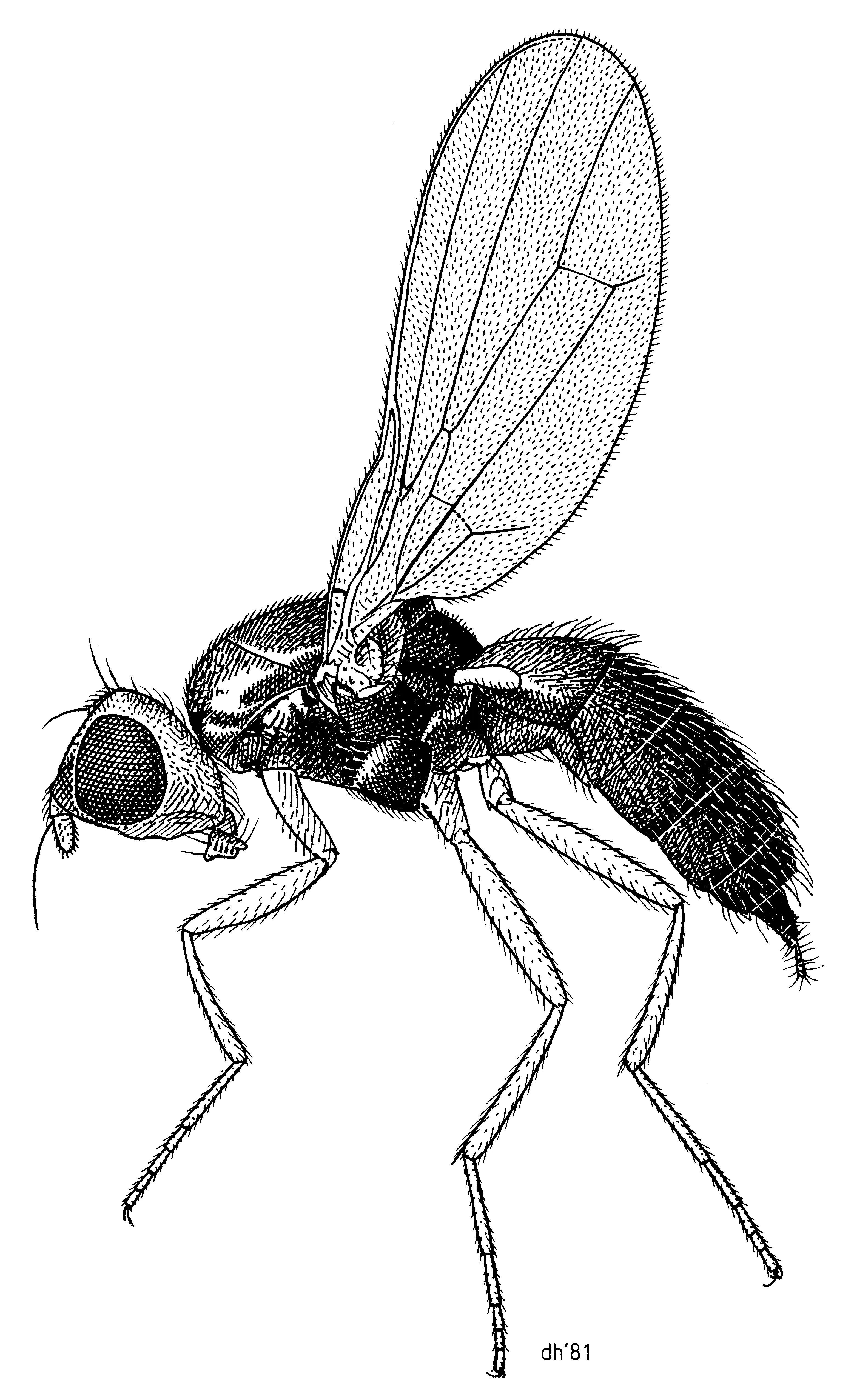
Carrot Rust Fly
Psila rosae
Fly whose larvae tunnel into carrot and parsnip roots, leaving rust-colored scars and entry points for secondary rot.
- Scientific name
- Psila rosae
- Hosts
- 3
- Identification signs
- 4
- Controls
- 5
Biology and lifecycle
Carrot rust fly (Psila rosae) is a small, shiny black fly whose adult stage is largely irrelevant to the gardener. The damage comes from its larvae: slender white maggots that hatch from eggs laid at the base of host plants in the Apiaceae family and tunnel directly into developing roots. In most temperate growing regions, the pest runs two generations per season. Adults of the first generation emerge in late April through May and begin laying eggs as soon as host foliage is present. Second-generation adults appear in late summer and target fall crops, with larvae active through October in many zones.
The larval tunnels leave rust-colored channels through roots, destroying marketability and, more practically, creating entry points for bacterial and fungal rots. Affected roots do not store. Even moderate infestations can render a bed unsalvageable.
The most cost-effective control window is before eggs are laid. Floating row cover installed at seeding and kept sealed through harvest physically excludes adults without any chemical input; this is the single most reliable tool for home growers. Delaying sowing until early summer sidesteps the first-generation egg-laying peak, though it compresses the harvest window. Allium companions (onions, leeks) are widely recommended on the theory that volatile compounds confuse host-finding adults; the effect is plausible and carries no downside, but controlled trial data are limited. Crop rotation away from beds with prior Apiaceae plantings reduces local soil populations over multiple seasons.
Sprays are rarely the right first move. Where pressure is severe and covers impractical, pyrethroid soil drenches timed to adult emergence have documented efficacy, but timing requires monitoring adult flight with sticky yellow traps.
Signs to watch for
- ▸ Rust-colored channels and tunnels in roots
- ▸ Yellowing of foliage
- ▸ Fine white maggots in damaged roots
- ▸ Affected roots unstorable
IPM controls
- ✓ Floating row cover from seeding through harvest
- ✓ Delay sowing until early summer to dodge first generation
- ✓ Companion plant with onions or leeks (the smell confuses egg-laying flies)
- ✓ Crop rotation away from previous Apiaceae beds
- ✓ Harvest before second generation peak in fall
Affected crops
Image: "DIPT Psilidae Psila rosae", by Desmond W. Helmore, via Wikimedia Commons, licensed under CC-BY Source.

Related