Pest
Currant Aphid
Cryptomyzus ribis
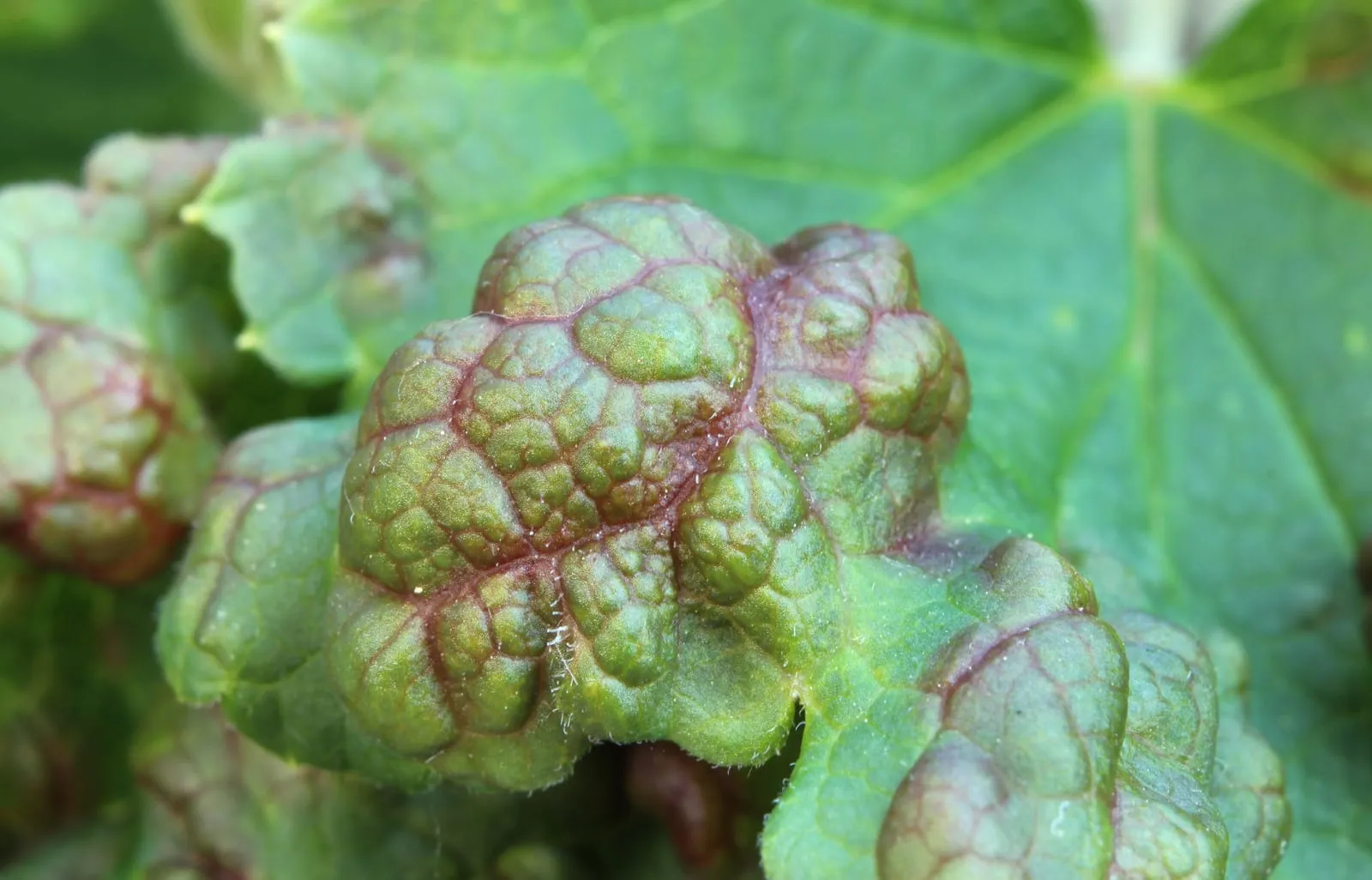
Sap-feeding aphid that causes characteristic red blistering on currant and gooseberry leaves in spring.
- Scientific name
- Cryptomyzus ribis
- Hosts
- 4
- Identification signs
- 3
- Controls
- 4
Biology and lifecycle
Cryptomyzus ribis overwinters as eggs on the bark of currant and gooseberry canes. Eggs hatch in early spring, timed closely with bud break, and first-generation nymphs move to newly emerging leaves where they feed on the undersides. The feeding triggers an abnormal cell proliferation in the leaf tissue, producing the distinctive red or yellow blisters visible on the upper surface. The aphids themselves remain hidden beneath these distorted pockets, making colonies easy to miss until damage is already established.
By mid-spring, populations expand rapidly through several parthenogenetic generations. Winged forms develop later in the season, disperse to herbaceous secondary hosts, then return to currants in autumn to lay overwintering eggs. The heaviest leaf distortion occurs in the first six to eight weeks after bud break, when new growth is most susceptible. Once leaves harden, new feeding causes less structural damage, though honeydew accumulation can invite sooty mold on fruit and foliage.
The most cost-effective control window is before egg hatch: dormant oil applied while canes are still fully dormant smothers overwintering eggs with minimal disruption to beneficial insects. Timing is narrow; dormant oil loses effectiveness once buds begin to swell. On early infestations, insecticidal soap directed at leaf undersides can reduce colony size, though blistered tissue makes thorough coverage difficult. Light to moderate infestations rarely affect fruit yield, so the practical threshold for intervention should be based on actual crop impact rather than cosmetic leaf damage. Maintaining habitat for lacewings, parasitic wasps, and ladybugs provides meaningful biological suppression when insecticide use is kept minimal.
Signs to watch for
- ▸ Red or yellow blisters on upper leaf surface
- ▸ Aphid colonies on leaf undersides
- ▸ Distorted new growth
IPM controls
- ✓ Dormant oil sprays before bud break
- ✓ Insecticidal soap on early infestations
- ✓ Encourage lacewings and ladybugs
- ✓ Tolerate light infestations (cosmetic only)
Affected crops
Image: "Galle Johannisbeerblasenlaus Cryptomyzus ribis", by Holger Krisp, via Wikimedia Commons, licensed under CC-BY Source.

Related