Pest
Elderberry Borer
Desmocerus palliatus
Long-horned beetle whose larvae bore into elderberry stems and roots, weakening older canes.
- Scientific name
- Desmocerus palliatus
- Hosts
- 1
- Identification signs
- 3
- Controls
- 4
Biology and lifecycle
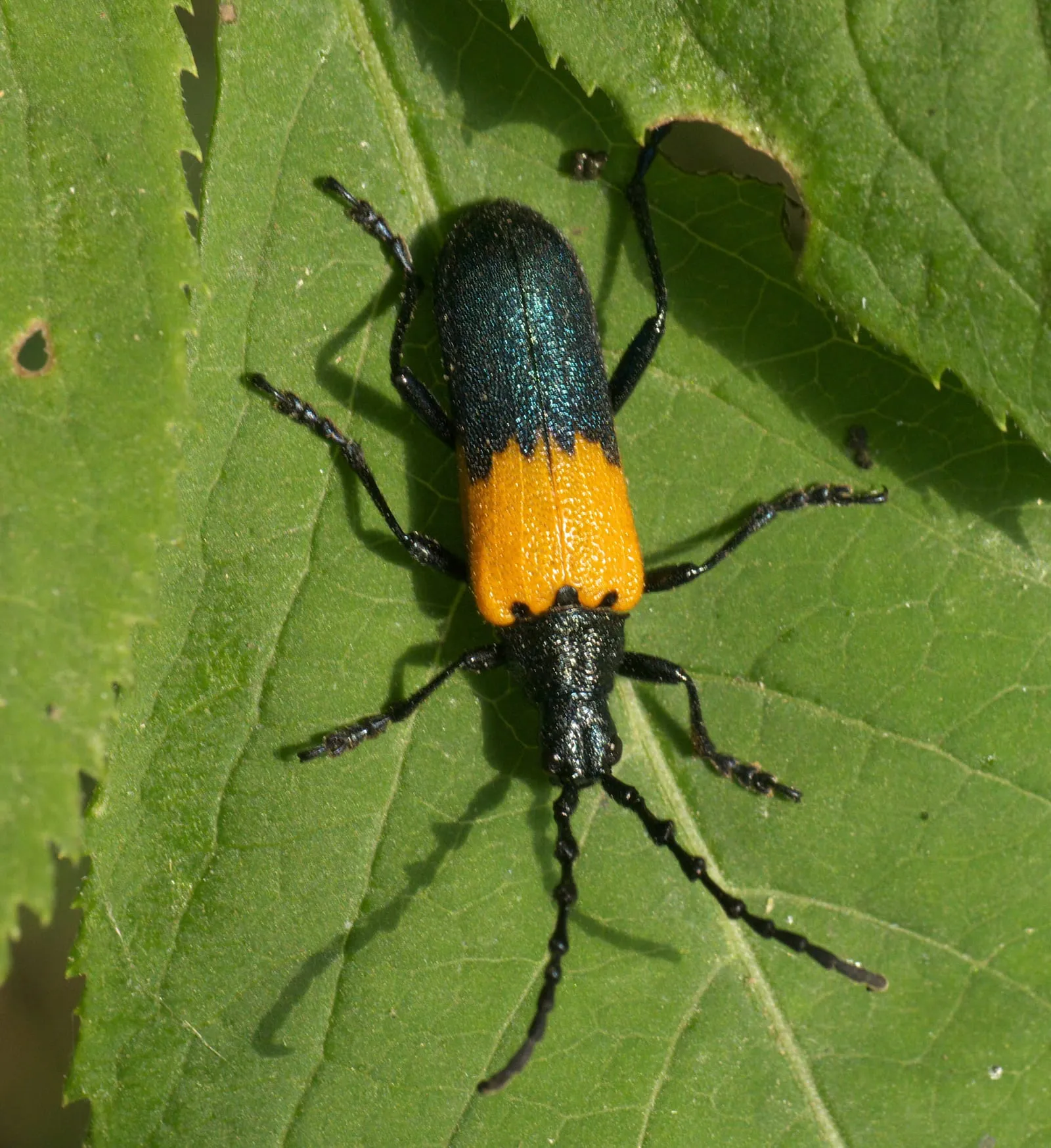
Elderberry borer (Desmocerus palliatus) is a native long-horned beetle in the family Cerambycidae. Adults are conspicuous, with red-orange and black patterning, and appear on elderberry flower clusters from late spring through midsummer. Despite their striking look, adults cause minimal direct harm. The damage comes from larvae.
After mating, females deposit eggs at or near the soil line on elderberry canes. Larvae hatch and bore into the base of canes and roots, where they feed and overwinter. The larval stage spans one to two years, during which the tunneling weakens canes from the inside. Infestation often becomes visible in summer when affected canes wilt despite adequate soil moisture. Cutting suspect canes open reveals the characteristic larval galleries and frass.
Established elderberry plantings typically tolerate moderate borer pressure. The shrubs' vigorous root systems sustain significant larval activity without plant death, which argues for a restrained management response in most cases.
The most effective and least disruptive control is annual renewal pruning. Elderberry naturally benefits from removing canes older than three years; this same practice eliminates the older wood where larvae concentrate. Cut out and destroy (not compost) any canes with visible galleries or soft, frass-filled pith. Removing old canes in late winter, before adults emerge in spring, interrupts the cycle without any pesticide input.
Chemical controls are rarely justified. Spray timing is difficult, since larvae are protected inside the wood for most of their development. Prioritizing plant vigor through consistent fertility and moisture management reduces susceptibility more reliably than reactive spray programs.
Signs to watch for
- ▸ Wilting canes during summer
- ▸ Larval tunnels visible when canes are cut
- ▸ Adult beetles (red-and-black) on flower clusters
IPM controls
- ✓ Annual renewal pruning of older canes
- ✓ Remove and destroy infested wood
- ✓ Tolerate light pressure (rarely kills established plantings)
- ✓ Healthy plant vigor reduces susceptibility
Affected crops
Image: "Desmocerus palliatus P1080239a", by xpda, via Wikimedia Commons, licensed under CC-BY Source.

Related