Pest
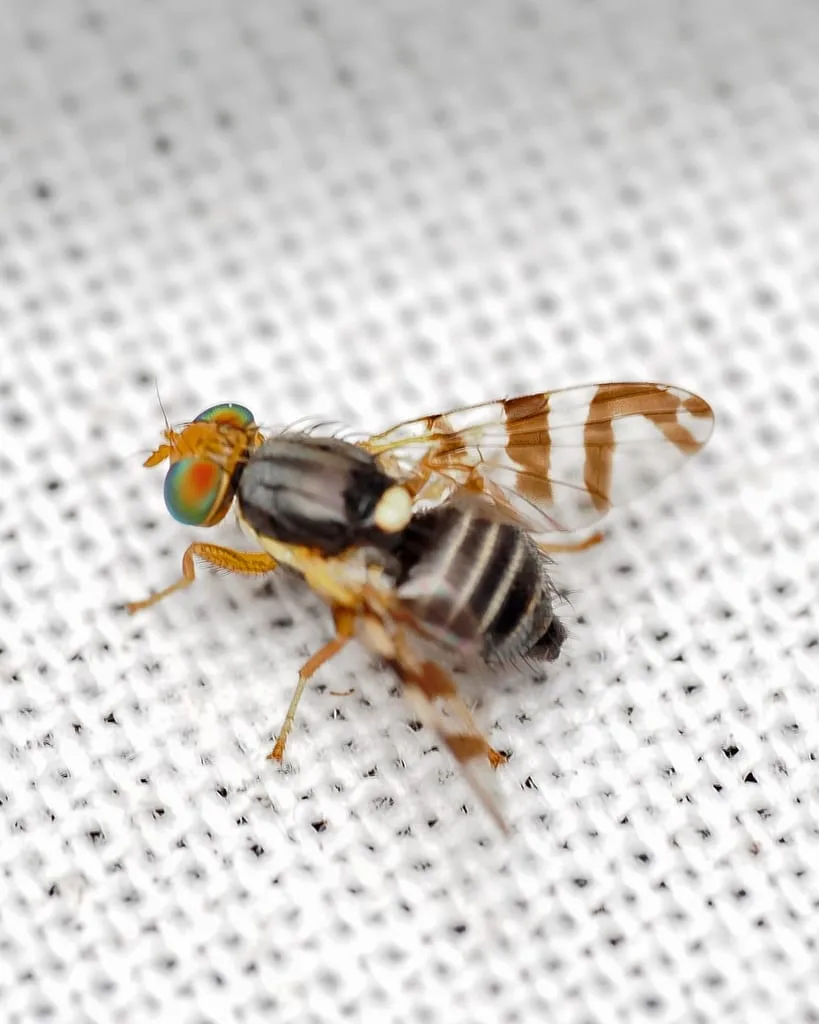
Cherry Fruit Fly
Rhagoletis cingulata
Native fly whose larvae develop in ripening cherries, the primary fresh-market quality concern.
- Scientific name
- Rhagoletis cingulata
- Hosts
- 2
- Identification signs
- 3
- Controls
- 4
Biology and lifecycle
Cherry fruit fly (Rhagoletis cingulata) is a native North American fly whose damage goes undetected until harvest, making monitoring and timing the core of any management approach.
Adults emerge from overwintering pupae in the soil starting in late May through mid-June in most growing regions, though timing shifts by 10 to 14 days depending on elevation and latitude. Emergence coincides roughly with the color change in ripening cherries. Females feed on leaf surface microorganisms for 7 to 10 days before they are reproductively mature, then begin laying single eggs just beneath the fruit skin. Each female can deposit 100 or more eggs over her lifespan. Larvae hatch within a few days and feed through the flesh toward the pit, completing development in roughly 2 to 3 weeks before dropping to the soil to pupate.
The practical control window is narrow: from first adult catch on a yellow sticky trap through the period before fruit reaches the color stage that attracts egg-laying. Acting after eggs are laid accomplishes little, since larvae inside the fruit are shielded from surface-applied treatments.
For low-spray and IPM programs, yellow sticky traps (ideally baited with ammonium acetate lure) are the starting point. Traps placed at the orchard perimeter facing potential wild cherry sources catch the first adults before they move into the planting. Kaolin clay applied as a barrier before first catch can reduce fruit punctures without chemical residues. Spinosad-based formulations, applied at first trap catch and repeated on label intervals, are effective and compatible with most beneficial insects. Broad-spectrum organophosphates and pyrethroids provide stronger knockdown but carry more collateral impact on natural enemy populations; they are most justified under high trap counts or in commercial settings where cosmetic damage thresholds are strict.
Signs to watch for
- ▸ Small puncture wounds on cherries
- ▸ Larvae visible when fruit is cut
- ▸ Fruit collapse near harvest
IPM controls
- ✓ Yellow sticky traps for monitoring
- ✓ Targeted spray at first catch
- ✓ Prompt removal of fallen fruit
- ✓ Reduce wild cherry hosts near orchard
Affected crops
Image: "Eastern Cherry Fruit Fly", by Roger Rittmaster, via iNaturalist, licensed under CC-BY Source.
Related