Pest
Strawberry Root Weevil
Otiorhynchus ovatus
Beetle whose larvae feed on strawberry roots and crowns, weakening or killing plants over time.
- Scientific name
- Otiorhynchus ovatus
- Hosts
- 2
- Identification signs
- 3
- Controls
- 4
Biology and lifecycle
Otiorhynchus ovatus completes one generation per year, overwintering as partially grown larvae in the soil around host-plant roots. Adults emerge in late spring through early summer, typically May through July depending on location, and feed nocturnally on leaf margins, leaving the characteristic notching that is often the first visible sign of an infestation. This adult feeding is cosmetically noticeable but rarely the primary concern.
The serious damage comes from larvae. North American populations are parthenogenetic (no males), so every adult lays eggs. Egg-laying begins in late June and runs through August, with eggs deposited in the soil near plant crowns. Eggs hatch in two to three weeks, and newly hatched larvae feed on root hairs before progressing to larger roots and crowns as they develop through fall and winter. By the time temperatures drop, larvae are large enough to girdle or sever crowns outright. This explains why the most obvious symptom, wilting and stunting, often appears in early spring well before adult activity resumes.
The most cost-effective control window is late summer to early fall, when larvae are small, near the soil surface, and most vulnerable. Beneficial nematodes (Steinernema carpocapsae or Heterorhabditis bacteriophora) applied to moist soil while temperatures remain above roughly 10 to 15°C can provide meaningful suppression, though consistent soil moisture is required for nematode survival and movement. Pitfall traps placed during adult emergence help confirm population levels and sharpen timing for nematode releases. Crop rotation away from weevil-host plants, which include many Rosaceous species and common ornamentals, reduces soil populations over several seasons. Replacing strawberry plantings on a 3-year cycle is a practical long-term measure; established beds accumulate weevil pressure steadily and rarely recover without intervention.
Signs to watch for
- ▸ Notched leaf margins from adult feeding
- ▸ Wilting and stunting from root damage
- ▸ Larvae visible at crowns when plants are pulled
IPM controls
- ✓ Beneficial nematodes (Steinernema or Heterorhabditis) applied to soil
- ✓ Crop rotation away from weevil-host plants
- ✓ Adult trapping with pitfall traps
- ✓ Replace plantings on a 3-year cycle
Affected crops
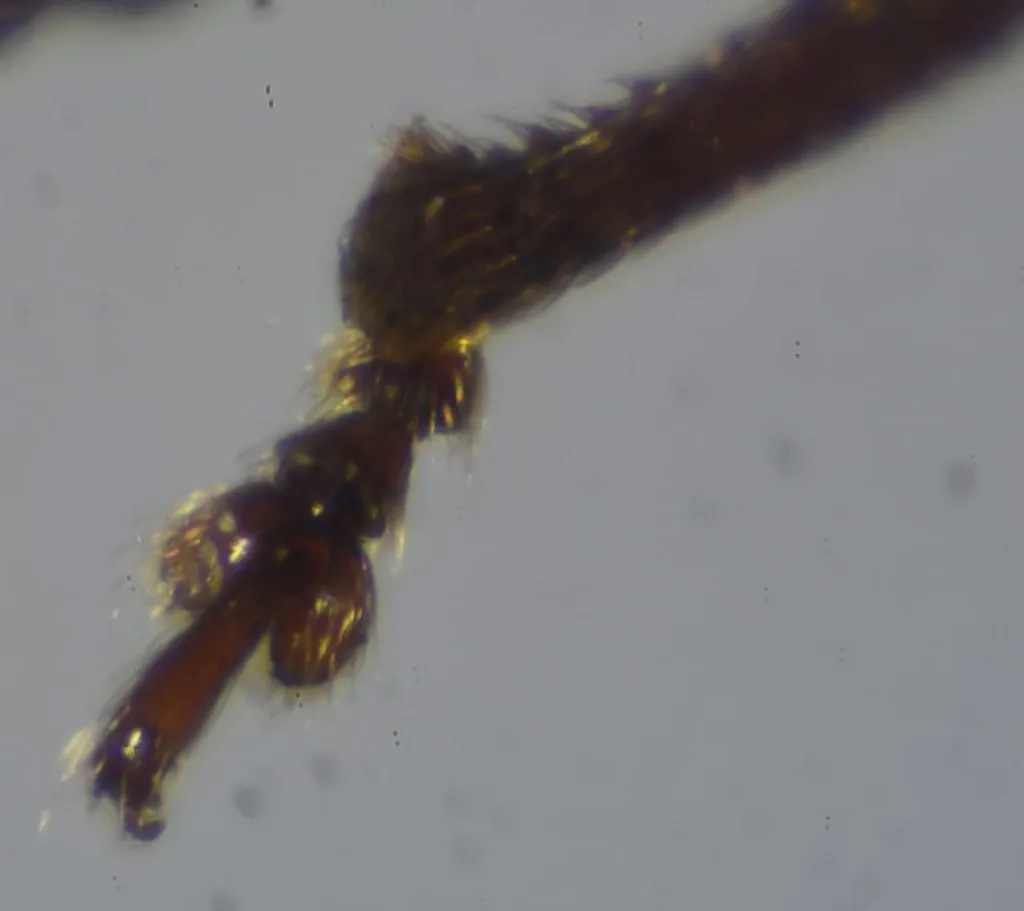
Image: "Strawberry Root Weevil", by zookanthos, via iNaturalist, licensed under CC-BY Source.
Related