Pest
Imported Cabbageworm
Pieris rapae
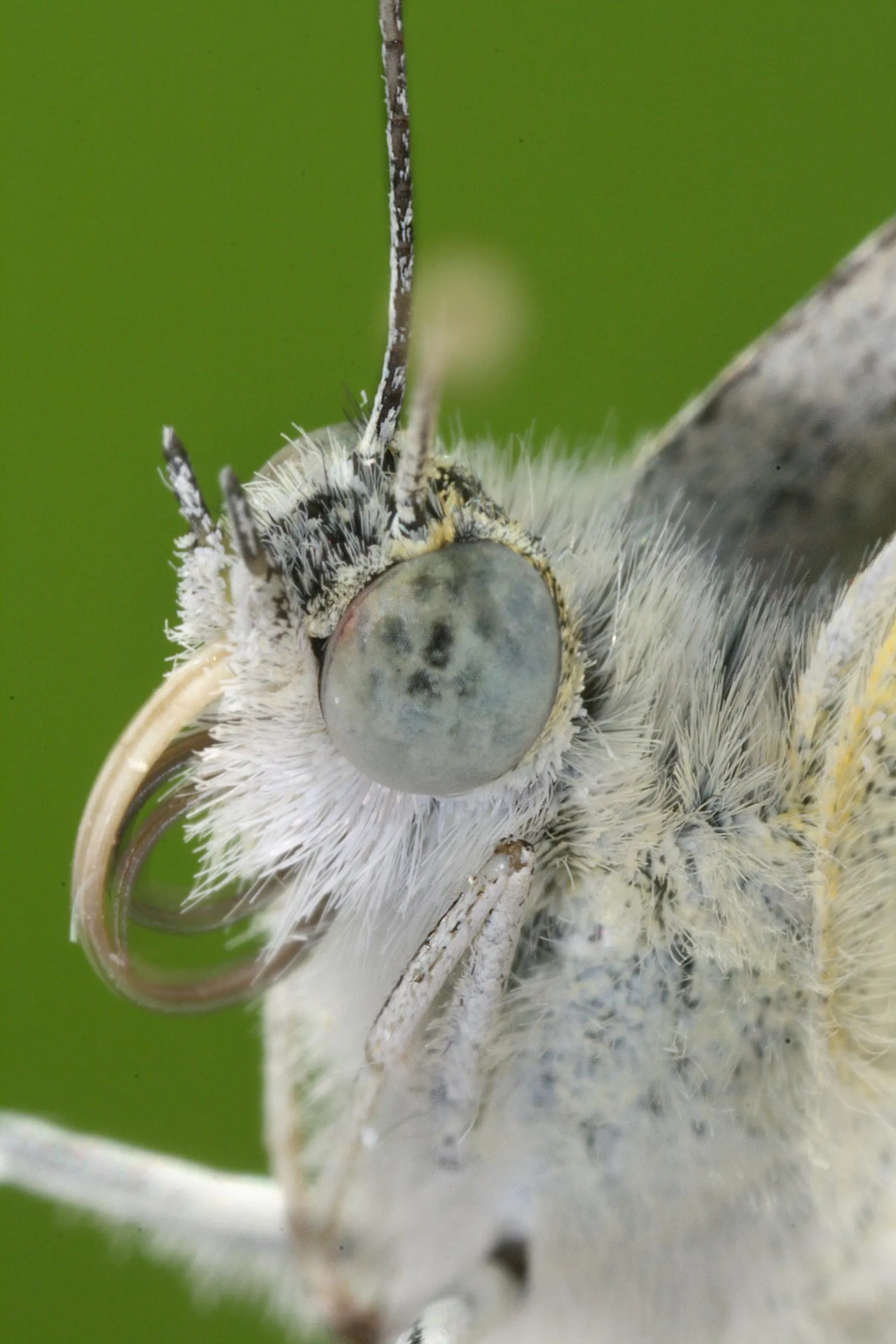
Velvety green caterpillars that chew large irregular holes in brassica leaves and bore into heads. Adults are the small white butterflies seen fluttering through the garden.
- Scientific name
- Pieris rapae
- Hosts
- 9
- Identification signs
- 4
- Controls
- 5
Biology and lifecycle
Imported cabbageworm (Pieris rapae) maintains pressure on brassica crops through most of the growing season because it completes multiple overlapping generations, often four to five in warmer zones. The pest has two distinct forms that matter to growers: the adult white butterfly, which is harmless but signals that egg-laying is underway, and the larval caterpillar, which does all the feeding damage.
Adults emerge in early spring as temperatures climb above 50°F, having overwintered as pupae in garden debris and soil. Females lay pale, bullet-shaped eggs singly on leaf undersides. Eggs hatch in 3 to 7 days depending on temperature, and larvae feed for 2 to 3 weeks before pupating. Populations typically peak in mid-spring and again in late summer, with the two surges often merging into continuous pressure in mild climates.
The larval stage is where the damage accumulates. Small caterpillars rasp surface tissue; larger ones chew through leaves entirely and bore into forming heads, contaminating them with green frass. Head crops, particularly cabbage, broccoli, and cauliflower, suffer the most economic loss when larvae penetrate the interior, since even a minor infestation renders a head unmarketable.
The most cost-effective control window is early, when larvae are small and surface-feeding. Floating row cover installed at transplant and left in place through harvest prevents egg-laying entirely without any spray inputs and is the strongest single intervention available. Where row cover is impractical, weekly applications of Bt (Bacillus thuringiensis var. kurstaki) timed to egg hatch are highly specific to caterpillars and spare beneficial insects. Established populations of parasitic braconid wasps in the genus Cotesia can provide meaningful suppression in gardens with low insecticide pressure.
Signs to watch for
- ▸ Large irregular holes in foliage
- ▸ Green frass between leaves and in cabbage heads
- ▸ Velvety light-green caterpillars with a faint yellow stripe
- ▸ White butterflies hovering over plants
IPM controls
- ✓ Floating row cover from transplant through harvest
- ✓ Bt (Bacillus thuringiensis) applied weekly during peak flight
- ✓ Hand-pick caterpillars and crush eggs
- ✓ Encourage parasitic braconid wasps (Cotesia)
- ✓ Trap crops with collards or mustard at field edges
Affected crops
Image: "Pieris rapae closer Richard Bartz", by Richard Bartz , Munich aka Makro Freak, via Wikimedia Commons, licensed under CC-BY Source.

Related