Pest
Codling Moth
Cydia pomonella
The most damaging pest of apple worldwide. Larvae tunnel into developing fruit, ruining the crop.
- Scientific name
- Cydia pomonella
- Hosts
- 4
- Identification signs
- 3
- Controls
- 5
Biology and lifecycle
Codling moth (Cydia pomonella) overwinters as a mature larva tucked in a silken cocoon beneath loose bark, in ground debris, or in harvest bins left near the orchard. Adults emerge in spring when cumulative heat units reach roughly 250 degree-days above a 50°F (10°C) base, which typically aligns with petal fall in apple. First-generation flight peaks a few weeks after bloom and can extend for six or more weeks, complicating spray timing.
Damage is done entirely by larvae. Within hours of hatching, young caterpillars bore directly into developing fruitlets, often entering at the calyx or a lenticel. Once inside, control options are essentially zero. The entry hole seals over, leaving frass and a soft brown spot as the only surface evidence of a larva tunneling toward the core. By harvest, affected fruit is unmarketable and a reservoir for next-season populations.
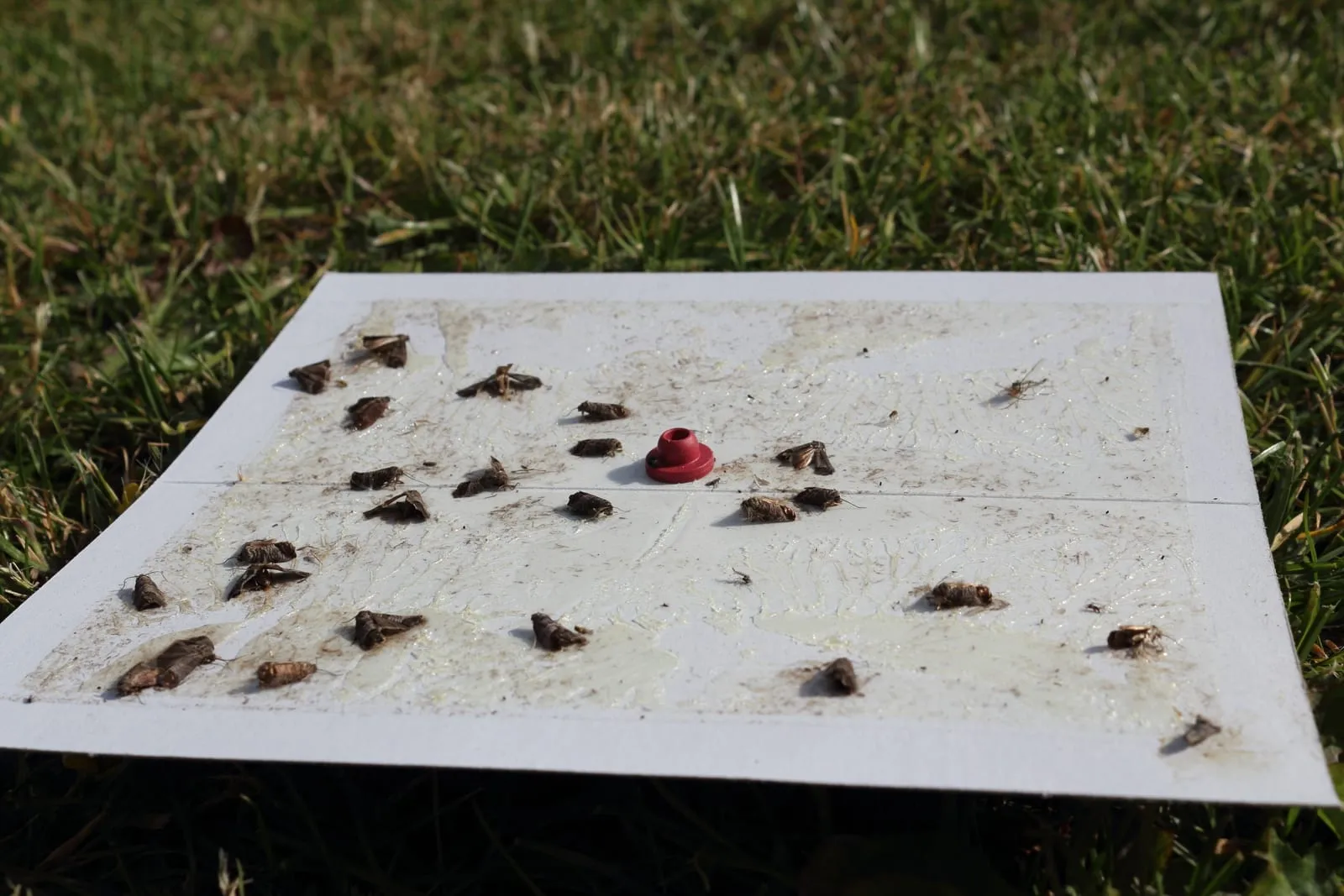
The practical control window is narrow: eggs on the surface, and newly hatched larvae before they enter fruit. Pheromone traps establish a biofix date, and degree-day tracking from that date targets spray or other intervention precisely at egg hatch. In cooler zones (5 and 6), one generation per year is common. Zone 7 and warmer regions regularly see two full generations, and partial third generations occur in the Southeast and Pacific Coast valleys, requiring extended vigilance through midsummer.
IPM-compatible options include granulosis virus (CpGV) formulations timed to egg hatch, kaolin clay applied before first adult flight, and mating disruption dispensers installed before biofix in blocks of two or more acres. Broad-spectrum insecticides remain effective but carry secondary pest risks by disrupting beneficial insect populations.
Signs to watch for
- ▸ Frass at fruit entry holes
- ▸ Soft brown spots on fruit
- ▸ Larval tunnels through core
IPM controls
- ✓ Pheromone traps for monitoring
- ✓ Mating disruption
- ✓ Kaolin clay sprays during flight
- ✓ Bagging individual fruit
- ✓ Granulosis virus targeted spray
Affected crops
Image: "Cydia pomonella trap 2012-06-05", by Slaunger, via Wikimedia Commons, licensed under CC-BY Source.

Related