Pest
Rabbit Damage
Sylvilagus and Lepus species
Cottontails and jackrabbits strip bark from young fruit trees in winter and graze tender garden vegetables year-round, especially seedlings.
- Scientific name
- Sylvilagus and Lepus species
- Hosts
- 22
- Identification signs
- 4
- Controls
- 5
Biology and lifecycle
Cottontail rabbits (Sylvilagus floridanus and related species) and jackrabbits (Lepus species) cause two distinct damage patterns depending on season. In late fall through early spring, when green forage is scarce, they gnaw the bark of young fruit trees at trunk height, typically 12 to 18 inches above the soil or snow surface. This girdling cuts off the phloem layer that moves sugars down from the canopy, and a fully girdled trunk kills the tree above the wound within a single growing season. Smooth, angled cut marks at consistent height distinguish rabbit damage from deer (rough, torn bark) and voles (damage at or below the soil line).
In the growing season, rabbits clip tender seedlings cleanly at a 45-degree angle and graze low-growing vegetables, with lettuce, spinach, peas, beans, and strawberries drawing the heaviest pressure. Populations spike in spring and cycle roughly every two to three years in most regions, so damage intensity varies year to year.
The most cost-effective control window is before damage occurs. Hardware-cloth trunk guards (1/4-inch mesh, 18 to 24 inches tall) installed in fall protect young fruit trees through the vulnerable dormant season and can be reused for years. Chicken-wire perimeter fencing, buried 6 inches at the base to prevent tunneling and standing 2 feet above grade, excludes rabbits from vegetable beds reliably at low cost. Repellent products (Plantskydd, dried blood, predator urine) offer a backup layer but require reapplication after rain and are less dependable than physical barriers. Reducing brush piles and tall-grass cover within 30 to 50 feet of plantings lowers local rabbit habitat and reduces pressure without any chemical inputs.
Signs to watch for
- ▸ Smooth-cut bark damage at angled rabbit-height (12-18 inches above snow)
- ▸ Cleanly clipped seedling stems at 45-degree angle
- ▸ Round droppings near feeding sites
- ▸ Tracks with two large rear footprints in front of two small front prints
IPM controls
- ✓ 1/4-inch hardware-cloth trunk guards (same setup as vole protection but taller, 18-24 inches)
- ✓ Chicken-wire fencing around vegetable beds (2 ft high, buried 6 inches deep)
- ✓ Repellents (Plantskydd, dried blood, predator urine) refreshed after rain
- ✓ Reduce brush piles and tall-grass cover near garden beds
- ✓ Encourage natural predators (foxes, hawks, owls)
Affected crops
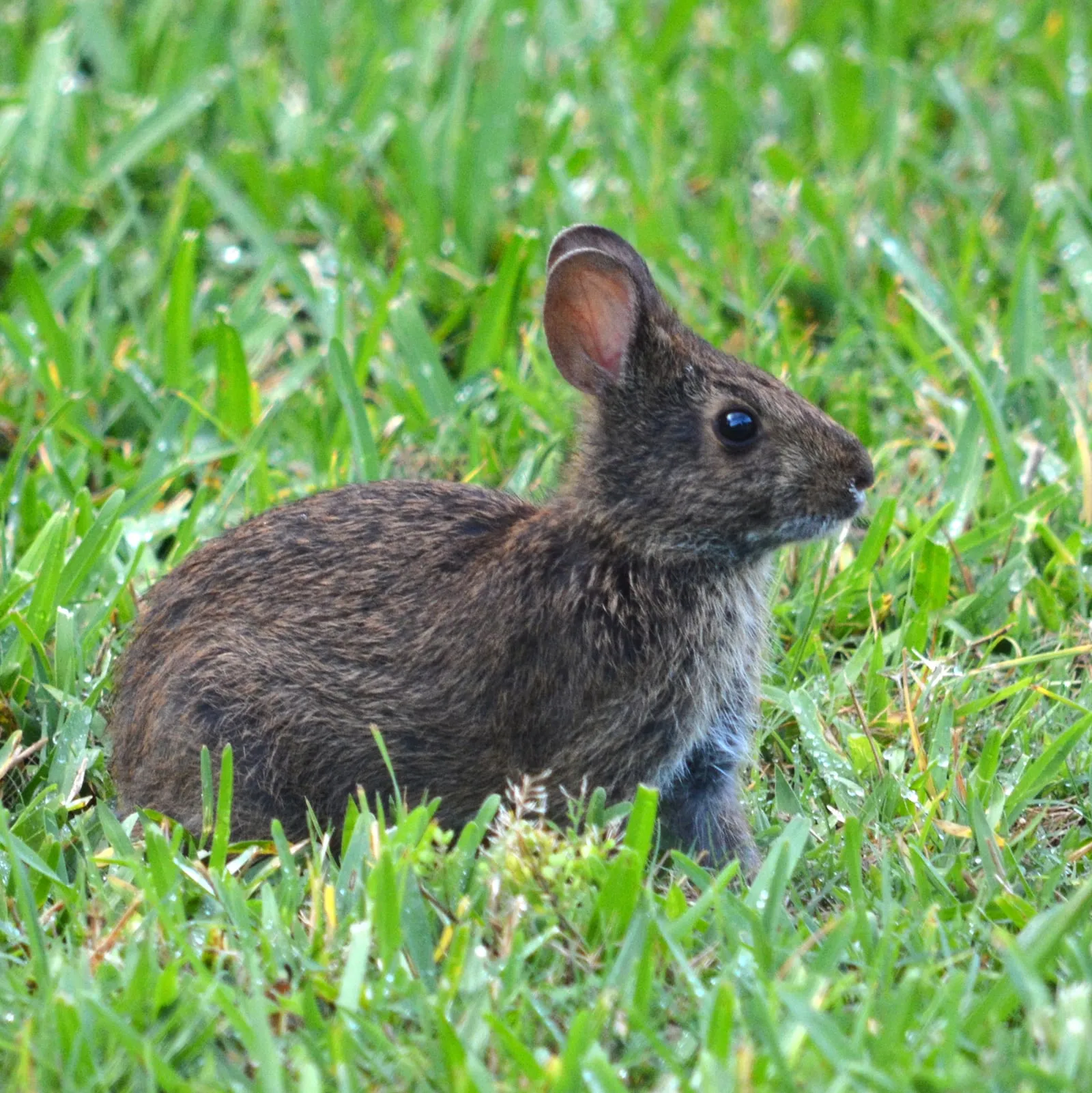
Image: "Sylvilagus palustris in Sanibel Island 02", by Jeanloujustine, via Wikimedia Commons, licensed under CC-BY Source.

Related