Pest
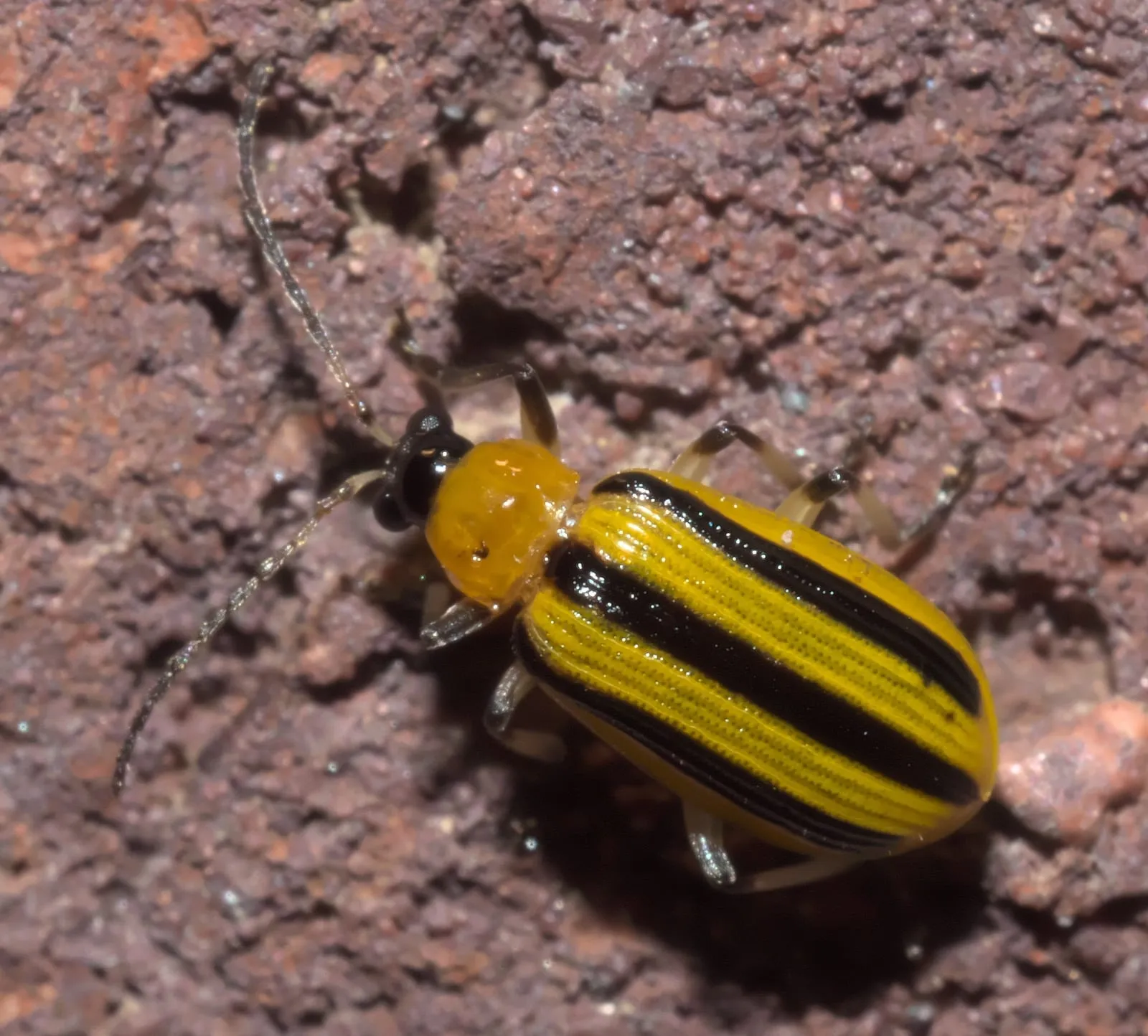
Cucumber Beetle
Acalymma vittatum (striped) and Diabrotica undecimpunctata (spotted)
Yellow-and-black beetles that feed on cucurbit foliage and flowers, but the bigger problem is that they vector bacterial wilt and cucumber mosaic virus.
- Scientific name
- Acalymma vittatum (striped) and Diabrotica undecimpunctata (spotted)
- Hosts
- 6
- Identification signs
- 3
- Controls
- 5
Biology and lifecycle
Striped cucumber beetle (Acalymma vittatum) and spotted cucumber beetle (Diabrotica undecimpunctata) are the two species most gardeners encounter, and both cause damage through the same two pathways: direct feeding and disease transmission. The direct feeding is manageable. The disease transmission is not.
Adults overwinter in soil and debris at field edges, emerging in spring as temperatures climb. The first flush of adults is the most dangerous because they carry Erwinia tracheiphila, the bacterium behind bacterial wilt, in their gut throughout winter. A single infected beetle feeding on a seedling is enough to introduce wilt. From there, the bacterium colonizes the xylem and blocks water movement; the characteristic symptom is one runner wilting suddenly while the rest of the plant looks fine. By the time that sign appears, the plant is lost.
Cucumber mosaic virus is a secondary concern, spread the same way.
The most cost-effective control window is the period from transplant until female flowers open. Floating row cover during this window physically excludes beetles and eliminates the disease vector threat without any spray. Timing matters: remove the cover when pollination is needed, but by then the first emergence peak has usually passed and populations are lower.
For fields or gardens too large for row cover, Blue Hubbard squash planted on the perimeter acts as a highly attractive trap crop. Beetles concentrate on it; that's where intervention is focused. Kaolin clay (Surround) applied to foliage before beetle arrival reduces feeding but requires thorough coverage and reapplication after rain. Yellow sticky traps help track population timing, which informs whether a chemical spray is warranted at all. Pyrethroid sprays are effective but should be timed to avoid open flowers to protect pollinators.
Signs to watch for
- ▸ Beetles on foliage and inside open flowers
- ▸ Notched or skeletonized leaves on young plants
- ▸ Sudden wilting of one runner at a time (bacterial wilt symptom)
IPM controls
- ✓ Floating row cover from transplant until first female flowers (then remove for pollination)
- ✓ Yellow sticky traps on plant stakes
- ✓ Kaolin clay (Surround) on foliage
- ✓ Trap-crop with Blue Hubbard squash on the field edges, treat heavily there
- ✓ Plant after first peak emergence to dodge the population spike
Affected crops
Image: "Acalymma vittatum P1310371a", by xpda, via Wikimedia Commons, licensed under CC-BY Source.

Related