Pest
Blueberry Maggot
Rhagoletis mendax
Native fruit fly whose larvae develop inside blueberries, the primary fresh-market quality concern in eastern North America.
- Scientific name
- Rhagoletis mendax
- Hosts
- 3
- Identification signs
- 3
- Controls
- 4
Biology and lifecycle
Blueberry maggot (Rhagoletis mendax) is a native fruit fly found throughout eastern North America, where it represents the primary insect threat to fresh-market blueberry quality. Adults emerge from overwintering pupae in the soil beginning in late June, with emergence continuing through August depending on location and season. Peak emergence typically coincides with the onset of blueberry ripening, which is the window of highest risk.
Female flies lay eggs just beneath the skin of ripening berries. Larvae hatch within a few days and feed inside the fruit for two to three weeks, destroying the flesh. Infested berries may look normal from the outside until soft spots develop near harvest or the fruit drops prematurely. The larval stage causes all direct fruit damage; controlling adults before egg-laying is the only effective intervention window.
Monitoring with yellow sticky traps baited with ammonium acetate or protein hydrolysate is the foundation of an IPM program for this pest. Traps placed at canopy height before anticipated adult emergence, checked weekly, identify the first catch and trigger the decision calendar. Many commercial operations use per-trap thresholds (commonly 1 to 5 flies per trap per week) rather than calendar-based spray schedules. Non-spray controls reduce pressure substantially: prompt harvest shortens the window ripe fruit is exposed to egg-laying females, cold storage slows larval development in any berries carrying eggs, and removing dropped fruit reduces the pupal population in the soil for the following season. When spray is warranted, materials applied at or shortly after first adult catch (spinosad and kaolin clay are commonly used IPM-compatible options; conventional insecticides are available per local extension guidance) provide the strongest return on timing precision.
Signs to watch for
- ▸ Soft spots on ripe berries
- ▸ Larvae found when berries are crushed
- ▸ Premature fruit drop
IPM controls
- ✓ Yellow sticky traps with ammonium baits for monitoring
- ✓ Targeted spray at first catch
- ✓ Prompt harvest and cold storage
- ✓ Sanitation of dropped fruit
Affected crops
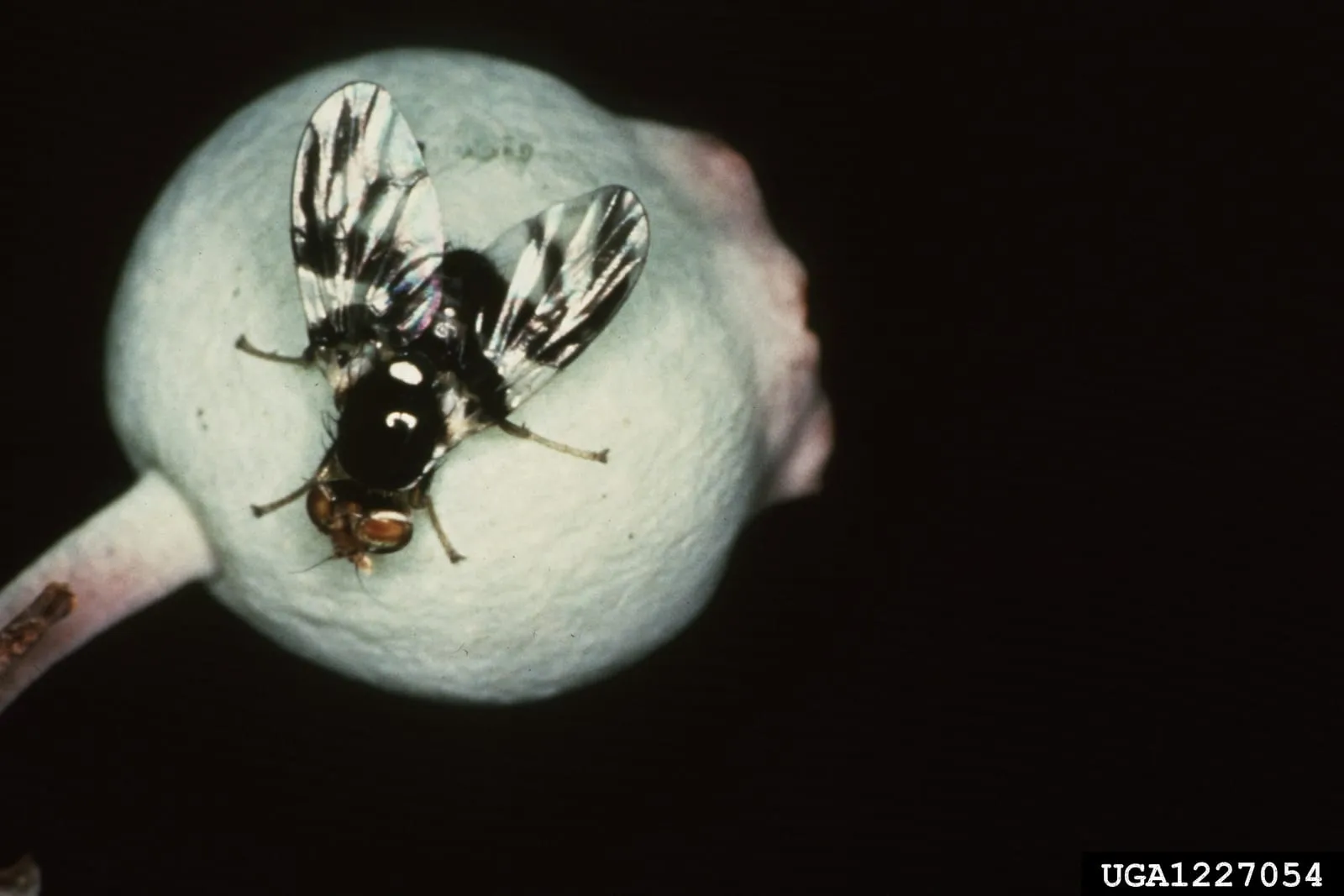
Image: "Blueberry maggot", by Jerry A. Payne, USDA Agricultural Research Service, via Wikimedia Commons, licensed under CC-BY Source.

Related