Pest
Citrus Leafminer
Phyllocnistis citrella
Tiny moth larvae tunnel inside young citrus leaves, leaving silvery serpentine trails. Damage is mostly cosmetic on mature trees but stunts new plantings.
- Scientific name
- Phyllocnistis citrella
- Hosts
- 4
- Identification signs
- 3
- Controls
- 4
Biology and lifecycle
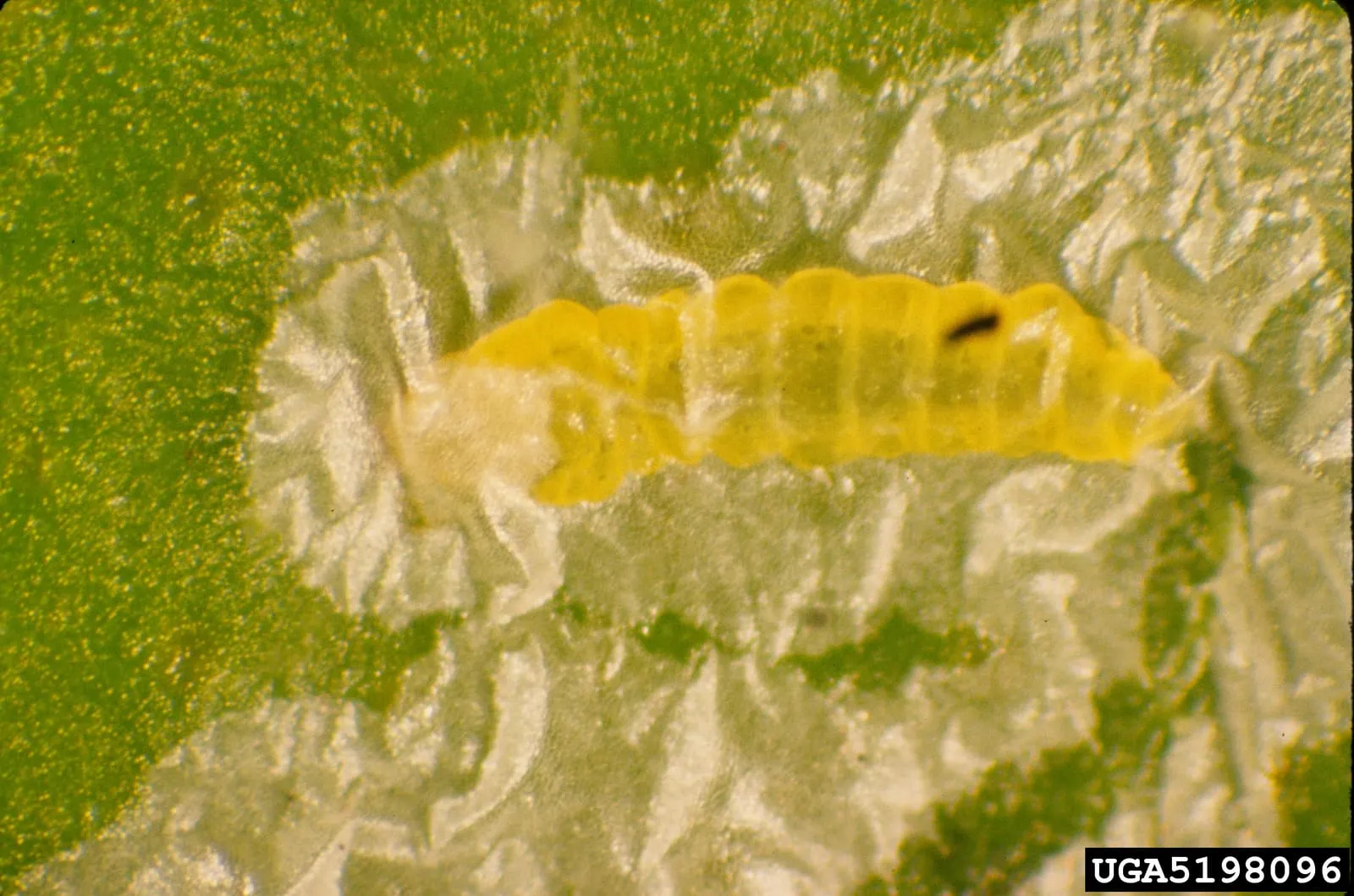
Citrus leafminer (Phyllocnistis citrella) is a small moth native to Asia, now established across subtropical and tropical citrus-growing regions of the United States, including Florida, California, and Gulf Coast states. Adults lay eggs exclusively on newly emerging, tender leaf tissue. Eggs hatch into minute larvae that tunnel just beneath the leaf surface, feeding on epidermal cells and leaving the characteristic silvery, serpentine mines that give the pest its name.
Larvae develop through several instars before pupating at the curled leaf margin. Development rate is temperature-dependent; warm summer conditions accelerate generations, and populations can cycle continuously as long as fresh flush growth is present. Activity peaks during flush pushes that follow nitrogen applications or seasonal rains. In subtropical zones, late summer and early fall often bring the heaviest pressure as trees push a second or third flush.
The critical intervention window is the early flush stage, before new leaves begin to harden. Once leaf tissue matures, larvae are shielded inside the mine and contact sprays have little impact. IPM-friendly approaches prioritize cultural controls first: limiting nitrogen applications to one or two timed fertilizations per year encourages all new growth to emerge in a single consolidated flush, giving leafminer populations fewer opportunities to find soft tissue. Yellow sticky traps help track adult flight peaks and signal when to watch new growth closely.
If treatment is warranted, spinosad or horticultural oil applied at the start of flush emergence and repeated weekly while leaves remain soft is effective and minimally disruptive to beneficial insects. On established trees, damage is largely cosmetic and rarely justifies a spray program. Control matters most for nursery stock and trees in their first several years, where repeated leaf distortion can meaningfully slow canopy development.
Signs to watch for
- ▸ silvery serpentine trails inside leaves
- ▸ curled or distorted new growth
- ▸ shoot dieback on young trees
IPM controls
- ✓ Limit nitrogen flushes to one or two per year so all flushes harden together
- ✓ Yellow sticky traps to monitor flight peaks
- ✓ Spinosad or horticultural oil sprayed at start of new flush, repeated weekly while flush is soft
- ✓ Tolerate damage on mature trees; control is mainly for nursery and young plantings
Affected crops
Image: "Phyllocnistis citrella larva", by Jeffrey W. Lotz, via Wikimedia Commons, licensed under CC-BY Source.

Related