Pest
Slug and Snail
Multiple species (Gastropoda)
Soft-bodied mollusks that feed on tender leaves and seedlings primarily at night. Damaging especially in wet years and shaded mulched gardens.
- Scientific name
- Multiple species (Gastropoda)
- Hosts
- 7
- Identification signs
- 4
- Controls
- 5
Biology and lifecycle
Slugs and snails (class Gastropoda, multiple species) are soft-bodied mollusks that thrive wherever soil stays moist and daytime shelter is available. They are not insects; they have no larval stage and no distinct season of dormancy in mild climates. Instead, populations build through spring and fall when temperatures sit between 50 and 70 degrees F and rainfall or irrigation keeps the soil surface damp. During hot, dry summers they retreat underground or under debris and activity drops sharply.
Feeding happens almost entirely at night or on overcast days. Slugs rasp through leaf tissue with a file-like tongue called a radula, leaving irregular holes with smooth, non-serrated edges and a characteristic silvery slime trail. Damage is heaviest on lower leaves and on seedlings close to the soil, which are often consumed entirely before the problem is noticed. Young transplants of lettuce, spinach, Swiss chard, and strawberry crowns are the highest-risk targets in the first two to three weeks after planting.
The most cost-effective control window is early in the season, before populations have reproduced through their cohort of spring egg clusters. Eggs are laid in soil or under organic debris in loose clusters of 20 to 100; they hatch in two to four weeks depending on soil temperature.
Iron phosphate baits (sold as Sluggo and similar formulations) are the IPM-preferred intervention: effective at low application rates, non-toxic to mammals and birds, and compatible with organic programs. Physical barriers such as copper tape and reduced mulch depth address habitat rather than the pest directly, which is generally the more durable long-term strategy.
Signs to watch for
- ▸ Irregular holes in leaves with smooth edges
- ▸ Silvery slime trails on plants and soil
- ▸ Seedlings missing entirely
- ▸ Damage especially heavy on lower foliage
IPM controls
- ✓ Iron phosphate baits (Sluggo) safe around pets and wildlife
- ✓ Beer traps in shallow containers buried at soil level
- ✓ Copper barriers around raised beds
- ✓ Reduce daytime hiding spots: avoid heavy organic mulch on lettuce beds
- ✓ Hand-pick after dark with a flashlight
Affected crops
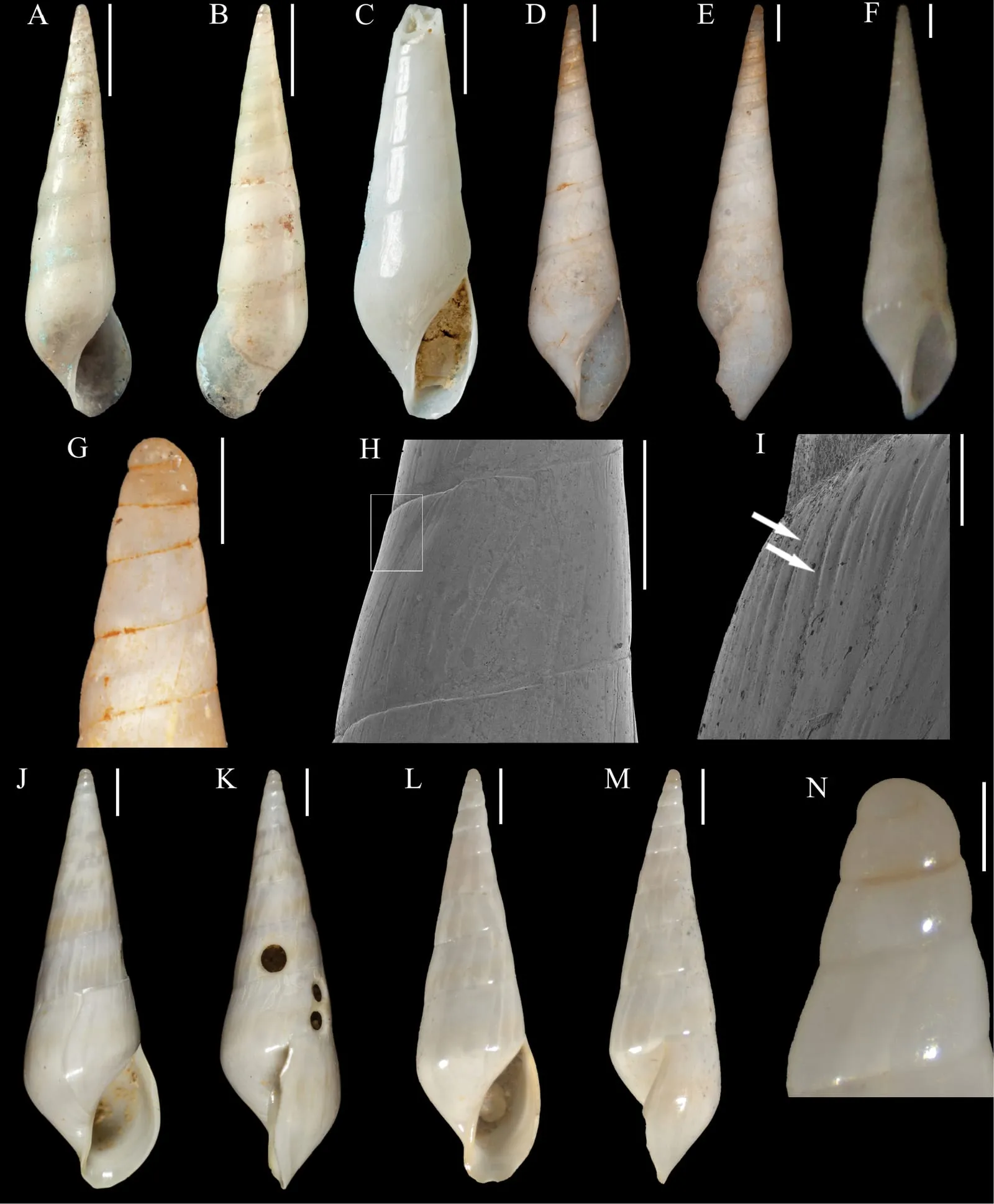
Image: "Eulimacrostoma (10.3897-zse.95.33880) Figure 3", by de Souza LS, Pimenta AD (2019) Eulimacrostoma gen. nov., a new genus of Eulimidae (Gastropoda, Caenogastropoda) with description of a new species and reevaluation of other western Atlantic species. Zoosystematics and Evolution 95(2): 403-415. https://doi.org/10.3897/zse.95.33880, via Wikimedia Commons, licensed under CC-BY Source.
_Figure_3.jpg)
Related