Pest
Onion Thrips
Thrips tabaci
Tiny slender insects that rasp leaf surfaces and suck plant juices. Most damaging on onion and garlic where they reduce bulb size and transmit Iris yellow spot virus.
- Scientific name
- Thrips tabaci
- Hosts
- 6
- Identification signs
- 4
- Controls
- 5
Biology and lifecycle
Thrips tabaci is a generalist insect pest measuring under 1.5 mm in length. Adults are pale yellow to brown; nymphs are whitish and wingless. The lifecycle from egg to adult runs roughly 13 to 25 days in warm weather (above 75°F), which allows multiple overlapping generations across a growing season. Eggs are inserted directly into leaf tissue, rendering them invisible and largely protected from contact sprays.
Feeding damage comes from both nymphs and adults rasping surface cells and extracting plant fluids, producing the characteristic silvery streaks. Nymphs concentrated in the innermost leaf folds cause the heaviest injury during bulb sizing, when sustained feeding directly reduces final bulb weight. Populations peak during hot, dry stretches from late spring through midsummer. A threshold of roughly one thrips per leaf is commonly referenced as an intervention trigger, though university extension programs in different regions may set different economic thresholds based on local crop value and pest pressure.
IPM-friendly options should come first. Consistent overhead irrigation during dry periods physically displaces thrips and makes foliage less hospitable to feeding. Reflective mulch disrupts adult orientation and can limit early-season colonization. Retaining natural enemy populations, particularly minute pirate bugs (Orius spp.) and predatory mites, provides meaningful suppression where beneficial insect habitat is preserved.
When populations exceed threshold, spinosad is a well-supported option: it targets thrips effectively and has a lower impact on beneficial insects than broad-spectrum organophosphates. Applications timed to morning, when thrips are most active on leaf surfaces, improve efficacy. Rotating modes of action matters here because pyrethroid resistance has been documented in T. tabaci populations with repeated exposure.
Signs to watch for
- ▸ Silvery-white streaks on leaves
- ▸ Tiny dark fecal spots on leaf surfaces
- ▸ Distorted twisted leaves in severe infestations
- ▸ Stunted bulb development
IPM controls
- ✓ Overhead irrigation reduces populations (thrips dislike wet conditions)
- ✓ Spinosad spray during peak feeding
- ✓ Encourage minute pirate bugs and predatory mites
- ✓ Reflective mulch for repelling adults
- ✓ Avoid excessive nitrogen which makes plants more attractive
Affected crops
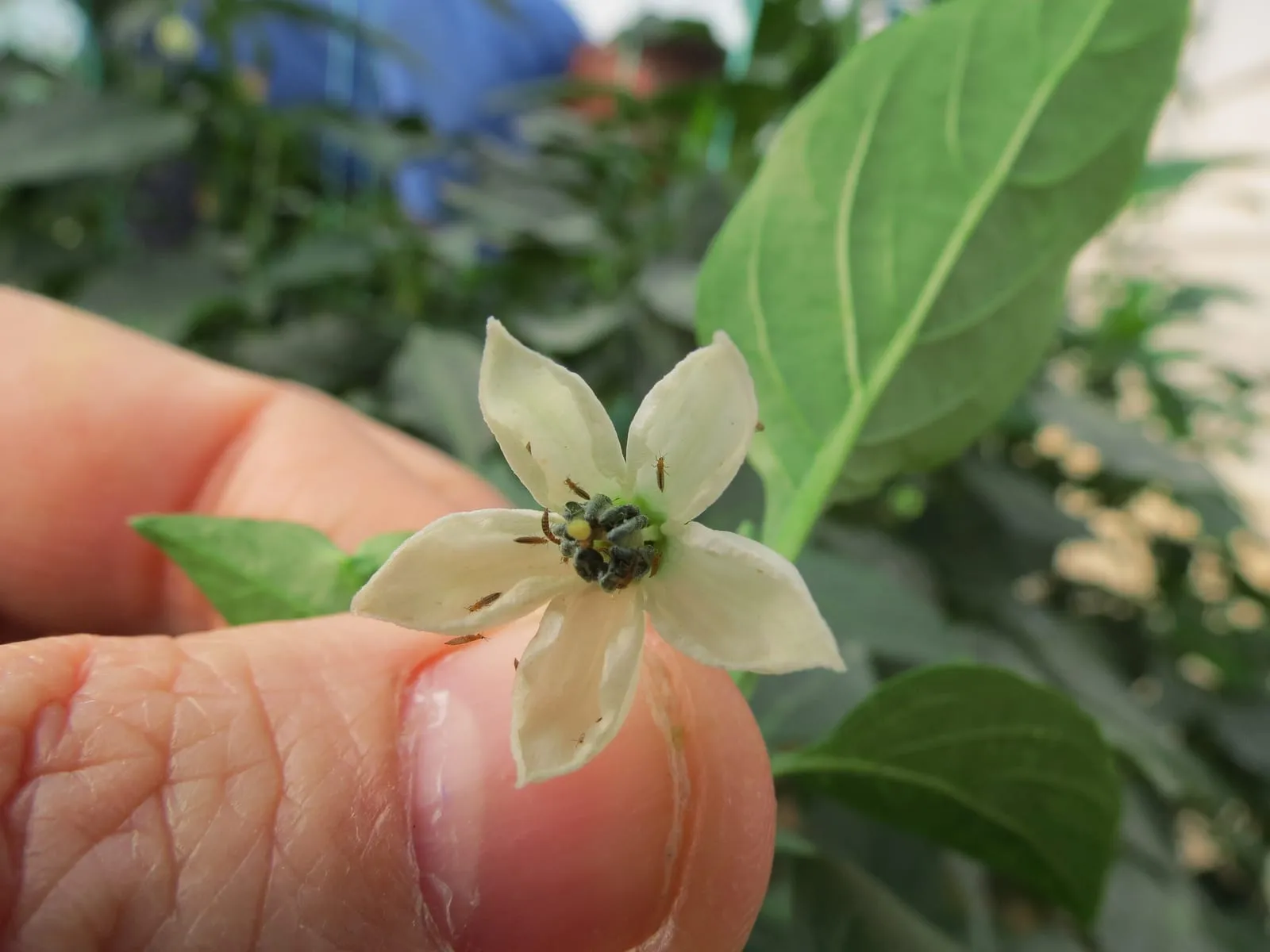
Image: "Thrips on pepper flower", by Metin GÜLEŞCİ, via Wikimedia Commons, licensed under CC-BY Source.

Related