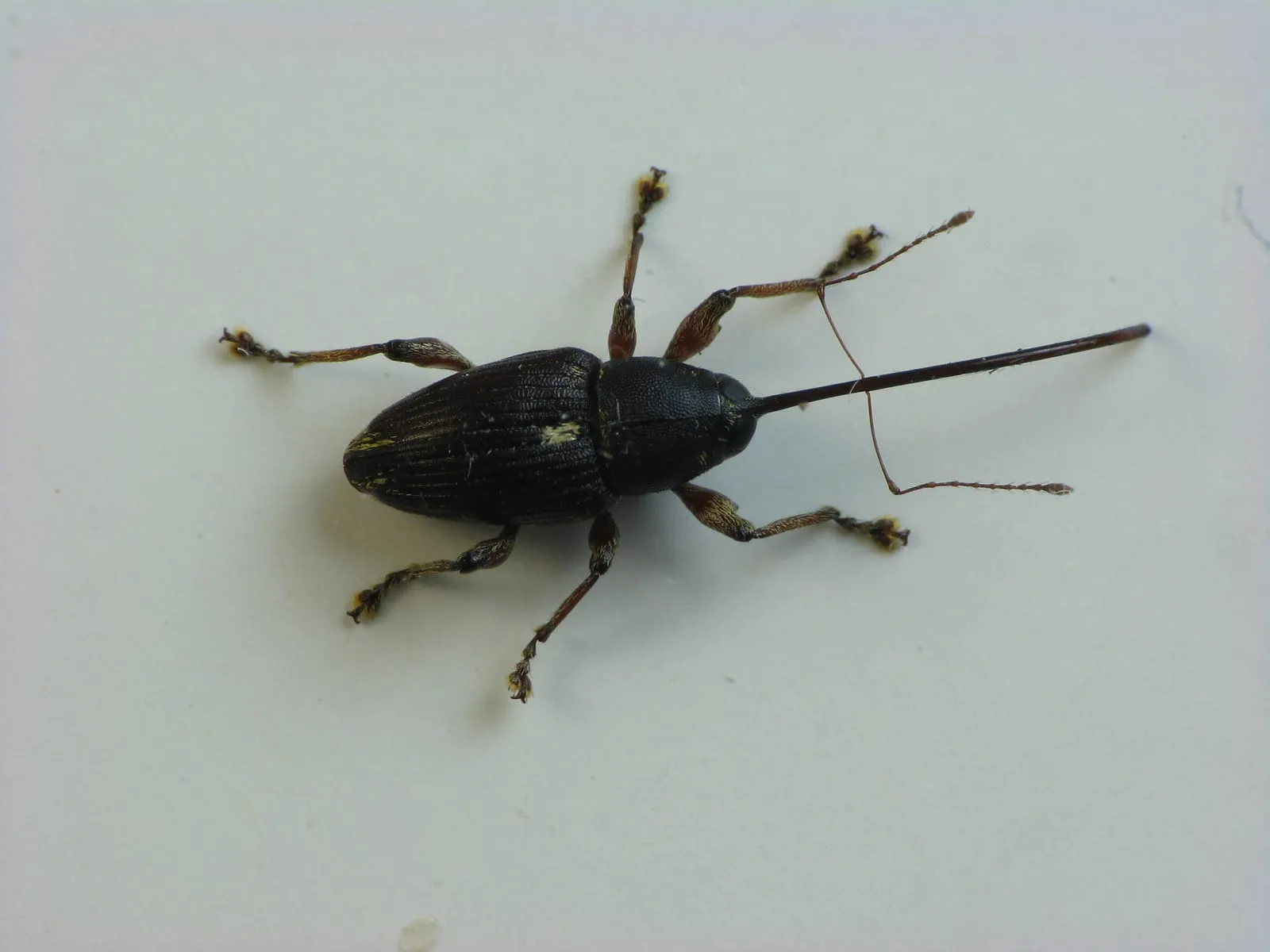
Pest
Chestnut Weevil
Curculio sayi and Curculio caryatrypes
Weevils whose larvae develop inside chestnut kernels, the leading cause of harvest loss in unmanaged plantings.
- Scientific name
- Curculio sayi and Curculio caryatrypes
- Hosts
- 1
- Identification signs
- 3
- Controls
- 4
Biology and lifecycle
Two weevil species share responsibility for chestnut kernel damage: Curculio sayi (lesser chestnut weevil) and Curculio caryatrypes (greater chestnut weevil). Adults overwinter in the soil as pupae and emerge in late summer, typically August into September, timed closely to the period when developing nuts become large enough to accept eggs. Females use their long curved rostrum to bore through the shell and deposit eggs directly into the kernel. Larvae feed inside the nut from late summer through fall, often consuming a substantial portion of the kernel before exit. C. sayi completes its life cycle in one year; C. caryatrypes may take two years underground before re-emerging, which complicates population management in blocks with established infestations.
The most cost-effective intervention window is the narrowest: the two to three weeks when adults are active above ground before eggs are laid. Chickens or guineas ranging under trees during this period can reduce adult numbers, and heavy organic mulch disruption at harvest time exposes pupae to predators and desiccation. Prompt harvest is essential. Nuts left on the ground allow late-emerging larvae to exit and burrow, replenishing next year's population.
For harvested nuts with suspected infestation, hot water treatment at 122°F for 20 minutes kills larvae without significant flavor loss if nuts are immediately cooled and refrigerated. This is the recommended non-chemical post-harvest step before storage or sale. Targeted insecticide applications at adult emergence are effective but require accurate local timing data, as emergence can shift by two weeks or more depending on soil temperature and latitude.
Signs to watch for
- ▸ Small entry holes in shells
- ▸ C-shaped white grubs visible when nuts are cracked
- ▸ Larvae emerging from harvested nuts during storage
IPM controls
- ✓ Hot water treatment of harvested nuts (122F for 20 minutes) to kill larvae
- ✓ Prompt harvest and refrigeration
- ✓ Heavy mulch and chickens to reduce overwintering pupae
- ✓ Targeted sprays at adult emergence (timing varies by region)
Affected crops
Image: "Curculio sayi dorsal", by Beatriz Moisset, via Wikimedia Commons, licensed under CC-BY Source.

Related