Pest
Tarnished Plant Bug
Lygus lineolaris
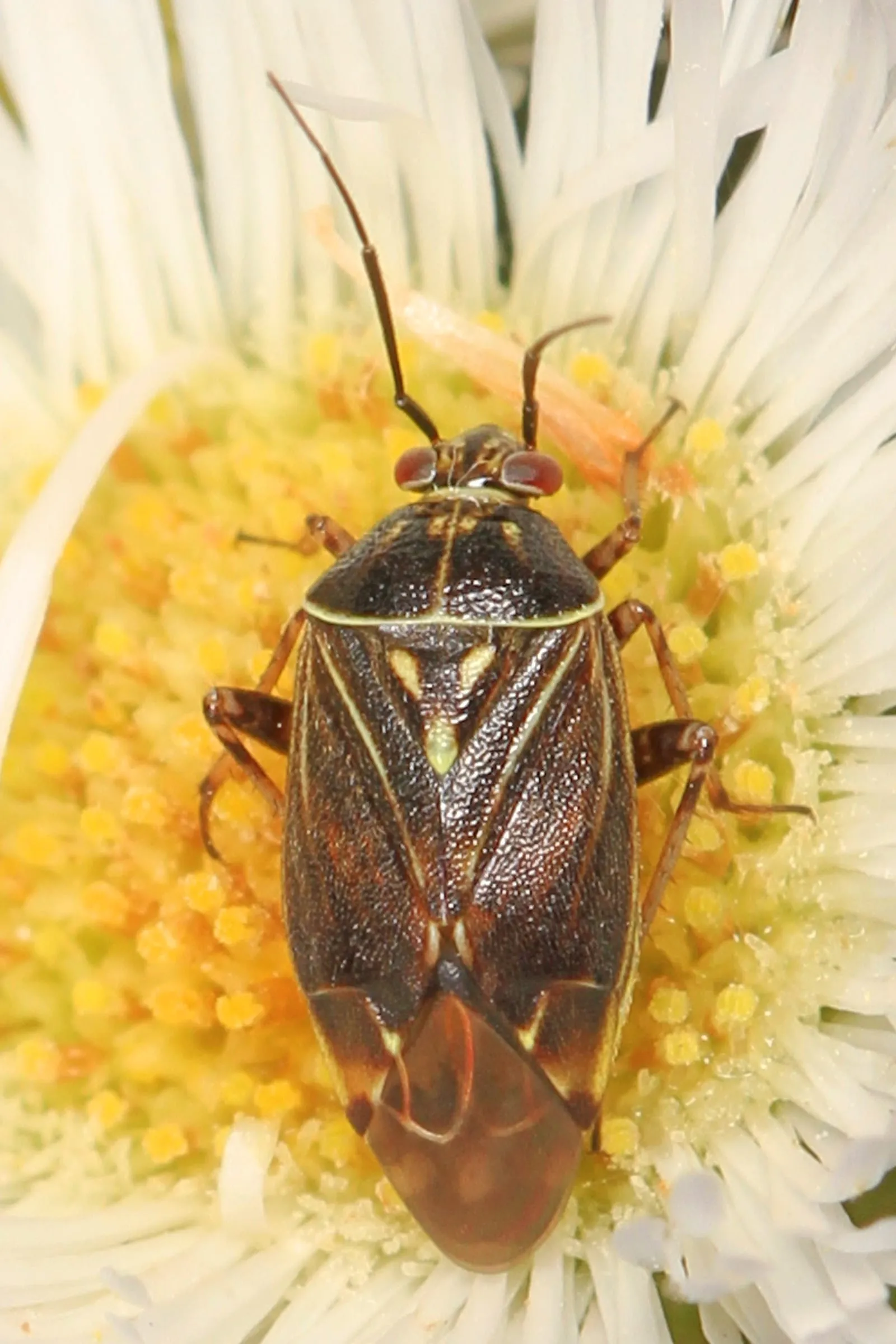
Mottled brown sucking bug that probes flower buds and developing fruit, causing 'cat-facing' deformities on tomato, peach, and strawberry. Wide host range and rapid generations.
- Scientific name
- Lygus lineolaris
- Hosts
- 12
- Identification signs
- 4
- Controls
- 5
Biology and lifecycle
Tarnished plant bug (Lygus lineolaris) overwinters as an adult in leaf litter and weedy field margins, becoming active when temperatures consistently exceed 50°F in early spring. Adults move first onto early-flowering weeds such as chickweed, dandelion, and wild mustard. As those weeds finish blooming, bugs migrate into adjacent strawberry, raspberry, apple, peach, and vegetable plantings, often arriving precisely when crops are at peak flower. That timing is not coincidental and is the key to managing the pest.
Nymphs cause most of the economic damage. They probe flower buds and very young developing fruit with piercing mouthparts, injecting saliva that disrupts cell differentiation. On strawberry and peach, the result is the familiar "cat-faced" deformity: sunken, corky tissue with misshapen lobes. On tomato and pepper, early-season feeding causes blossom drop and scarred fruit surfaces. On brambles, aborted buds reduce set across the cluster. At low population levels, damage on many crops is cosmetic rather than economically significant, which is relevant when setting action thresholds.
The most cost-effective control window is before and during bloom, when populations are still building and fruit is most susceptible. The practical first step is mowing weedy field borders before they flower, removing the staging habitat that fuels migration into crops. At field scale, alfalfa trap strips along edges intercept adults; mow those strips just before the primary crop blooms to avoid pushing a concentrated flush of bugs into the planting. Sweep-net monitoring against published thresholds for each crop should drive any insecticide decision. Broad-spectrum sprays during bloom carry pollinator risk and should be the last resort, not the default response.
Signs to watch for
- ▸ Distorted, dimpled, or 'cat-faced' fruit
- ▸ Aborted flower buds
- ▸ Small dark sunken spots on leaves and stems
- ▸ Mottled adults and small green nymphs on flower clusters
IPM controls
- ✓ Sweep-net monitoring for population thresholds
- ✓ Mow weedy borders before they bloom (Lygus migrates from flowering weeds onto crops)
- ✓ Trap crops with alfalfa strips along field edges (mow trap crop just before crop blooms)
- ✓ Targeted insecticide at high-pressure populations
- ✓ Tolerate light damage: cosmetic only on most crops
Affected crops
Image: "Tarnished Plant Bug - Lygus lineolaris, Natchez Trace, near Natchez, Mississippi", by Judy Gallagher, via Wikimedia Commons, licensed under CC-BY Source.

Related