Pest
Imported Currantworm
Nematus ribesii
Sawfly whose larvae can rapidly defoliate currant and gooseberry bushes, working from the inside of the bush outward.
- Scientific name
- Nematus ribesii
- Hosts
- 4
- Identification signs
- 3
- Controls
- 4
Biology and lifecycle
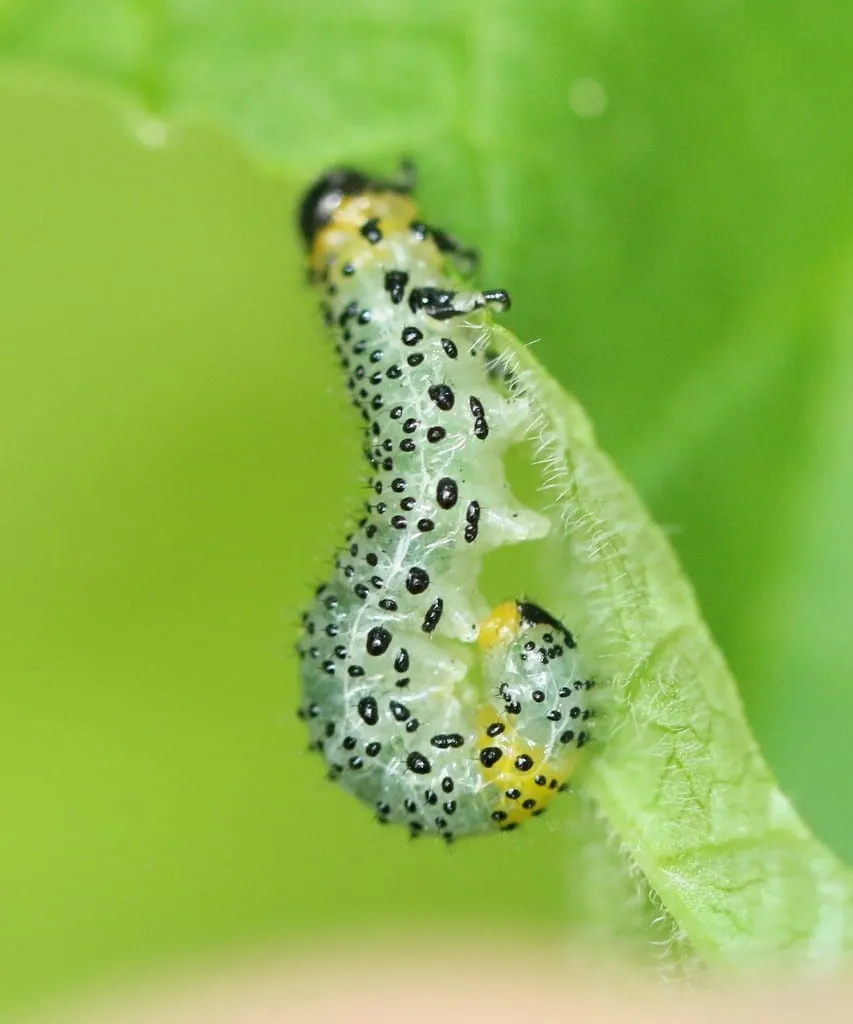
Imported currantworm (Nematus ribesii) is a sawfly, not a true caterpillar, though its larvae are convincingly caterpillar-like: pale green with black spots, up to about 20 mm at full size. Adults are small yellowish wasps that overwinter as pupae in the soil beneath host plants. Females emerge in spring as leaves unfurl on currants and gooseberries, laying rows of eggs along the undersides of lower interior leaves. Emergence timing shifts with latitude and season, but it reliably tracks bud break on host shrubs.
Young larvae skeletonize leaves near the base and center of the bush first, leaving main veins intact. This inside-out feeding pattern is a useful diagnostic: damage that starts deep in the canopy, rather than at leaf margins, points to imported currantworm rather than most other defoliators. Populations spread outward and upward quickly. A heavy first generation can strip a bush to bare stems in less than two weeks. Most populations complete two or three generations per season, with the first spring generation typically causing the most damage.
The most cost-effective control window is early, when larvae are small and still clustered on interior foliage. Weekly inspection during leaf-out, starting at bud break, gives enough lead time to act before populations explode. Hand-picking is practical on lightly infested plants caught at this stage. For moderate infestations, spinosad or insecticidal soap applied to leaf undersides, with particular attention to the lower bush interior, provides effective knockdown while minimizing impact on beneficial insects. Established, well-nourished bushes can generally absorb first-generation damage without measurable yield loss, so tolerating light pressure is a reasonable default before reaching for any spray.
Signs to watch for
- ▸ Skeletonized leaves starting at the bush interior
- ▸ Green caterpillar-like larvae on undersides of leaves
- ▸ Rapid defoliation in late spring
IPM controls
- ✓ Hand-pick larvae if caught early
- ✓ Spinosad or insecticidal soap for moderate infestations
- ✓ Inspect bushes weekly during leaf-out
- ✓ Tolerate first-generation damage on established bushes
Affected crops
Image: "Euura ribesii", by Barry Cottam, via iNaturalist, licensed under CC-BY Source.
Related