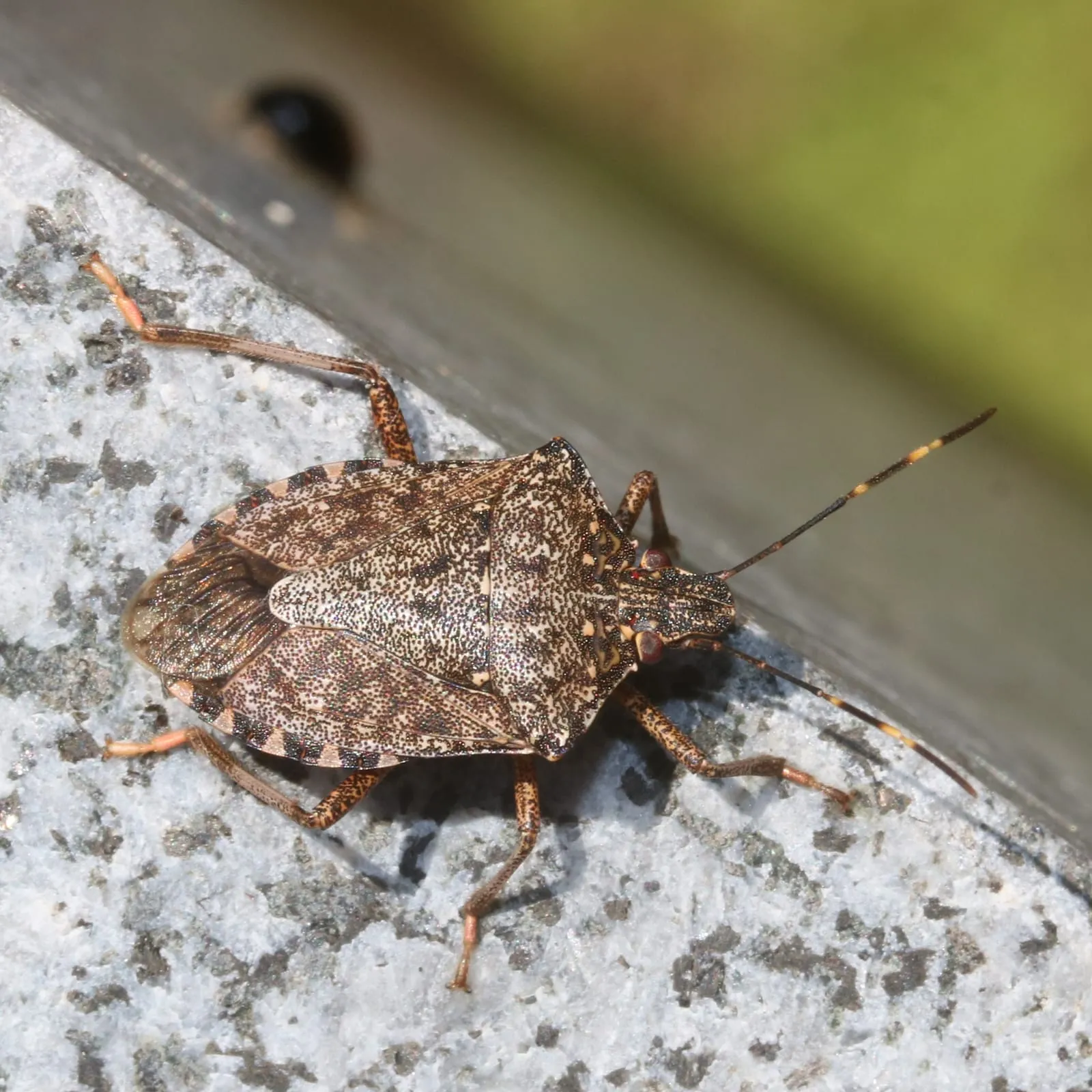
Pest
Brown Marmorated Stink Bug
Halyomorpha halys
Invasive stink bug from Asia that pierces fruit, causing corky tissue and surface dimpling.
- Scientific name
- Halyomorpha halys
- Hosts
- 3
- Identification signs
- 3
- Controls
- 4
Biology and lifecycle
Brown Marmorated Stink Bug (Halyomorpha halys) arrived in North America from East Asia in the mid-1990s and has since established in most US states. Adults overwinter in sheltered sites, including inside buildings, and emerge in spring once temperatures reliably exceed 50°F, typically April through May depending on region. After feeding and mating in early summer, females lay clusters of light green eggs on leaf undersides from June through August. Nymphs pass through five instars over six to eight weeks before reaching adulthood.
The most damaging feeding window is late summer and early fall, when populations peak and bugs aggregate on ripening fruit. Both nymphs and adults pierce fruit skin with their stylet mouthparts, injecting saliva that causes the characteristic corky tissue and surface dimpling documented in peach, apple, and pear. Damage can render fruit unmarketable even when visible infestation levels appear low, because injury from early-season punctures may not be apparent until harvest.
For growers prioritizing IPM, the most cost-effective entry point is early-season monitoring combined with perimeter management. Pheromone-baited traps placed at orchard edges from early June onward provide a reliable picture of population pressure before significant damage begins. Trap crops planted along the orchard border can intercept bugs moving in from surrounding habitat, reducing the need for broad canopy coverage. When monitoring indicates threshold populations, targeted border sprays during the initial influx period are generally more effective and less disruptive than full-orchard applications. Reducing overwintering populations by sealing entry points in nearby structures provides meaningful pressure reduction going into the following season, particularly on smaller properties where buildings sit close to the orchard.
Signs to watch for
- ▸ Cat-facing or dimpling on fruit surface
- ▸ Corky tissue beneath puncture sites
- ▸ Adult bugs aggregating on trees
IPM controls
- ✓ Trap crops near orchard edges
- ✓ Targeted border sprays during influx
- ✓ Fall building exclusion to reduce spring populations
- ✓ Pheromone-baited monitoring traps
Affected crops
Image: "Halyomorpha halys s3", by Alpsdake, via Wikimedia Commons, licensed under CC-BY Source.

Related