Pest
Asparagus Beetle
Crioceris asparagi
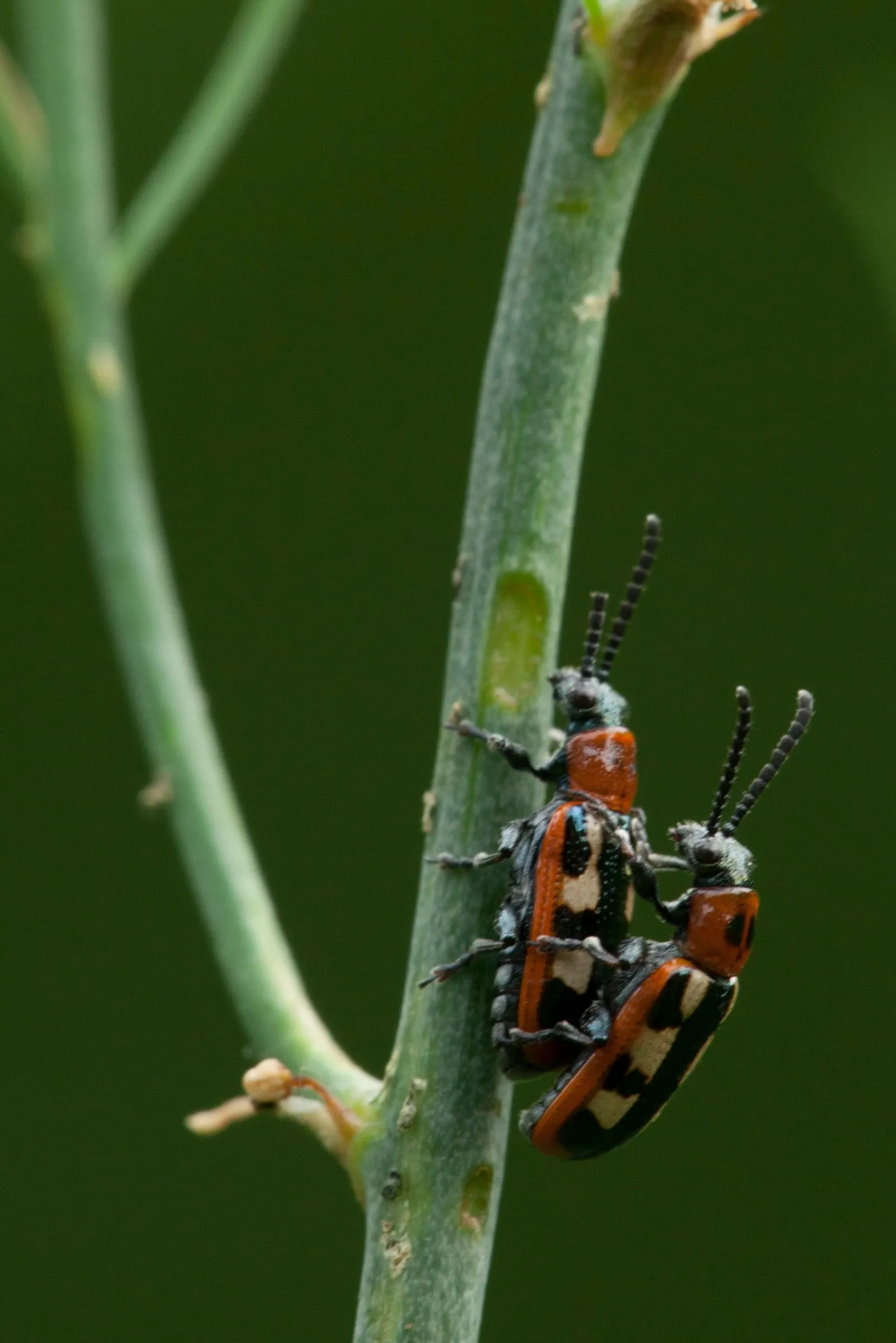
Blue-black beetle with cream spots that feeds on asparagus spears in spring and ferns in summer. Defoliates ferns reducing crown energy storage for next year.
- Scientific name
- Crioceris asparagi
- Hosts
- 1
- Identification signs
- 4
- Controls
- 5
Biology and lifecycle
Asparagus beetle (Crioceris asparagi) overwinters as an adult in garden debris and soil near asparagus beds. Adults emerge in spring as soil temperatures climb, typically coinciding with spear emergence, which makes the opening weeks of harvest season the critical observation window. The blue-black beetle with cream-colored spots is easy to spot against pale spear tissue.
Adults lay dark, elongated eggs glued vertically to spear surfaces. Eggs hatch within days depending on temperature; larvae feed on spears and developing fern tissue before dropping to the soil to pupate. A second adult generation emerges by midsummer to attack the ferns, extending pressure through late summer.
The fern phase is where the most lasting damage occurs. Larvae and adults feeding on fern fronds through summer strip foliage, reducing the photosynthetic output the crown needs to store carbohydrates for next year's spear production. Consecutive years of heavy defoliation weaken crowns measurably, reducing both yield and spear diameter over time.
The most cost-effective control window is the spring harvest period. Cutting and removing all harvestable spears every 2 to 3 days eliminates eggs before they hatch, with no inputs required. Hand-picking adults during peak spring emergence adds minimal time and meaningfully reduces egg-laying pressure. Parasitic Tetrastichus wasps naturally attack asparagus beetle larvae and are worth preserving by avoiding broad-spectrum sprays during their active season. Late-fall removal of fern material denies overwintering adults shelter, suppressing the following spring population. Spinosad-based sprays are a targeted option when populations are high enough that mechanical controls fall short; apply in early morning when pollinators are less active.
Signs to watch for
- ▸ Dark eggs glued vertically to spear surfaces
- ▸ Beetles and larvae on spears and ferns
- ▸ Browning damaged spear tips
- ▸ Defoliated fern stalks in summer
IPM controls
- ✓ Hand-pick adults at peak emergence in spring
- ✓ Cut and remove all spears every 2-3 days during harvest (removes eggs)
- ✓ Encourage parasitic Tetrastichus wasps
- ✓ Late-fall sanitation: cut and remove ferns to deny overwintering shelter
- ✓ Targeted spinosad spray at peak infestation
Affected crops
Image: "Aspergehaantje; crioceris asparagi; common asparagus beetle 03", by Luc hoogenstein, via Wikimedia Commons, licensed under CC-BY Source.

Related