Pest
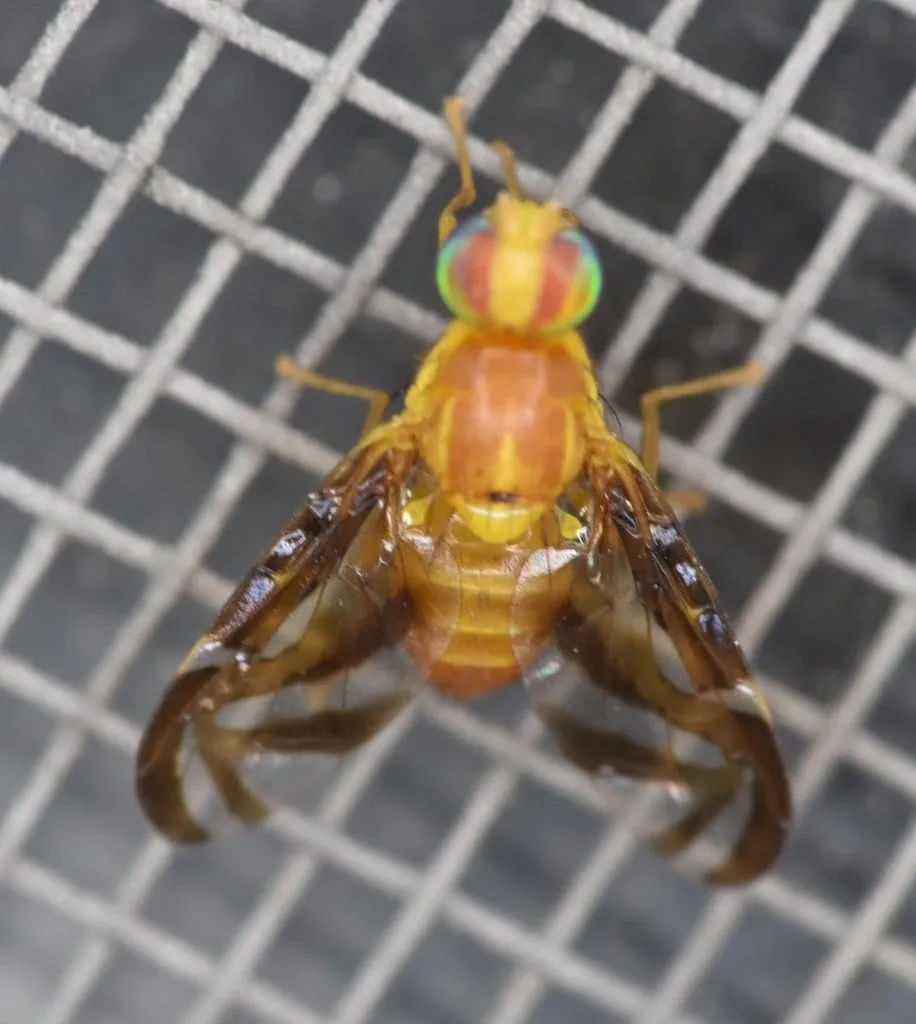
Caribbean Fruit Fly
Anastrepha suspensa
Tropical fruit fly endemic to Florida and the Caribbean. Less aggressive on commercial citrus than Mediterranean fruit fly, but devastating on guava, carambola, and other thin-skinned tropicals.
- Scientific name
- Anastrepha suspensa
- Hosts
- 5
- Identification signs
- 3
- Controls
- 4
Biology and lifecycle
The Caribbean fruit fly (Anastrepha suspensa) is a tephritid fly native to the Caribbean basin and established throughout Florida. Adults are roughly 8 mm long, amber-colored with distinctive wing banding. Females use a sharp ovipositor to puncture ripening fruit and deposit eggs just below the skin. Eggs hatch in 1 to 3 days; larvae then tunnel through the flesh for 10 to 14 days before dropping to the soil to pupate. The full egg-to-adult cycle runs 30 to 45 days under warm conditions, allowing multiple overlapping generations through summer and fall.
All damage is done by larvae. By the time the puncture wound, internal tunneling, or premature drop is visible, the fruit is already compromised. The critical control window is before oviposition, which means acting before fruit reaches color break. At that point, adults are present but eggs have not yet been laid.
For home growers, physical exclusion is the most reliable IPM strategy. Bagging clusters of developing fruit in paper or fine mesh bags before any color change blocks oviposition entirely, with no pesticide inputs required. Sanitation is equally important: fallen fruit left on the ground provides a pupation reservoir that sustains local populations across the season. Collecting and destroying dropped fruit every two to three days measurably reduces adult emergence over time.
Where populations are high and bagging is impractical, spinosad-based bait sprays (where labeled for the target crop) attract and kill adult females before egg-laying. Sticky traps baited with ammonium acetate or torula yeast support population monitoring and help time any spray applications accurately. Spray programs are most effective at early fruit set; applications after color break offer limited benefit because oviposition is already underway.
Signs to watch for
- ▸ small puncture wounds on fruit
- ▸ internal larvae tunneling
- ▸ premature drop
IPM controls
- ✓ Bag developing fruit before color break
- ✓ Sanitation: pick up and destroy fallen fruit promptly
- ✓ Sticky traps with ammonium-based attractants
- ✓ Spinosad bait sprays where labeled
Affected crops
Image: "Anastrepha suspensa", by Mike Ostrowski, via iNaturalist, licensed under CC-BY Source.
Related