Pest
Plum Curculio
Conotrachelus nenuphar
Native weevil that lays eggs in young stone and pome fruit, causing characteristic crescent-shaped scars.
- Scientific name
- Conotrachelus nenuphar
- Hosts
- 8
- Identification signs
- 3
- Controls
- 4
Biology and lifecycle
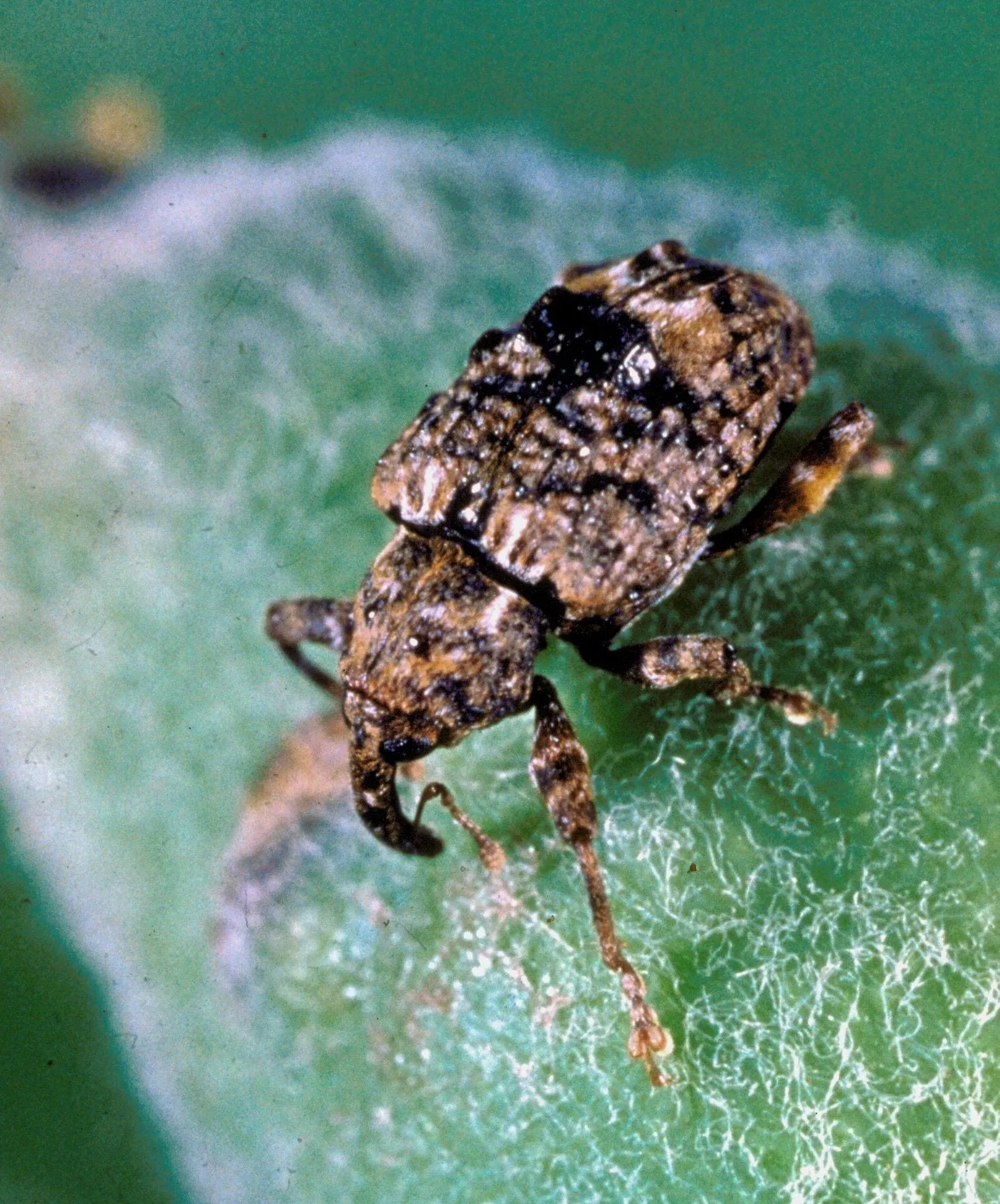
Plum curculio (Conotrachelus nenuphar) is a native North American weevil that overwinters as an adult in leaf litter and woody debris along orchard edges. Adults become active when temperatures consistently reach around 60°F, emerging shortly before or at petal fall on apples and stone fruits. The overlap between adult emergence and the presence of small, developing fruit defines the critical management window.
After moving into the canopy, females lay eggs in young fruit and cut a crescent-shaped scar around each egg to relieve pressure from the expanding tissue. That scar is the reliable field diagnostic. Larvae hatch and feed inside the fruit for two to three weeks before exiting to pupate in the soil. In most regions east of the Rockies, the species is single-brooded; a damaging second generation is uncommon north of zone 7.
The bulk of economic damage concentrates in the three to four weeks starting at petal fall, while fruit is still small and thin-skinned. Eggs deposited later in the season have lower viability as tissue hardens.
For low-spray and small-planting situations, two IPM-friendly approaches have genuine track records. The tarp-and-jar method (laying a tarp beneath the canopy at dawn and tapping branches with a padded mallet) exploits the weevil's drop-and-feign-dead reflex; adults collected this way represent direct population reduction. Surround WP kaolin clay sprays, applied at petal fall and reapplied after rain, create a physical barrier that disrupts both feeding and egg-laying. Both require consistent timing and reapplication to be effective.
For higher pest pressure, targeted insecticide applications at petal fall and a follow-up seven to ten days later are the conventional program. Organic-certified spinosad is an intermediate option with meaningful efficacy. Prompt removal of fallen fruit, regardless of the control strategy, interrupts larval development before pupation.
Signs to watch for
- ▸ Crescent-shaped scars on young fruit
- ▸ Premature fruit drop
- ▸ Larvae visible in fallen fruit
IPM controls
- ✓ Tarp-and-jar shaking at petal fall
- ✓ Surround (kaolin) sprays
- ✓ Prompt removal of fallen fruit
- ✓ Targeted sprays at petal fall
Affected crops
Image: "Plum Curculio adult", by Clemson University, via Wikimedia Commons, licensed under CC-BY Source.

Related