Pest
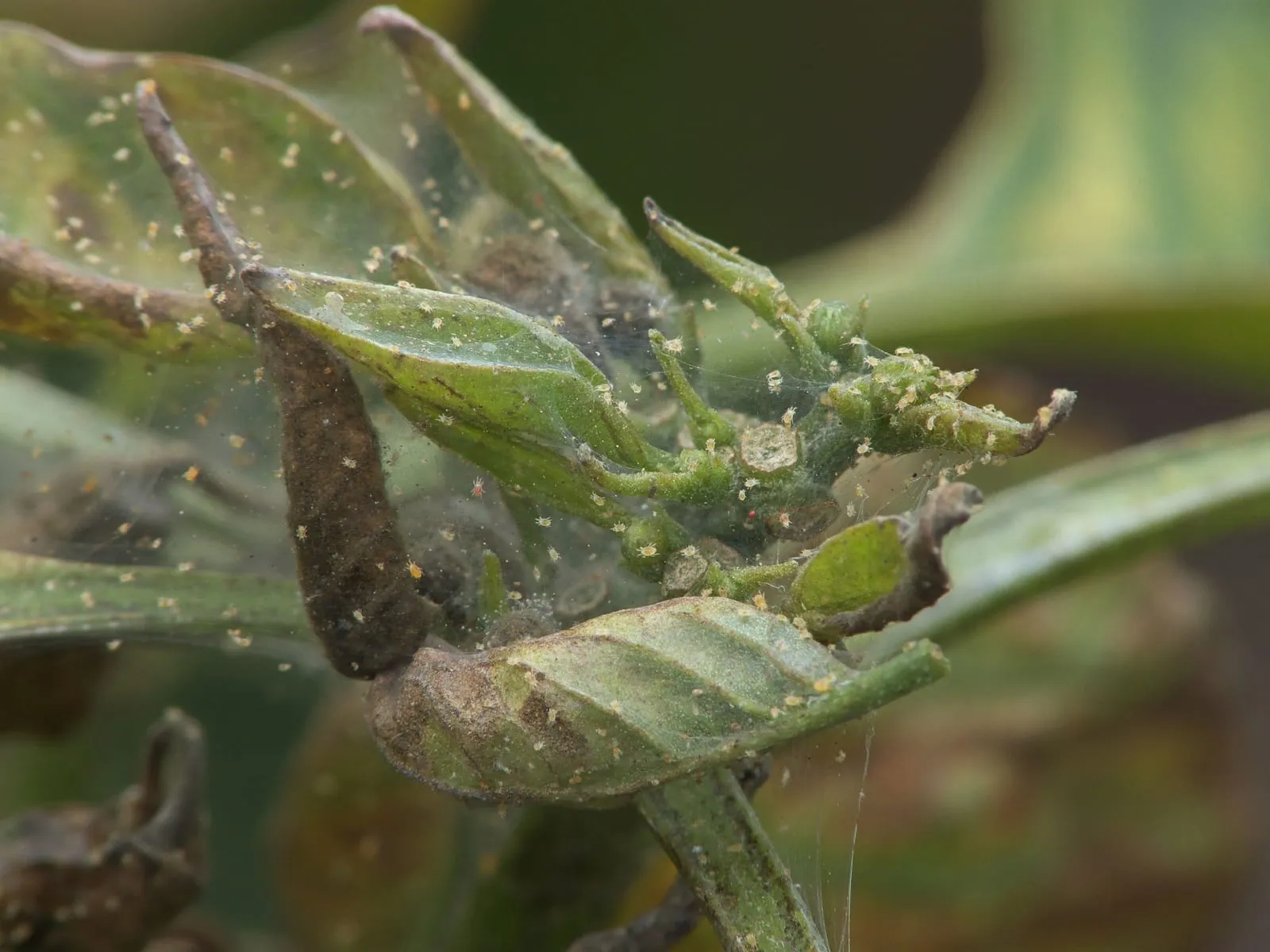
Two-Spotted Spider Mite
Tetranychus urticae
Tiny mite that feeds on leaf undersides, causing stippling and webbing during hot dry weather.
- Scientific name
- Tetranychus urticae
- Hosts
- 16
- Identification signs
- 3
- Controls
- 4
Biology and lifecycle
Tetranychus urticae overwinters as fertilized females in soil debris and leaf litter, becoming active in spring as temperatures warm. Under hot, dry conditions above 85°F, a single generation can complete in 5 to 7 days, meaning populations can move from undetectable to damaging between weekly scouting visits. Low humidity accelerates development; prolonged dry spells in summer are the clearest indicator that scouting intensity should increase.
Adults and nymphs feed on leaf undersides, piercing cells and extracting contents. The first visible symptom is yellow stippling on upper leaf surfaces; fine silken webbing follows as colonies grow. On strawberry and goji, heavy infestations cause bronzing, early leaf drop, and reduced fruit size when populations build during the fruiting period.
The cost-effective control window is early, before webbing establishes and colonies spread. Scouting leaf undersides weekly from late spring onward, especially during dry stretches, allows intervention while numbers are still low. Overhead irrigation or strong water sprays aimed at leaf undersides can reduce mite populations substantially without chemical input; the humidity increase also slows reproduction. Consistent early disruption often prevents populations from reaching spray thresholds.
Where biological control is feasible, introducing the predatory mite Phytoseiulus persimilis before populations peak is an effective option. Broad-spectrum insecticides should be avoided: they eliminate natural predators and commonly trigger rebounds worse than the original infestation. When a miticide is warranted, insecticidal soap or horticultural oil applied to leaf undersides are the preferred choices. Apply in early morning or evening to limit phytotoxicity risk, and rotate modes of action if repeated applications are needed.
Signs to watch for
- ▸ Yellow stippling on upper leaf surface
- ▸ Fine webbing on leaf undersides
- ▸ Bronzed leaves and reduced vigor in heat
IPM controls
- ✓ Overhead irrigation or strong water spray to dislodge mites
- ✓ Predatory mites (Phytoseiulus persimilis) for biological control
- ✓ Insecticidal soap or horticultural oil
- ✓ Avoid broad-spectrum insecticides that kill predators
Affected crops
Image: "Tetranychus urticae on sweet pepper, Bonenspintmijt op paprika (2)", by Rasbak, via Wikimedia Commons, licensed under CC-BY Source.
.jpg)
Related