Pest
Aphid
Multiple species (Aphididae)
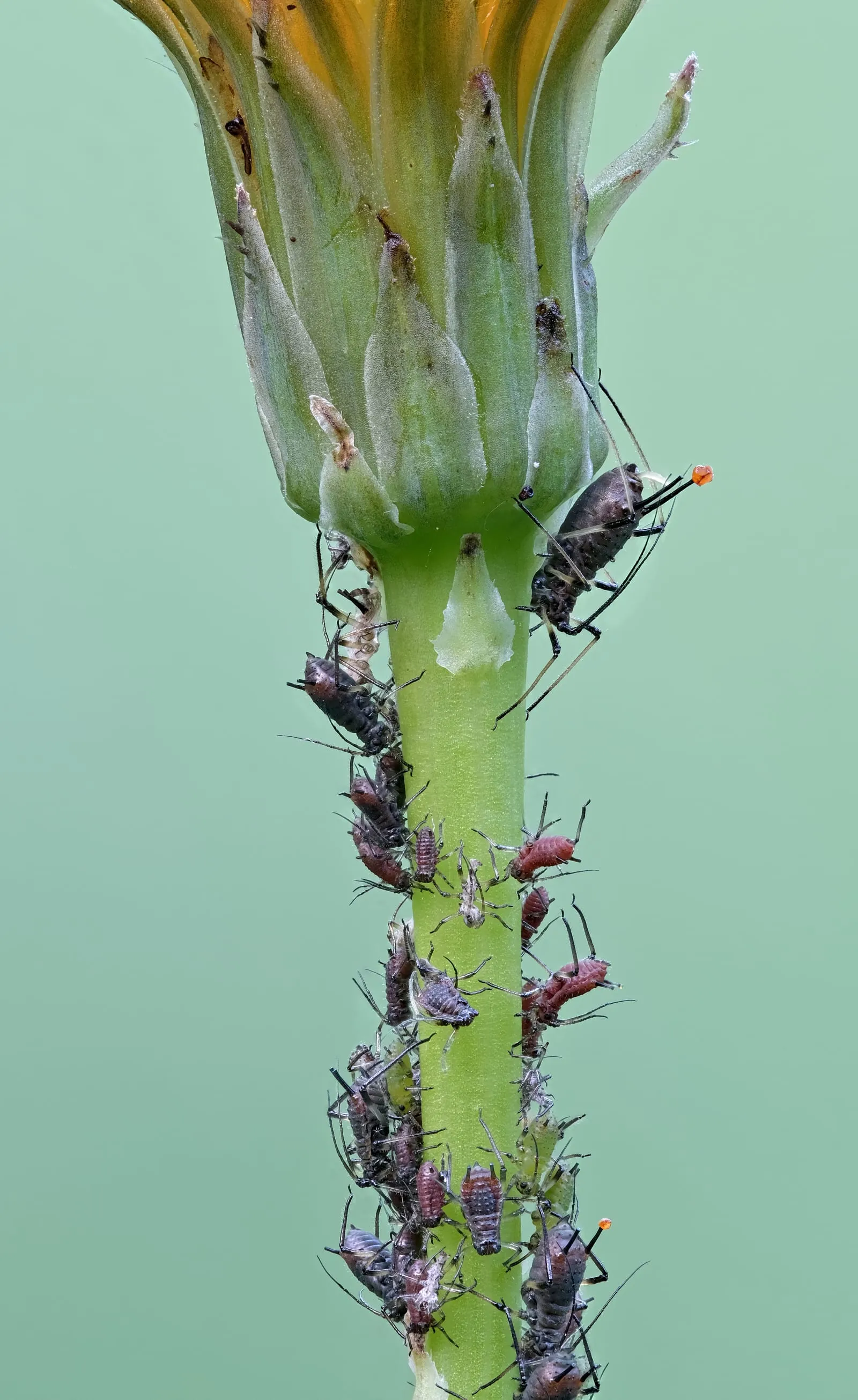
Small soft-bodied sap-sucking insects that reproduce explosively in spring. Excrete honeydew that supports sooty mold and attracts ants. Transmit viral diseases.
- Scientific name
- Multiple species (Aphididae)
- Hosts
- 32
- Identification signs
- 4
- Controls
- 5
Biology and lifecycle
Aphids (family Aphididae) encompass hundreds of species, but they share a common strategy: rapid, overlapping generations that can overwhelm a garden before the problem registers visually. In temperate climates, populations typically emerge in spring as temperatures climb above 50°F and accelerate sharply once consistent warmth arrives. Winged adults migrate to new host plants, establishing colonies that reproduce parthenogenetically (without mating), meaning a single aphid can found a new infestation within days.
The most damaging phase is early to mid-season, when colonies are doubling on tender new growth before natural predator populations have built up. Aphids feed by piercing plant tissue and extracting sap, which weakens growth and, on many crops, creates curled or cupped leaves that physically shelter the colony from contact sprays. They also excrete honeydew, a sticky residue that coats leaf surfaces and supports sooty mold, reducing photosynthesis even after the aphids themselves are gone. Several species also transmit viral diseases as they move between plants.
Biological control is the most durable management tool. Ladybugs, lacewings, parasitic wasps, and hoverfly larvae are all effective predators when populations are allowed to develop. Avoiding broad-spectrum insecticides preserves these beneficials. For early infestations, a forceful water spray dislodging colonies from leaf undersides often sets populations back before they recover, at no chemical cost. Insecticidal soap is the most accessible option where knockdown is needed; thorough coverage of leaf undersides is critical for any effect. Reflective mulch reduces winged migrant colonization in high-pressure seasons. Excess nitrogen fertilization should be moderated since it produces the lush, nitrogen-rich new growth that aphids prefer.
Signs to watch for
- ▸ Curled, distorted, or yellowing new growth
- ▸ Sticky honeydew on leaves and below plants
- ▸ Visible colonies on undersides of leaves and on growing tips
- ▸ Ants tending colonies
IPM controls
- ✓ Strong water spray to dislodge colonies (effective for early infestations)
- ✓ Insecticidal soap targeted to leaf undersides
- ✓ Encourage ladybugs, lacewings, hoverflies, and parasitic wasps
- ✓ Reflective mulch deters winged migrants
- ✓ Avoid excessive nitrogen which favors lush susceptible growth
Affected crops
Image: "Blattlaeuse-JR-T3-I176-2024-09-22", by Johannes Robalotoff, via Wikimedia Commons, licensed under CC-BY Source.

Related