Pest
Woolly Apple Aphid
Eriosoma lanigerum
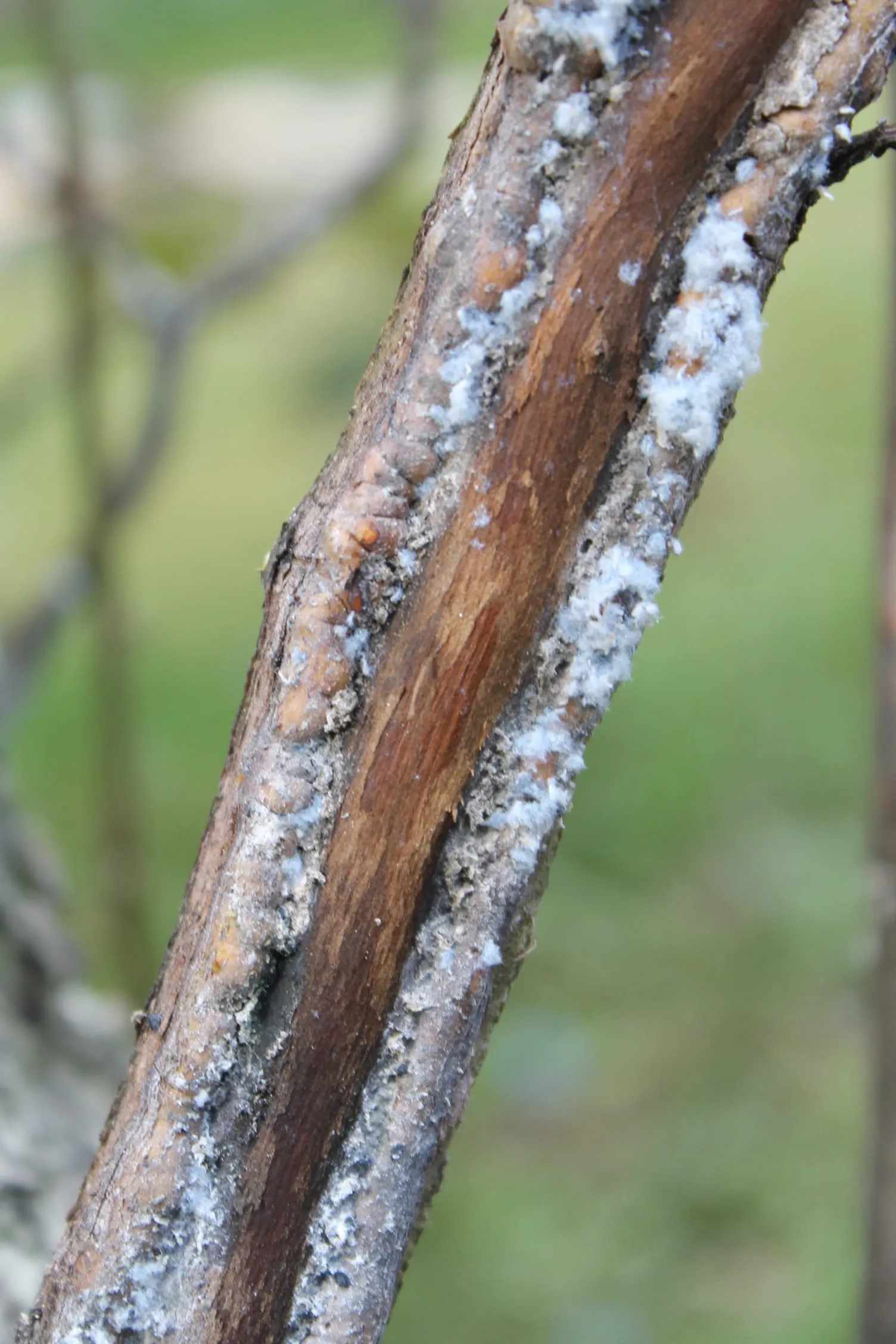
Aphid that feeds on apple roots and aerial wood, producing distinctive cottony white wax. Root colonies cause galls that reduce vigor; aerial colonies disfigure new growth.
- Scientific name
- Eriosoma lanigerum
- Hosts
- 2
- Identification signs
- 4
- Controls
- 5
Biology and lifecycle
Woolly apple aphid (Eriosoma lanigerum) is unusual among aphid species in that it maintains two distinct colony types simultaneously: aerial colonies on shoots, pruning wounds, and trunk bases, and subterranean colonies on roots. Both phases cause damage, but they do so differently and respond to different controls.
The insect overwinters as nymphs sheltered in bark crevices and on roots. As soil temperatures rise in spring, root colonies resume feeding and begin forming the characteristic galls that restrict water and nutrient uptake. Aerial colonies become visible later in spring, identifiable by their cottony white waxy secretions, and populations expand through summer before declining in fall. The root phase is generally the more damaging of the two over the long term; root galls persist, compromise anchorage, and can serve as entry points for secondary pathogens including crown rot organisms.
The single most cost-effective intervention is rootstock selection before planting. M.111, MM.106, and the Geneva series carry genetic resistance to root feeding by this pest, and that resistance is durable. On resistant rootstocks, aerial populations still occur but rarely reach economically significant levels.
On established trees, the parasitic wasp Aphelinus mali is the primary biocontrol agent. It is host-specific, establishes naturally in most apple-growing regions, and can suppress aerial colonies substantially by midsummer. Broad-spectrum insecticides applied for other pests often do more harm than good by reducing Aphelinus populations. Spot applications of horticultural oil or insecticidal soap to aerial colonies in late spring can reduce pressure when populations are building, but thorough coverage through the wax is required. Dormant pruning that removes heavily infested suckers and water sprouts reduces overwintering sites at low cost.
Signs to watch for
- ▸ Cottony white woolly masses on shoots, branch wounds, and at the base of trunks
- ▸ Galls and swellings on roots when soil is excavated
- ▸ Reduced shoot growth and vigor
- ▸ Sticky honeydew below colonies
IPM controls
- ✓ Plant on resistant rootstocks (M.111, MM.106, Geneva series)
- ✓ Encourage parasitic wasp Aphelinus mali (the standard biocontrol)
- ✓ Spot-treat aerial colonies with horticultural oil or insecticidal soap
- ✓ Remove and destroy heavily infested suckers and water sprouts during dormant pruning
- ✓ Improve tree vigor with proper irrigation and nutrition
Affected crops
Image: "Letorost 5816", by I.Sáček, senior, via Wikimedia Commons, licensed under CC0 Source.

Related