Pest
Tomato Hornworm
Manduca quinquemaculata
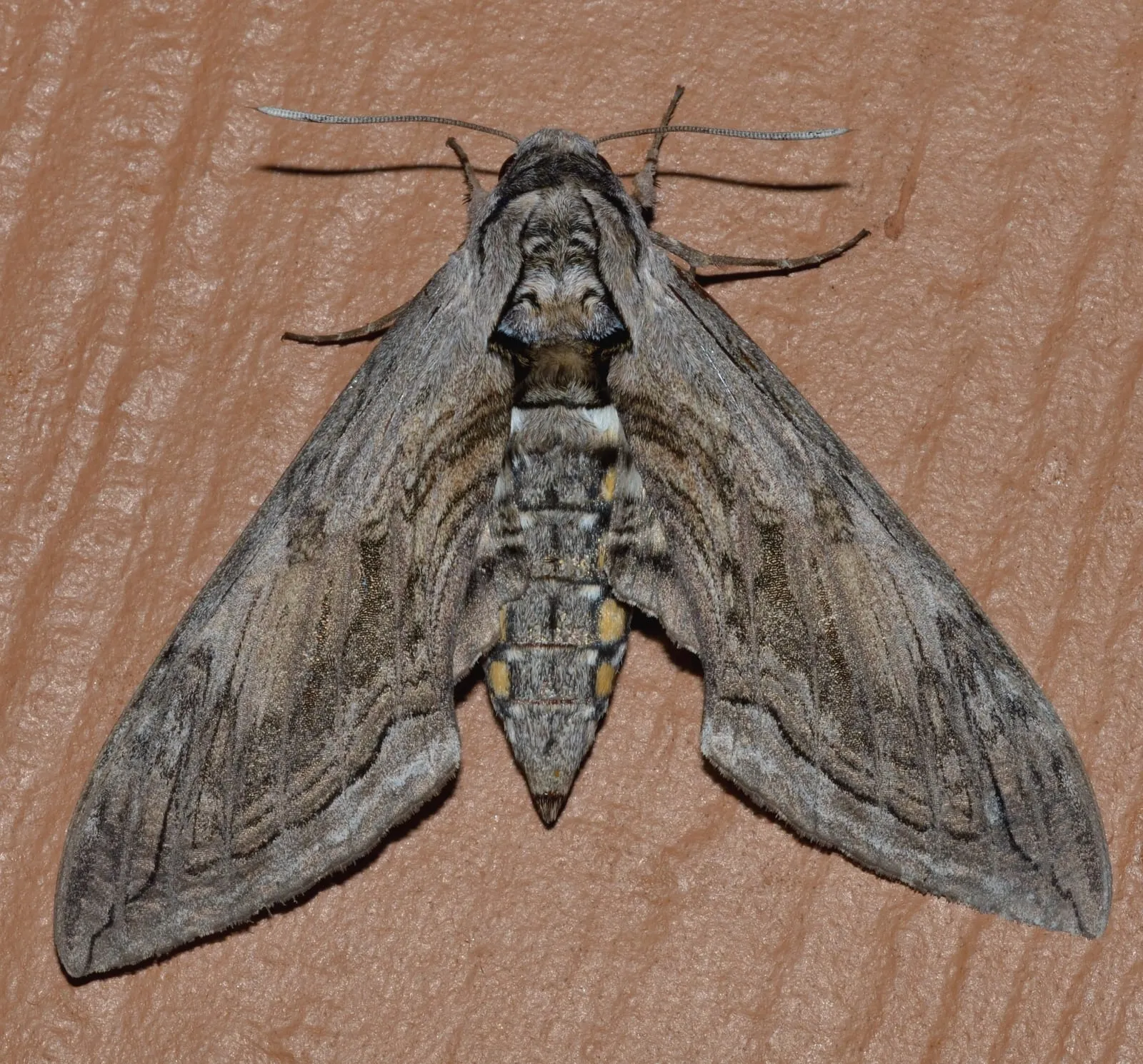
Large green caterpillar (up to 4 inches) that defoliates tomato and other Solanaceae plants rapidly. Mature larvae become five-spotted hawk moths.
- Scientific name
- Manduca quinquemaculata
- Hosts
- 5
- Identification signs
- 3
- Controls
- 4
Biology and lifecycle
Tomato hornworm (Manduca quinquemaculata) is the larval stage of the five-spotted hawk moth. Adults overwinter as pupae in the soil and emerge in late spring to early summer as soil temperatures climb above 60°F. Moths are nocturnal; females lay individual spherical green eggs on the undersides of host plant leaves, primarily on tomato but also on pepper, eggplant, and potato.
Larvae hatch within a week and feed for three to four weeks before dropping to the soil to pupate. Young larvae in their first and second instars cause relatively little damage and are the most susceptible to Bacillus thuringiensis (Bt) spray. By the time a caterpillar reaches its final instar at up to 4 inches long, feeding is rapid and dramatic: entire branches can be stripped overnight. Frass pellets on leaves below the feeding zone are often the first visible sign, since the caterpillar blends almost perfectly with foliage.
The most cost-effective control window is early. Scout undersides of leaves for eggs and small larvae beginning two weeks after transplant. Hand-picking at dawn or dusk is practical for small plantings and removes the problem immediately without any inputs. Bt sprays applied to larvae under 1 inch are effective and low-impact; Bt has no residual effect on beneficial insects and breaks down within a few days.
Caterpillars carrying white rice-grain-sized cocoons on their backs have been parasitized by braconid wasps (Cotesia congregata). Those individuals will die without any intervention; removing them also removes a cohort of emerging beneficials. Leave parasitized hornworms in place. Fall tillage exposes overwintering pupae to predators and meaningfully reduces the following season's moth population.
Signs to watch for
- ▸ Stripped foliage starting at the top of the plant
- ▸ Large dark-green frass pellets on leaves below the feeding zone
- ▸ Bright green caterpillar with white V-shaped marks and a single horn at the rear
IPM controls
- ✓ Hand-pick at dawn or dusk (caterpillars are well-camouflaged)
- ✓ Bt (Bacillus thuringiensis) spray on small larvae
- ✓ Encourage parasitic braconid wasps (white cocoons on hornworm body indicate parasitism — leave those caterpillars in place)
- ✓ Till garden in fall to expose overwintering pupae to predators
Affected crops
Image: "- 7776 – Manduca quinquemaculatus – Five-spotted Hawk Moth (15119475961)", by Andy Reago & Chrissy McClarren, via Wikimedia Commons, licensed under CC-BY Source.
.jpg)
Related