Pest
Mexican Bean Beetle
Epilachna varivestis
Coppery-orange ladybug-like adults and yellow spiny larvae that skeletonize bean foliage. The defining bean pest in the eastern US.
- Scientific name
- Epilachna varivestis
- Hosts
- 2
- Identification signs
- 4
- Controls
- 5
Biology and lifecycle
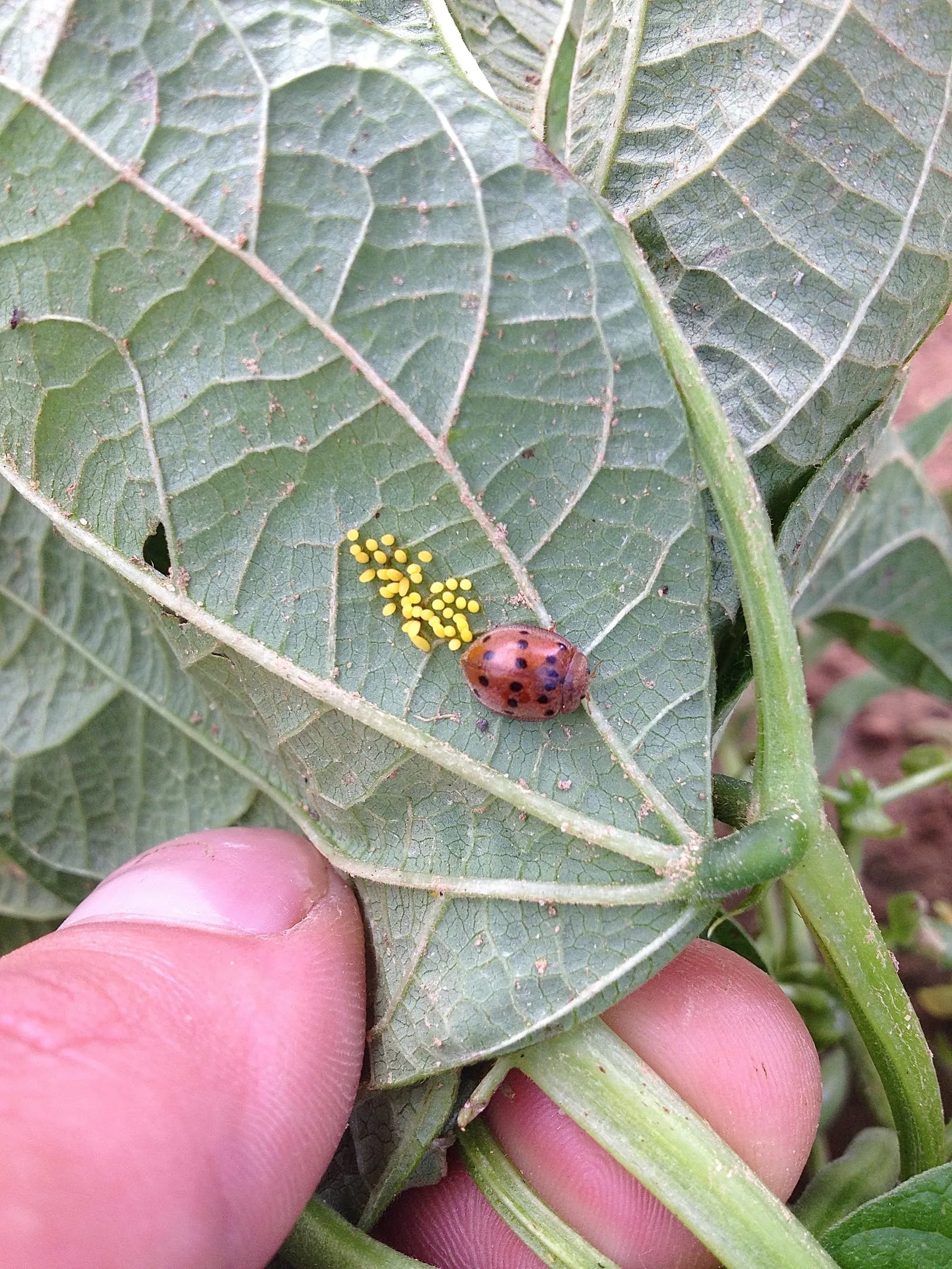
Mexican Bean Beetle (Epilachna varivestis) is unusual among its coccinellid relatives: where most ladybug species are predators, this one is a plant feeder, and it is the defining bean pest across the eastern United States. Adults overwinter in leaf litter and woodland edges, emerging in late spring once temperatures reliably exceed 60°F. Females deposit clusters of yellow eggs on the undersides of bean leaves; larvae hatch within one to two weeks depending on temperature.
The larval stage causes the most damage. Spiny, yellow larvae feed from the leaf underside, consuming soft tissue while leaving veins intact, producing the characteristic lace-like skeletonization that signals an established population. Two to three generations per season are typical in the eastern range, and by midsummer a single planting can host overlapping life stages simultaneously.
The most cost-effective control window is early, before populations compound. Floating row cover applied at seeding or transplant blocks adult colonization entirely, provided edges are sealed at the soil line. Covers must come off when flowers open, at which point hand-picking becomes the primary non-spray tool: adults are slow-moving, larvae cluster predictably on leaf undersides, and egg masses are easy to crush on contact. Where commercially available, releases of Pediobius foveolatus, a parasitic wasp specific to this pest, can reduce mid-season pressure without chemical inputs.
Targeted neem oil application on larvae is a reasonable fallback when hand-picking is impractical, but coverage on leaf undersides must be thorough and residual activity is short. Snap beans tolerate feeding better than dry beans; plantings intended for dry seed harvest warrant closer monitoring and earlier intervention.
Signs to watch for
- ▸ Lace-like skeletonized leaves with veins remaining
- ▸ Yellow fuzzy larvae on leaf undersides
- ▸ Yellow egg clusters on leaf undersides
- ▸ Adults that look like overgrown ladybugs
IPM controls
- ✓ Hand-pick adults and crush eggs and larvae
- ✓ Floating row cover until flowering
- ✓ Pediobius parasitic wasp release where commercially available
- ✓ Targeted neem oil spray on larvae
- ✓ Plant resistant varieties (snap beans tolerate damage better than dry beans)
Affected crops
Image: "Mexican bean beetle adult laying eggs", by LouNottingham, via Wikimedia Commons, licensed under CC-BY Source.

Related