Pest
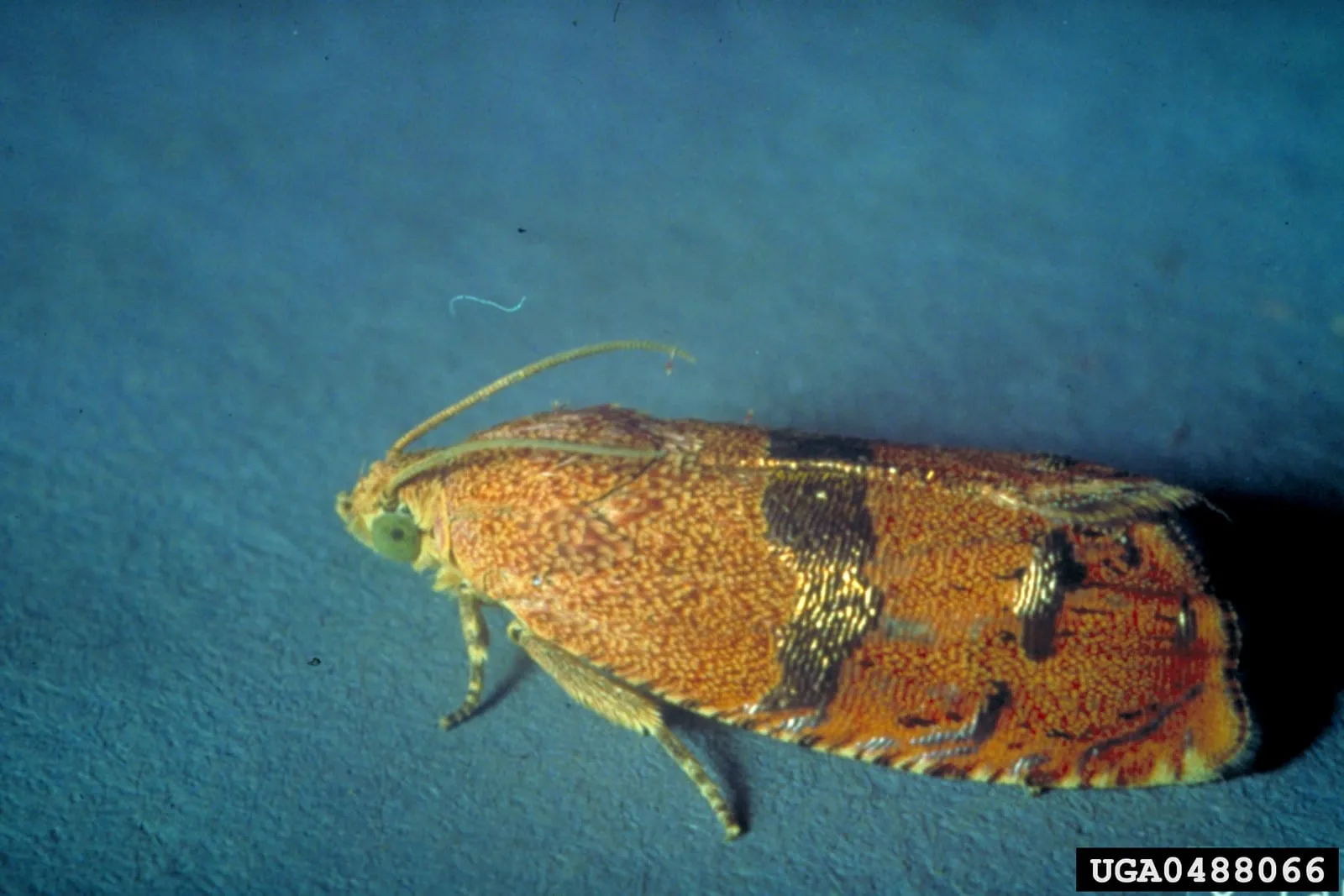
Filbertworm
Cydia latiferreana
Moth whose larvae bore into developing hazelnuts and chestnuts, the primary direct-pest concern for nut quality in the Pacific Northwest and increasingly in the East.
- Scientific name
- Cydia latiferreana
- Hosts
- 2
- Identification signs
- 3
- Controls
- 4
Biology and lifecycle
Filbertworm (Cydia latiferreana) is a tortricid moth whose larvae are the primary internal pest of hazelnuts in commercial and home plantings across the Pacific Northwest. The pest is also expanding eastward, where it is becoming a documented concern for hazelnut and chestnut growers.
Adults emerge in early to midsummer, with peak flight typically running late July through August, though exact timing shifts by location and season. Females deposit eggs on the surface of developing nut husks. Newly hatched larvae bore through the husk via a pinhole-sized entry point and feed on the developing kernel inside, leaving hollowed shells, frass, and webbing. By harvest time the damage is complete and irreversible; infested nuts are unsalvageable for fresh use or processing.
Mature larvae exit the nut before or around harvest, drop to the ground, and pupate in leaf litter and soil debris at the base of trees. One generation occurs per year. Overwintering as pupae in ground debris is the biological bottleneck that makes floor sanitation one of the more durable management tools available, particularly for home-scale plantings where spray programs may not be warranted.
The practical spray window, if one is used, targets peak adult flight rather than larvae. Once larvae have bored into the shell, they are chemically inaccessible. Pheromone traps deployed by late June establish local flight onset and inform precise spray timing. Prompt collection of dropped nuts throughout the season, combined with fall debris removal, reduces the overwintering population and compounds in effectiveness across multiple years.
Signs to watch for
- ▸ Pinhole entry points in nut shells
- ▸ Frass visible at entry holes
- ▸ Hollowed kernels and webbing inside infested nuts
IPM controls
- ✓ Pheromone traps for flight monitoring
- ✓ Targeted spray at peak flight (typically late July to August)
- ✓ Prompt collection of fallen nuts
- ✓ Floor sanitation to reduce overwintering pupae
Affected crops
Image: "Cydia latiferreana", by Larry R. Barber, USDA Forest Service, United States, via Wikimedia Commons, licensed under CC-BY Source.

Related