Pest
Vole Damage
Microtus species
Field voles and meadow voles girdle young fruit-tree trunks under snow cover during winter and chew root crops. The leading cause of mysterious orchard losses.
- Scientific name
- Microtus species
- Hosts
- 17
- Identification signs
- 4
- Controls
- 5
Biology and lifecycle
Voles (Microtus species) are small, short-tailed rodents that inhabit dense grass, thick mulch, and ground cover at the base of trees and along field edges. Unlike moles, which hunt earthworms and grubs, voles are strict herbivores. Their reproductive rate is high: a single pair can produce six to ten litters annually under favorable conditions, so light vole pressure in early fall can become severe infestation by midwinter without intervention.
The most damaging phase is winter, when snow cover provides insulation and concealment. Voles travel through subnivean runways (tunnels between soil surface and snow pack) and gnaw the bark of young fruit trees at or just below ground level. Complete girdling strips bark in a continuous ring around the trunk, severs the phloem, and kills the tree. Because the damage occurs under snow, it often goes undetected until after snowmelt, when leaves fail to emerge. Mature trees with thick, furrowed bark tolerate light gnawing; any tree under five to seven years is at meaningful risk of total loss. Root crops left in-ground or stored in shallow conditions face similar pressure.
The most cost-effective intervention is preventive and mechanical, applied before the first snow accumulation. Hardware-cloth trunk guards (1/4-inch mesh, set 2 inches below soil and extending 6 inches above the anticipated snow line) block access reliably and last several seasons. Pulling mulch back 6 inches from trunks through winter removes the cover voles depend on. Mowing the orchard floor short in October eliminates runway habitat before populations establish under snow. Where populations are already high, snap traps set under cover boards along visible runways provide reliable reduction without the secondary-poisoning risk that rodenticide baits pose to owls and hawks.
Signs to watch for
- ▸ Chewed bark at the base of trunks visible after snow melt, often killing trees outright
- ▸ Surface runways through grass and mulch
- ▸ Tunnels at the soil surface
- ▸ Damage to root crops in storage and in-ground
IPM controls
- ✓ Hardware-cloth trunk guards (1/4 inch mesh) extended 6 inches above expected snow line and 2 inches below soil
- ✓ Keep mulch pulled back 6 inches from trunks during winter
- ✓ Mow orchard floor short before snow accumulation eliminates cover
- ✓ Snap traps under cover boards along runways
- ✓ Encourage owls and hawks with perches and nest boxes
Affected crops
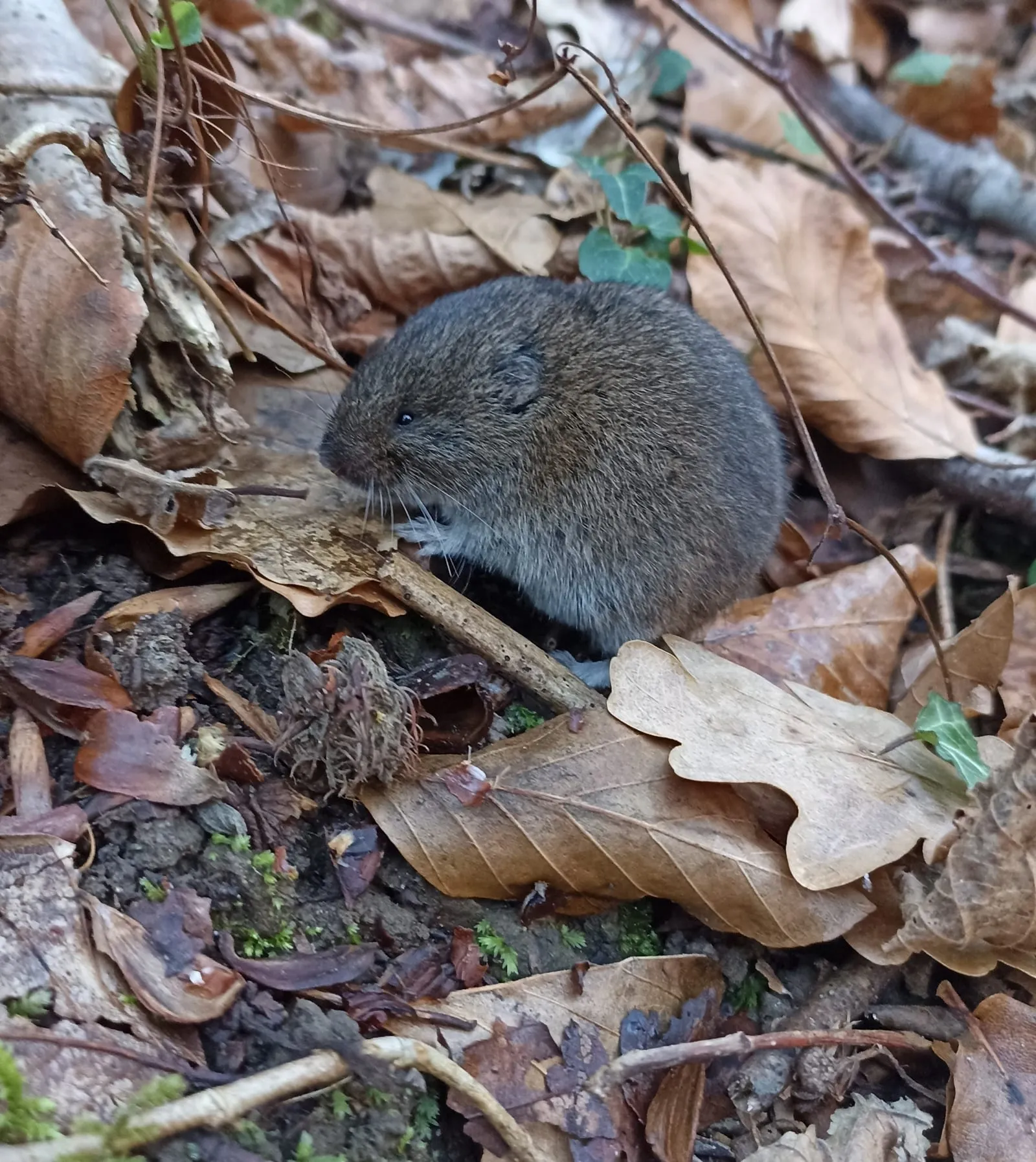
Image: "Microtus lavernedii (Cantabria, Spain)", by Fran Gonzalez, via Wikimedia Commons, licensed under CC-BY Source.
.jpeg)
Related