Pest
Squash Bug
Anasa tristis
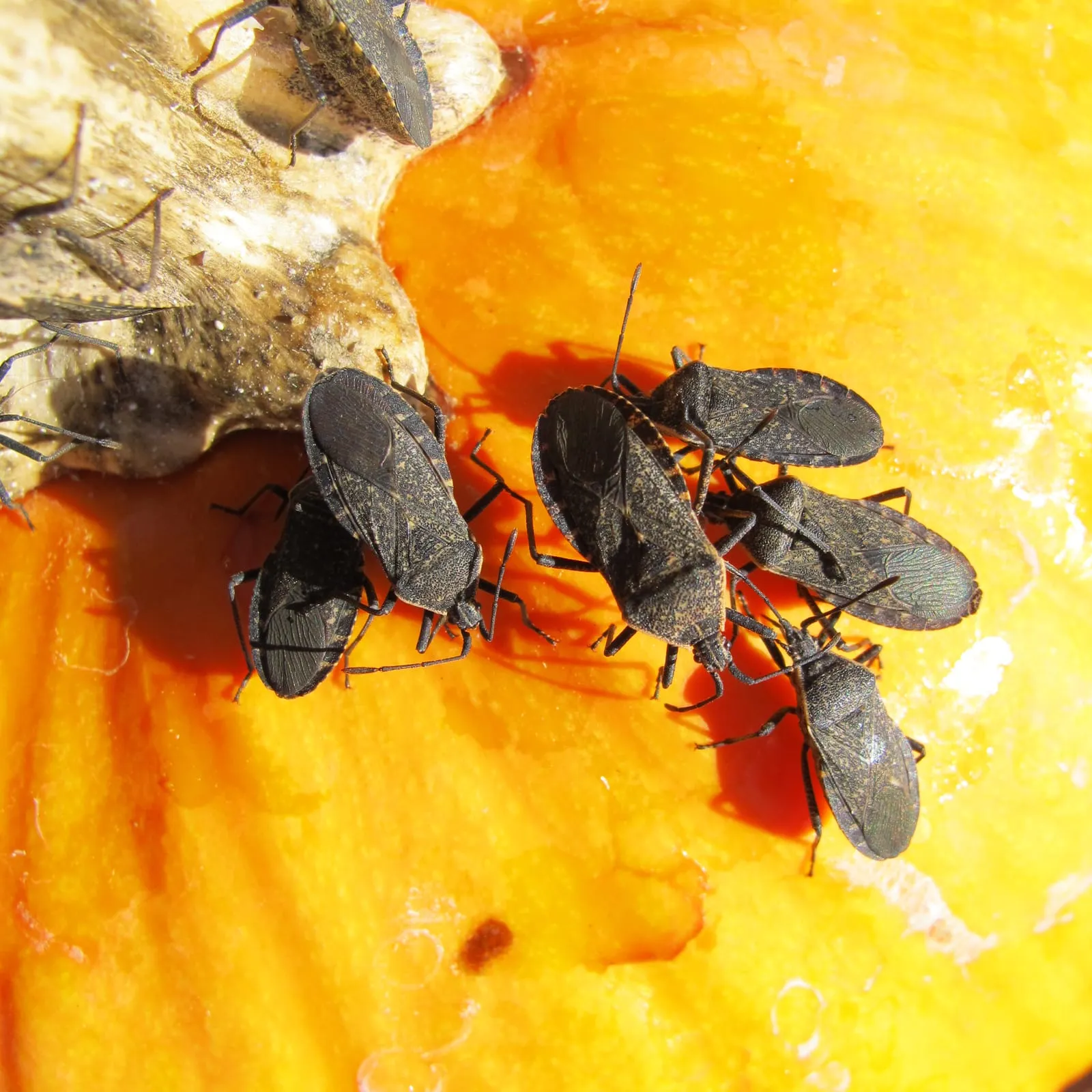
Brown shield-shaped bugs that feed on cucurbit foliage and fruit, causing wilting and fruit-quality damage. Transmit cucurbit yellow vine disease.
- Scientific name
- Anasa tristis
- Hosts
- 5
- Identification signs
- 4
- Controls
- 4
Biology and lifecycle
Squash bug (Anasa tristis) is a shield-shaped pest in the family Coreidae that overwinters as an adult in garden debris, mulch, and wood piles. Adults emerge in late spring when cucurbit vines begin to run, typically after soil temperatures stabilize above 60°F. Females lay distinctive bronze-brown egg clusters on leaf undersides, most often in the angle between leaf veins. Eggs hatch in 7 to 14 days depending on temperatures.
The most consequential damage window is late spring through midsummer, when populations build rapidly. Nymphs are gray and soft-bodied and represent the most vulnerable stage, both ecologically and as a spray target. Adults develop a thick, waxy cuticle that renders them largely resistant to contact insecticides. Feeding disrupts vascular tissue, causing wilted, yellow-speckled foliage that can resemble spider mite or drought stress. Populations carrying cucurbit yellow vine disease can cause rapid wilt and plant death independent of feeding pressure alone, making early suppression worthwhile even when adult counts seem low.
The most cost-effective control window is the egg and early-nymph stage, before populations disperse across the planting. Daily scouting from transplant through mid-season pays off here. Boards placed on bare soil near plants act as aggregation traps; bugs shelter underneath overnight and can be collected each morning. Row covers at transplant delay initial colonization, though they must be removed at flowering unless hand-pollinating. Where hand-removal falls short, targeted applications of pyrethrin or spinosad directed at nymph aggregations on leaf undersides can reduce populations with limited non-target impact. End-of-season removal of all cucurbit residue eliminates overwintering habitat and meaningfully reduces pressure the following year.
Signs to watch for
- ▸ Bronze-colored egg clusters on leaf undersides
- ▸ Wilting and yellow speckled foliage (looks like spider mite damage)
- ▸ Adult bugs and gray nymphs gathered on leaves and stems
- ▸ Damaged fruit with sunken spots
IPM controls
- ✓ Hand-pick adults and crush egg clusters every few days
- ✓ Place boards on the ground near plants — bugs hide under at night, flip and squash in morning
- ✓ Targeted insecticide on nymphs (adults are tough)
- ✓ Sanitation: remove crop residue at season end to deny overwintering sites
Affected crops
Image: "Anasa tristis gathered on a pumpkin", by Ilona Loser, via Wikimedia Commons, licensed under CC-BY Source.

Related