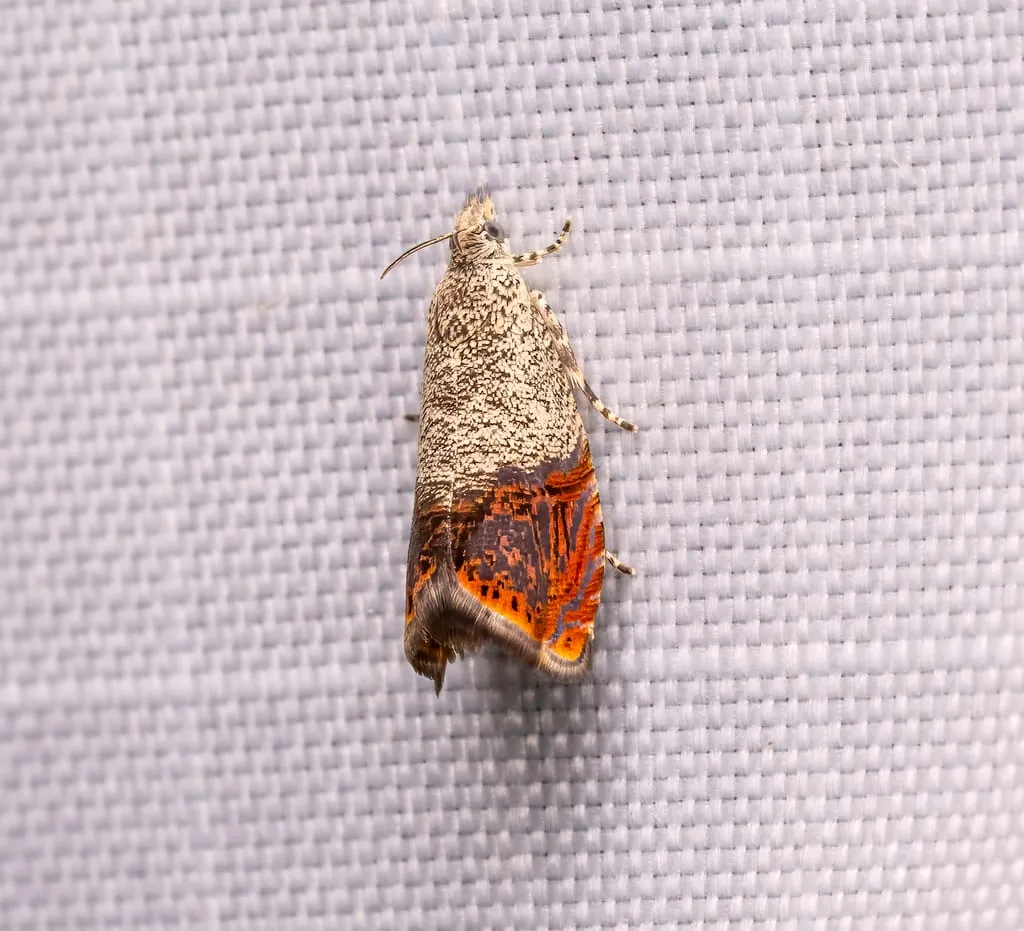
Pest
Pawpaw Peduncle Borer
Talponia plummeriana
Tiny moth whose larvae bore into pawpaw flower stems, causing fruit drop.
- Scientific name
- Talponia plummeriana
- Hosts
- 1
- Identification signs
- 3
- Controls
- 3
Biology and lifecycle
The pawpaw peduncle borer (Talponia plummeriana) is a small tortricid moth whose larvae cause damage during the brief window of pawpaw flowering. Adults emerge in late winter to early spring, timed closely with pawpaw bloom, and females lay eggs at or near the base of flower pedicels. Larvae then bore into the peduncle or pedicel, feeding from within. The infested flower stem is effectively severed from the inside, and the flower or developing fruitlet drops prematurely.
The damage is subtle until growers notice fallen flowers with hollowed pedicels. Fine frass at the stem base is often the earliest visible sign. Because pawpaw fruit set is already limited under normal conditions, repeated heavy infestations can meaningfully reduce yields, though most seasons the pest causes only minor losses.
Control windows are narrow because the larvae are protected inside plant tissue for much of their feeding period. The most cost-effective intervention is sanitation: collecting and disposing of dropped flowers removes larvae before they complete development and reduces the next generation's population. This approach requires no chemical inputs and fits naturally into an IPM program.
Targeted insecticide sprays are rarely warranted given the pest's generally minor economic impact. In orchards where repeated seasons of significant drop are observed, a well-timed spray at early bloom, before larvae enter the stem tissue, is the most defensible approach. Consult regional extension resources for any registered materials, as label registrations for pawpaw are limited and vary by state.
Signs to watch for
- ▸ Frass at flower-stem base
- ▸ Premature fruit drop
- ▸ Hollowed pedicels on dropped flowers
IPM controls
- ✓ Generally minor pest; tolerate light damage
- ✓ Sanitation of dropped flowers
- ✓ Targeted spray rarely warranted
Affected crops
Image: "Talponia plummeriana", by Bill Sheehan, via iNaturalist, licensed under CC-BY Source.
Related