Disease
fungalCane Anthracnose
Elsinoe veneta
Fungal cane disease causing purple-bordered lesions that girdle and weaken bramble and Ribes canes, reducing yield over consecutive seasons.
- Pathogen type
- Fungal
- Hosts
- 8
- Symptoms
- 3
- Scientific name
- Elsinoe veneta
- Resistant varieties
- 0
Biology and conditions
Cane anthracnose is caused by the fungus Elsinoe veneta and ranks among the more persistent fungal threats to bramble and Ribes plantings. The pathogen overwinters in infected cane tissue, releasing spores during wet spring weather that splash onto emerging shoots. Cool, wet conditions (temperatures in the range of 60 to 75°F paired with extended leaf-wetness periods) favor infection; plantings with poor airflow or heavy canopy density are at elevated risk.
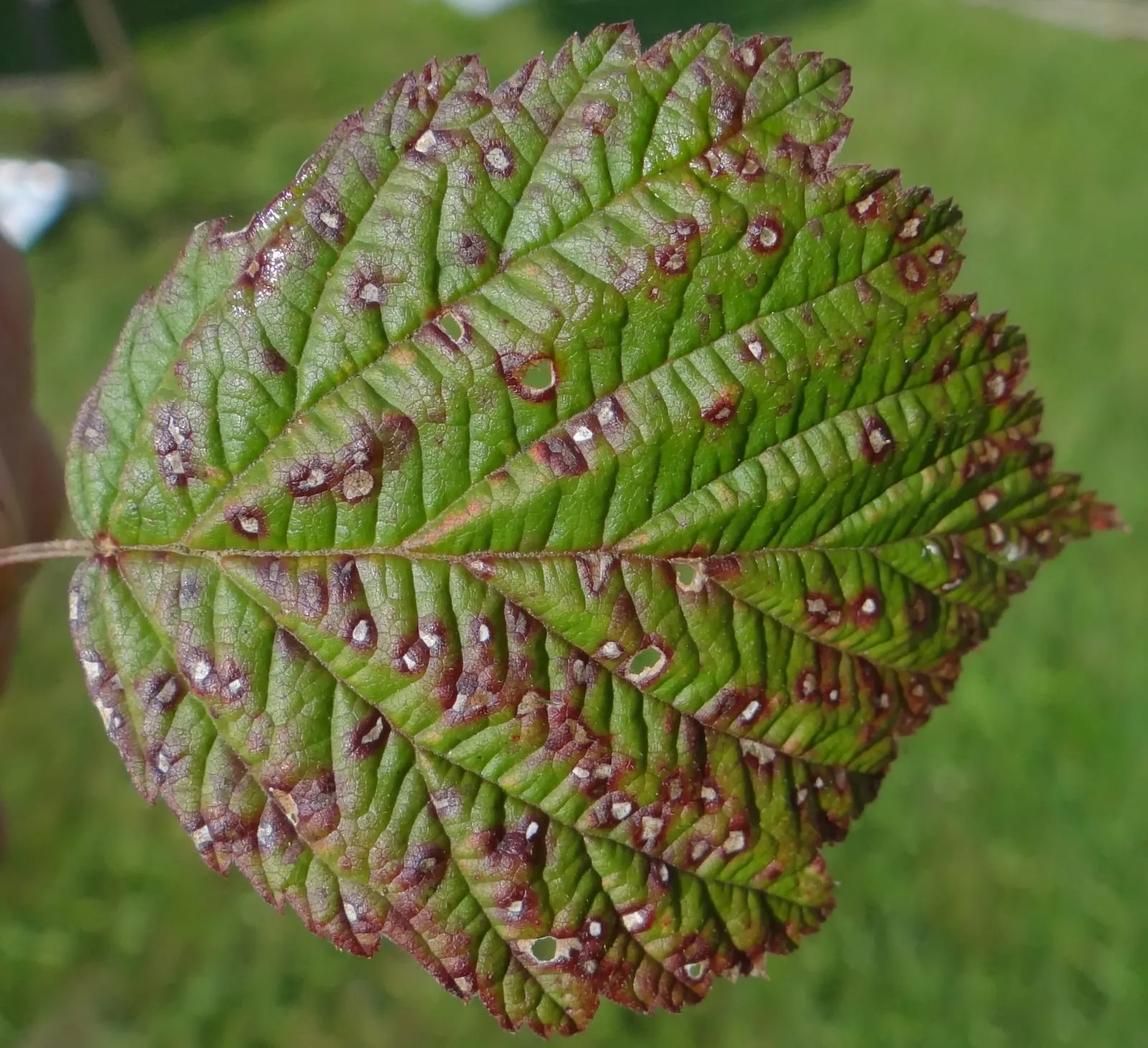
On raspberries and blackberries, the disease progresses from small purple flecks to characteristic sunken gray lesions with purple margins. Bark cracking over mature lesions is a reliable field-diagnostic sign. Repeated infection cycles across consecutive seasons weaken floricanes, reducing fruit size and overall yield. Currants and gooseberries show similar lesion development, though brambles tend to sustain heavier economic losses when the disease goes unmanaged.
The most cost-effective single intervention is rigorous annual removal of fruited floricanes immediately after harvest. Because Elsinoe veneta overwinters primarily in old cane tissue, prompt removal disrupts the inoculum cycle before the following spring flush. A lime-sulfur dormant spray applied before bud break provides additional protection in plantings with a documented history of the disease; timing matters, as application after budbreak risks phytotoxicity on emerging tissue. Wide spacing and trellis systems that separate canes and allow the canopy to dry quickly after rain reduce the hours of leaf wetness that favor sporulation.
No resistant varieties are identified in the current data set. Starting with certified, disease-free nursery stock remains the most reliable preventive measure when establishing a new planting.
Symptoms
- ▸ Small purple spots on canes that expand into gray sunken lesions with purple borders
- ▸ Cracked bark over lesions
- ▸ Cane dieback and reduced berry size
IPM controls
- ✓ Annual removal of fruited (floricane) canes after harvest
- ✓ Lime-sulfur dormant spray before bud break
- ✓ Wide spacing and trellising for airflow
- ✓ Plant clean nursery stock from certified sources
Affected crops
Image: "Elsinoë veneta a1 (8)", by Jerzy Opioła, via Wikimedia Commons, licensed under CC-BY Source.
.jpg)
Related