Disease
fungalStrawberry Anthracnose
Colletotrichum acutatum
Aggressive fungal disease that causes fruit rot, crown rot, and runner lesions in strawberries, devastating during warm wet weather.
- Pathogen type
- Fungal
- Hosts
- 2
- Symptoms
- 3
- Scientific name
- Colletotrichum acutatum
- Resistant varieties
- 0
Biology and conditions
Strawberry anthracnose, caused by Colletotrichum acutatum, ranks among the most destructive fungal diseases in both commercial and home strawberry production. The pathogen is favored by warm, wet conditions: infection rates climb sharply when temperatures stay between 20 and 30°C (68 to 86°F) and free moisture persists on plant surfaces for even a few hours. These conditions are common during bloom and early fruit development in humid climates, which is precisely when the crop is most vulnerable.
The fungus spreads through rain splash and overhead irrigation, moving spores from infected runners and old plant debris to flowers, fruit, and crowns. Infected transplants are the primary introduction pathway into new plantings; plants can carry the pathogen without showing obvious symptoms, then break down under field stress. Once established in a planting, C. acutatum can cycle rapidly through a block, especially in dense canopies where humidity stays elevated.
Fruit rot and crown rot are the most economically damaging expressions. Sunken brown lesions on ripening fruit, sometimes showing the characteristic salmon-colored spore masses (acervuli), can render a harvest unsaleable within days. Crown rot leads to wilting and plant collapse, compounding losses in stands maintained across multiple seasons.
The most cost-effective management combines planting only certified disease-free transplants with a fungicide program initiated at bloom and continued through harvest. Plasticulture systems, which route irrigation below plastic mulch, reduce the splash dispersal that drives secondary spread. Removing and destroying infected tissue limits inoculum buildup between seasons. No widely grown commercial variety is considered fully resistant to C. acutatum, though tolerance levels vary by cultivar and should be factored into variety selection in high-pressure regions.
Symptoms
- ▸ Sunken brown lesions on fruit with salmon-colored spore masses
- ▸ Black lesions on runners and petioles
- ▸ Wilting and collapse of crowns
IPM controls
- ✓ Plant disease-free certified plants only
- ✓ Fungicide program from bloom through harvest
- ✓ Plasticulture to reduce splash dispersal
- ✓ Remove and destroy infected plant tissue
- ✓ Avoid overhead irrigation
Affected crops
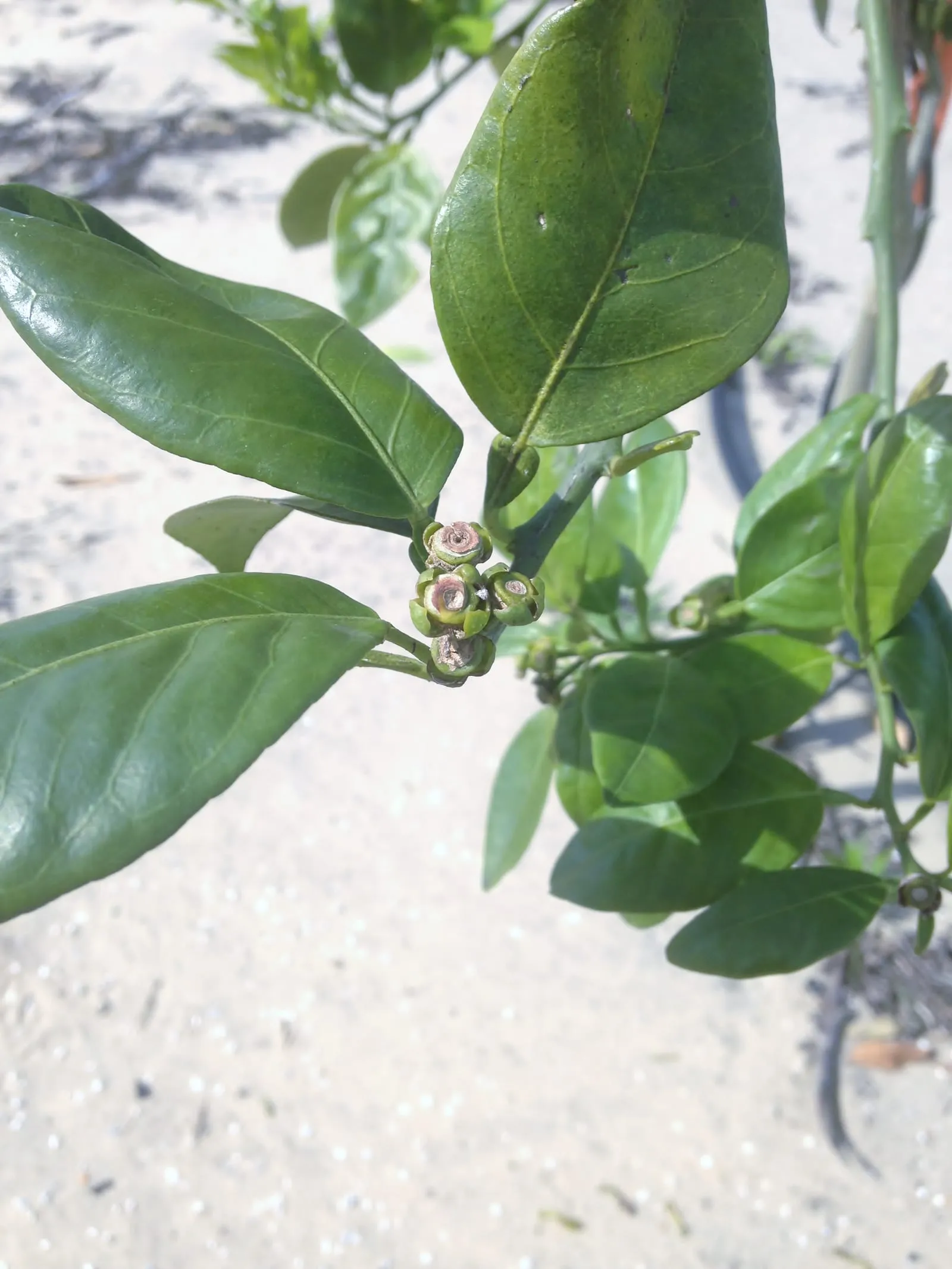
Image: "Postbloom fruit drop", by Mmacbeth, via Wikimedia Commons, licensed under CC0 Source.

Related