Disease
bacterialBacterial Canker
Pseudomonas syringae
Bacterial disease causing limb dieback and gummosis, particularly damaging in wet cool springs.
- Pathogen type
- Bacterial
- Hosts
- 2
- Symptoms
- 3
- Scientific name
- Pseudomonas syringae
- Resistant varieties
- 0
Biology and conditions
Pseudomonas syringae infects stone fruit trees through wounds, pruning cuts, and natural openings in the bark, with the greatest infection risk occurring during cool, wet periods in fall and early spring. Sweet and sour cherries are among the most susceptible hosts. Once established in bark tissue, the bacterium kills cambium cells and produces the characteristic sunken cankers with amber gum exudate. Limb dieback and bud death follow as the pathogen spreads into adjacent wood.
The conditions that most favor disease development are temperatures between roughly 45 and 65 degrees F combined with prolonged leaf wetness or rain. Frost-injured bark is particularly vulnerable to infection, which is why trees planted in low-lying frost pockets consistently suffer higher losses than trees on well-drained, air-draining slopes. Young trees in their first two to four years face the greatest risk because their bark is thinner and wounds from establishment stress are common.
Copper bactericides applied at leaf fall and again during the dormant season represent the most cost-effective management tool available. The goal is to build a protective barrier before winter rains move the pathogen into wounds, so timing relative to leaf drop matters more than spray volume. Applications made after infection is established have limited effect. Avoiding pruning during wet weather eliminates one of the primary infection pathways at low cost.
Rootstock tolerance to bacterial canker varies, and regional extension trial data can identify selections that perform better under high disease pressure. No widely planted sweet or sour cherry scion variety is considered fully resistant.
Symptoms
- ▸ Sunken cankers with gum exudate
- ▸ Limb dieback
- ▸ Bud death and shoot blight
IPM controls
- ✓ Copper sprays in fall and dormant season
- ✓ Avoid pruning in wet weather
- ✓ Site selection (well-drained, less frost-pocket)
- ✓ Tolerant rootstocks
Affected crops
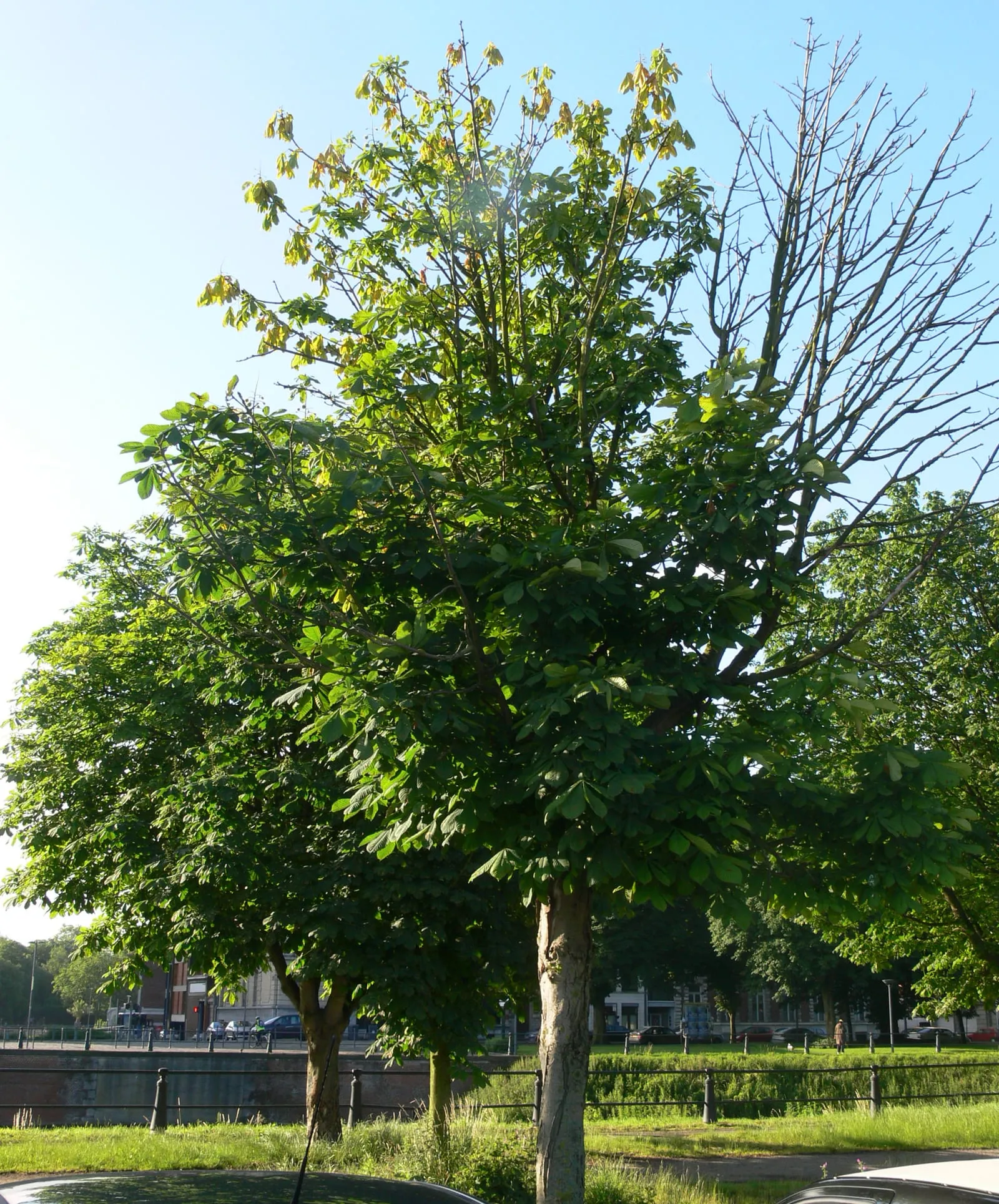
Image: "ChestnustMarronnierPseudomonasSyringae", by Lamiot, via Wikimedia Commons, licensed under CC-BY Source.

Related