Disease
bacterialBacterial Hazelnut Blight
Xanthomonas arboricola pv. corylina
Bacterial disease that kills young hazelnut trees and damages established plantings, particularly during wet establishment.
- Pathogen type
- Bacterial
- Hosts
- 1
- Symptoms
- 3
- Scientific name
- Xanthomonas arboricola pv. corylina
- Resistant varieties
- 0
Biology and conditions
Bacterial hazelnut blight, caused by Xanthomonas arboricola pv. corylina, is among the most damaging bacterial diseases in hazelnut production. The pathogen spreads via water splash and infected pruning tools, moving readily under conditions common during establishment: cool, wet weather in spring and fall.
The infection cycle begins when bacteria enter the plant through natural openings or wounds. Young tissue is most vulnerable. Trees planted in poorly drained sites or areas with restricted airflow accumulate moisture on leaf and stem surfaces, extending the infection window. First- and second-year plantings face the highest mortality risk; established trees tolerate infections more readily but still suffer twig dieback and reduced yield where lesion pressure is high.
Characteristic signs include reddish-brown angular spots on leaves bounded by leaf veins, and black, sunken cankers on current-season wood. Under sustained wet conditions, lesions on small branches can girdle and kill entire shoots.
Management centers on reducing moisture contact with susceptible tissue. Copper-based bactericides applied in fall (after harvest, before leaf drop) and again at bud break provide the best protection window without requiring heavy seasonal spray programs. Timing matters: applications during dry weather improve coverage and reduce phytotoxicity risk. Pruning should be deferred until dry periods, and cuts made with disinfected tools between every tree.
Sourcing certified, pathogen-tested nursery stock is the single highest-leverage intervention for new plantings. No commercially dominant resistant varieties are currently documented for this pathogen, though extension breeding programs in Oregon and Washington are actively screening hazelnut selections for tolerance.
Symptoms
- ▸ Reddish-brown angular leaf spots
- ▸ Black sunken lesions on twigs and small branches
- ▸ Death of young trees in nursery and first 2-3 years after planting
IPM controls
- ✓ Copper sprays in fall and at bud break
- ✓ Avoid pruning in wet weather
- ✓ Plant in well-drained sites with good airflow
- ✓ Source clean nursery stock from certified suppliers
Affected crops
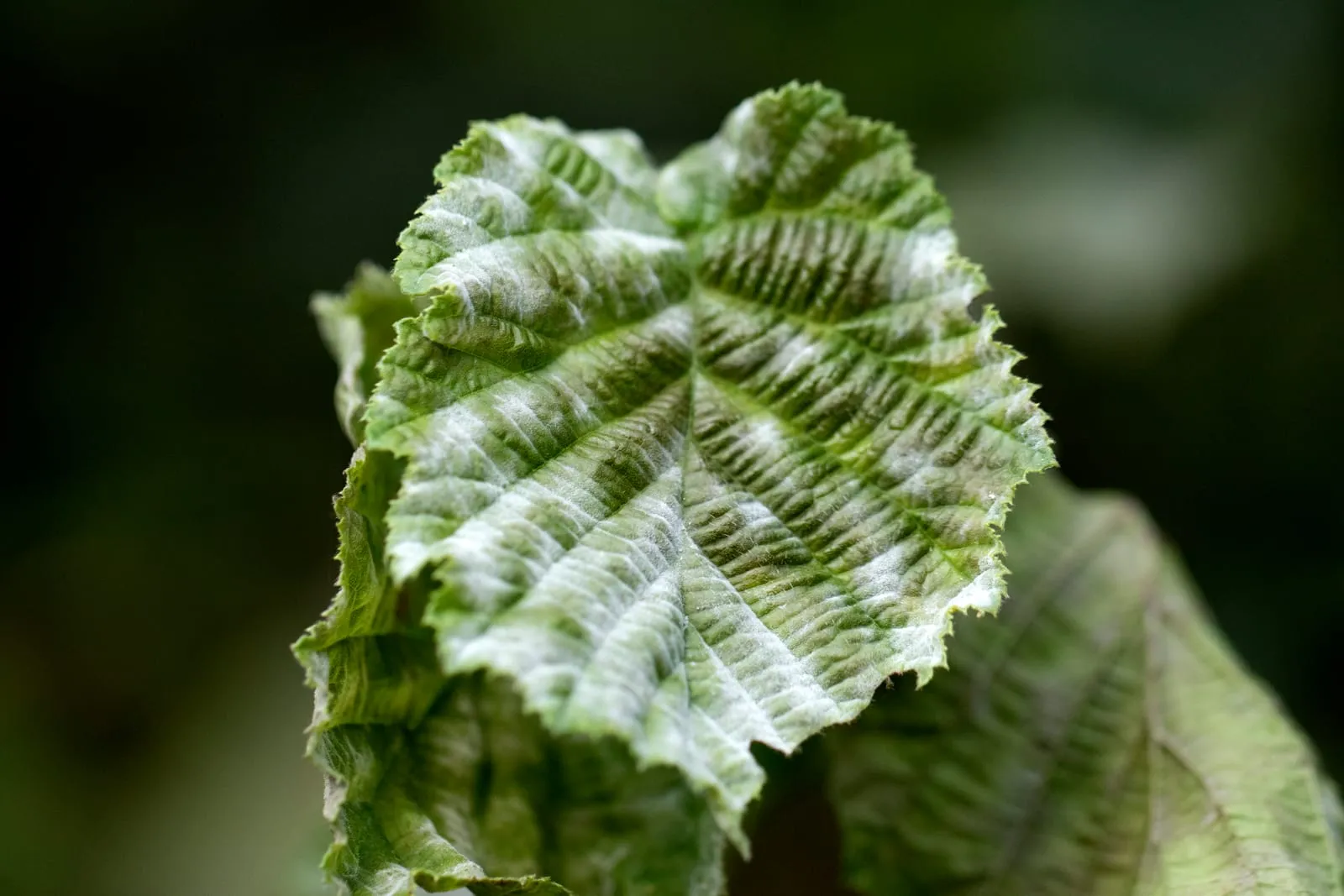
Image: "Hazelnut mildew", by Zeynel Cebeci, via Wikimedia Commons, licensed under CC-BY Source.

Related