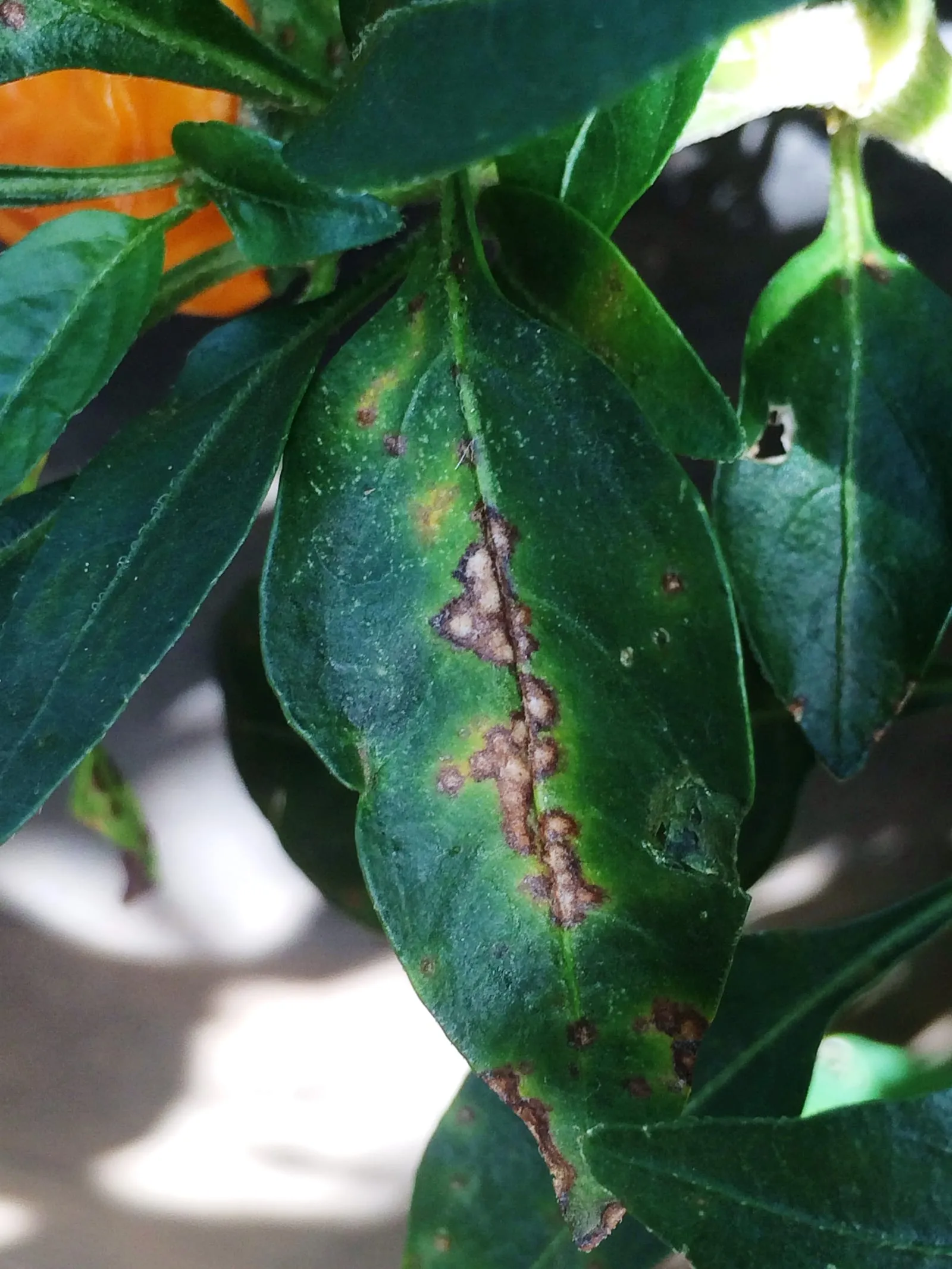
Disease
bacterialBacterial Spot of Pepper
Xanthomonas euvesicatoria and X. perforans
Bacterial disease causing leaf spots and fruit blemishes on pepper and tomato. Severe in warm humid weather, transmitted via splashing water and seed.
- Pathogen type
- Bacterial
- Hosts
- 3
- Symptoms
- 4
- Scientific name
- Xanthomonas euvesicatoria and X. perforans
- Resistant varieties
- 0
Biology and conditions
Bacterial spot of pepper is caused by Xanthomonas euvesicatoria and X. perforans, two closely related bacteria that infect pepper and tomato. The disease thrives in warm, humid conditions, particularly during rainy periods or wherever overhead irrigation keeps foliage wet for extended intervals. Infection spreads rapidly through splashing water, making wet growing seasons especially damaging and poorly ventilated planting areas a chronic risk.
The pathogen enters leaf tissue through stomata and wounds, producing small, dark, angular spots often rimmed with a yellow halo. On pepper fruit, infections cause sunken, corky lesions that render the crop unmarketable even when the plant otherwise survives. Severe outbreaks cause widespread defoliation, which compounds the problem by exposing fruit to sunscald and reducing the plant's capacity to set additional pods. Stem and pedicel lesions can girdle developing fruit clusters before symptoms appear on leaves.
Seed is the primary long-distance vehicle for the pathogen. Starting with certified disease-free transplants or hot-water-treated seed eliminates the most common entry point. Once the season is underway, drip irrigation and wide plant spacing with staking are the most cost-effective cultural adjustments, since both reduce the leaf-wetness duration that allows bacteria to establish and spread. Copper-based bactericides slow spread but do not eradicate existing infections; applications are most useful at first symptom detection and repeated weekly during wet weather. Resistant pepper varieties are available and represent the strongest long-term strategy where the disease recurs annually, though resistance should be confirmed against current regional pathogen strains, since Xanthomonas populations show documented shifts in virulence over time.
Symptoms
- ▸ Small dark angular leaf spots that may turn yellow
- ▸ Defoliation in severe cases
- ▸ Sunken corky lesions on fruit, especially on peppers
- ▸ Lesions on stems and pedicels
IPM controls
- ✓ Source clean seed and certified disease-free transplants
- ✓ Drip irrigation rather than overhead
- ✓ Wide spacing and staking for airflow
- ✓ Copper sprays at first symptom and weekly during wet weather
- ✓ Resistant varieties where available
Affected crops
Image: "Bacterial leaf spot of pepper (14954536360)", by Scot Nelson, via Wikimedia Commons, licensed under CC0 Source.
.jpg)
Related