Disease
fungalBlueberry Stem Blight
Botryosphaeria dothidea
Fungal disease that enters through wounds and kills entire stems or whole bushes, particularly damaging on young plantings in the southeastern US.
- Pathogen type
- Fungal
- Hosts
- 2
- Symptoms
- 3
- Scientific name
- Botryosphaeria dothidea
- Resistant varieties
- 3
Biology and conditions
Blueberry stem blight, caused by the fungus Botryosphaeria dothidea, is one of the more destructive diseases affecting highbush and rabbiteye blueberries in the southeastern United States. The pathogen is a wound invader: it enters through pruning cuts, mechanical damage from cultivation equipment, or physical injury from hail and insects. Stressed plants are particularly vulnerable, and the disease spreads aggressively under warm, humid conditions typical of the Gulf Coast and Atlantic coastal plain.
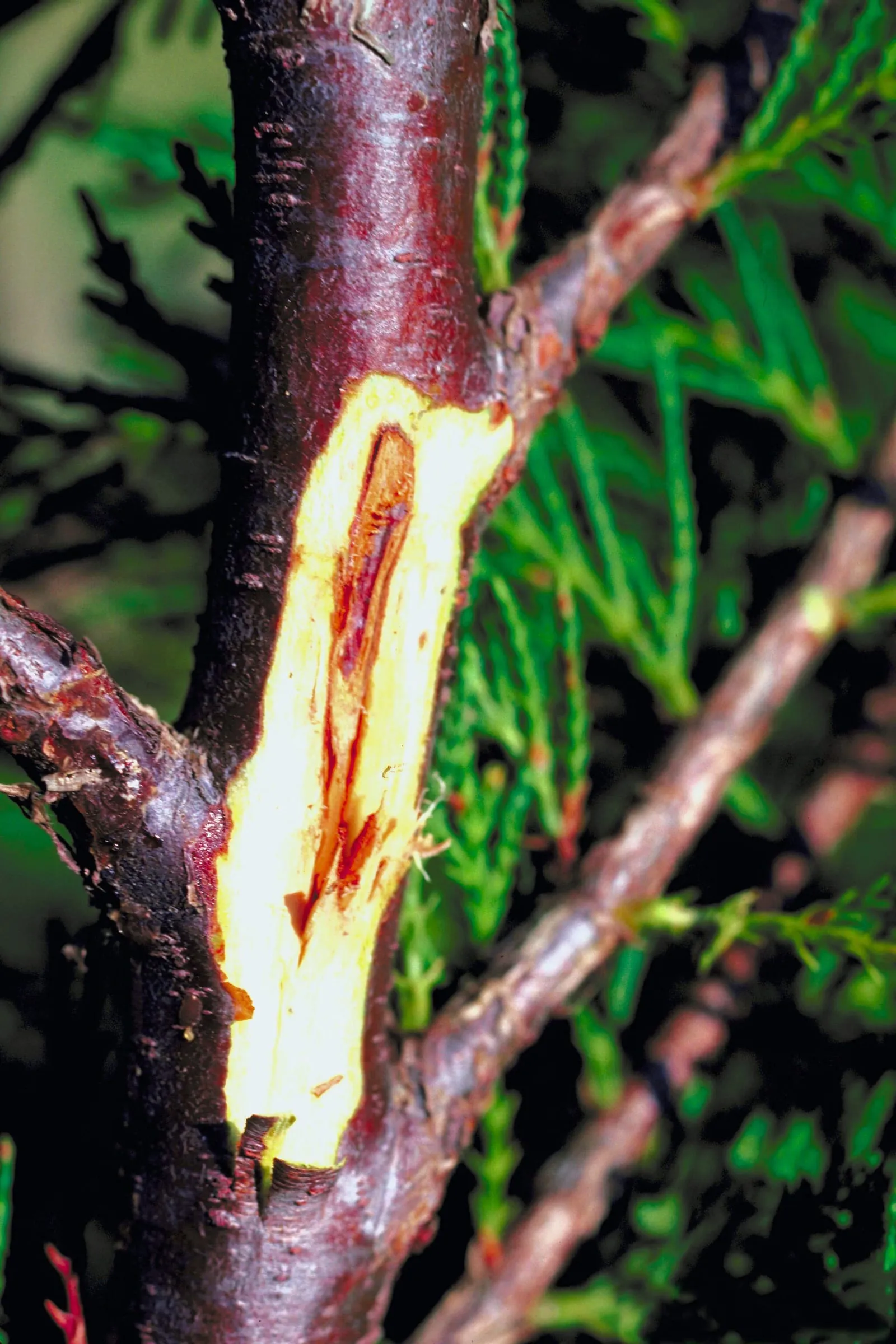
Once inside the vascular tissue, the fungus blocks water and nutrient transport. The signature symptom is sudden, dramatic wilting of an entire cane or stem, often appearing as if the branch was scorched. Cutting into affected wood reveals a reddish-brown stain in the interior tissue rather than healthy white or cream-colored pith. In young plantings, the disease can kill established bushes within one to two growing seasons if left unchecked.
Management starts before the first symptom appears. Avoiding unnecessary wounds during cultivation is the single most cost-effective practice. When pruning is required, cuts should be made during dry weather and tools should be sanitized between plants. Any cane showing discoloration should be removed at least six inches below the last visible lesion, and prunings should leave the site rather than decompose nearby. Soil pH maintained in the 4.5 to 5.5 range supports root health and reduces the physiological stress that makes plants susceptible. Where rabbiteye blueberries are grown, varieties such as Premier, Tifblue, and Powderblue carry documented field resistance and are the preferred starting point for new plantings in high-pressure areas.
Symptoms
- ▸ Sudden wilting and browning of entire stems
- ▸ Reddish-brown discoloration of vascular tissue when stems are cut
- ▸ Whole-plant decline over 1-2 years
IPM controls
- ✓ Plant resistant varieties (Premier, Tifblue for rabbiteye)
- ✓ Avoid wounding stems during cultivation and pruning
- ✓ Prune out infected stems 6 inches below visible discoloration
- ✓ Maintain plant vigor with proper soil pH and nutrition
Resistant varieties
Selecting a variety with documented resistance is the most effective single decision for low-input management of blueberry stem blight.
Affected crops
Image: "Botryosphaeria dothidea", by Robert L. Anderson, via Wikimedia Commons, licensed under CC-BY Source.

Related