Disease
fungalBrown Rot
Monilinia fructicola
The most damaging stone-fruit and almond disease, causing blossom blight and fruit rot.
- Pathogen type
- Fungal
- Hosts
- 7
- Symptoms
- 4
- Scientific name
- Monilinia fructicola
- Resistant varieties
- 2
Biology and conditions
Brown rot (Monilinia fructicola) is the primary limiting factor in stone fruit production across most of North America. The fungus overwinters in mummified fruit and infected cankers, releasing spores in early spring when temperatures climb above roughly 50°F (10°C). Warm, humid conditions between 60°F and 77°F drive the fastest spore germination, and infection can establish within a few hours of wet tissue at peak temperatures.
The disease progresses in two distinct waves. The first arrives at bloom: spores land on flowers, colonize petals and stamens, and cause blossom blight that can track back into spurs and small branches. The second wave strikes ripening fruit, often advancing from symptom-free to fully rotted within 48 to 72 hours under humid conditions. Infected fruit typically mummifies rather than dropping, and those persistent mummies remain the dominant inoculum source the following season.
Sanitation delivers the best return on effort. Removing all mummies before bud break, collecting dropped fruit through the season, and pruning out blighted spurs substantially reduces the inoculum load that drives each new outbreak. Fungicide applications at bloom and again in the two to three weeks before harvest address the two highest-risk windows; skipping one of those windows while covering the other yields incomplete protection. Pruning for canopy airflow reduces the sustained humidity periods that favor infection. Among varieties with documented resistance, Harcot apricot and Contender peach carry moderate tolerance and are worth prioritizing in sites with consistently high brown rot pressure.
Symptoms
- ▸ Brown spreading lesions on fruit
- ▸ Fuzzy gray-brown spore masses
- ▸ Blossom blight in spring
- ▸ Mummified fruit hanging through winter
IPM controls
- ✓ Sanitation (remove all mummies and fallen fruit)
- ✓ Fungicide at bloom and pre-harvest
- ✓ Pruning for airflow
- ✓ Avoid wet harvest
- ✓ Resistant varieties where available
Resistant varieties
Selecting a variety with documented resistance is the most effective single decision for low-input management of brown rot.
Affected crops
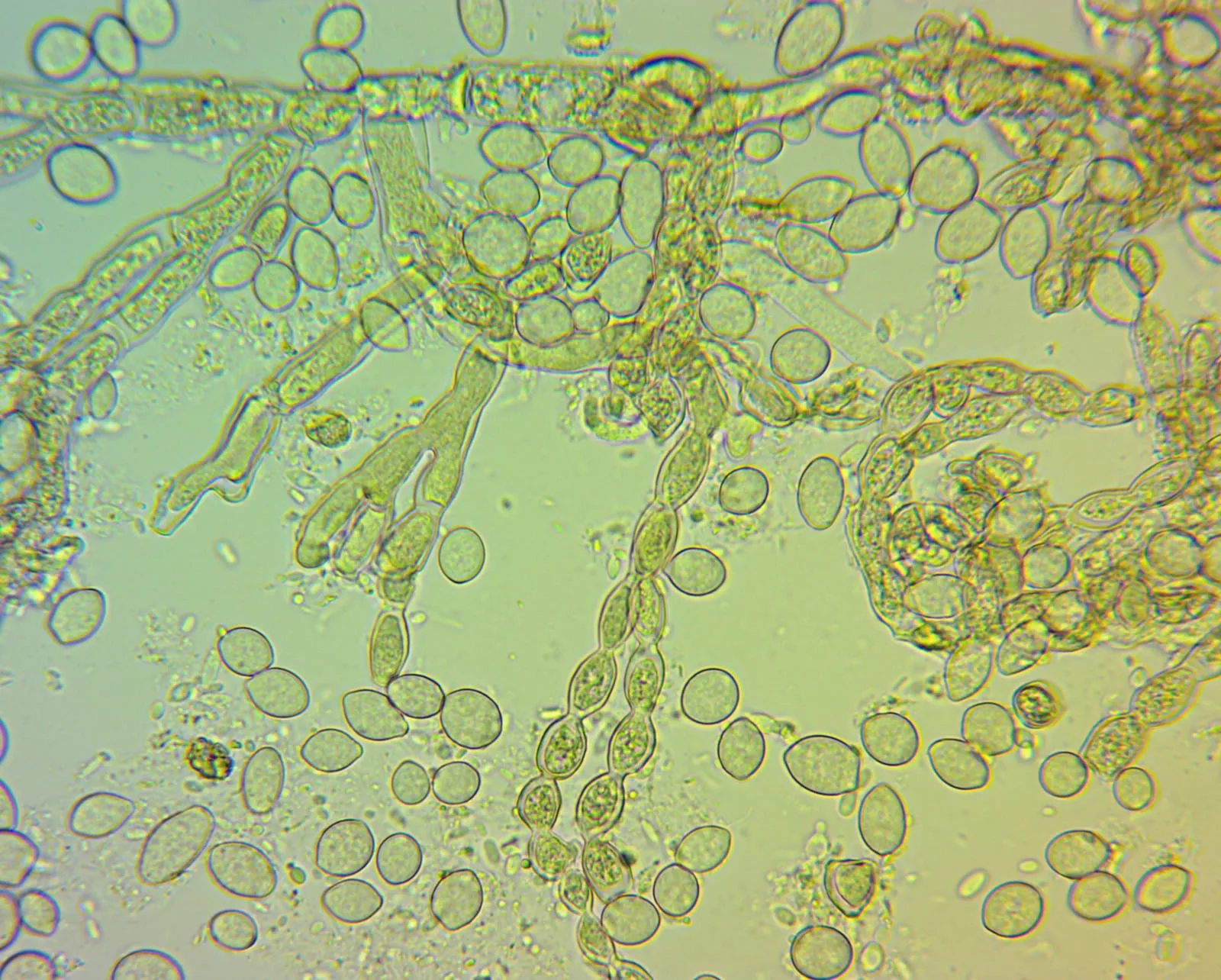
Image: "Starr-160617-0001-Prunus persica var nucipersica-Brown rot of stone fruit Monilinia fructicola-Olinda-Maui (31144762780)", by Forest and Kim Starr, via Wikimedia Commons, licensed under CC-BY Source.
.jpg)
Related