Disease
fungalCane Blight
Leptosphaeria coniothyrium
Fungal disease that enters through wounds (often from cane-borer or pruning cuts) and causes dark cankers that wilt and kill canes.
- Pathogen type
- Fungal
- Hosts
- 4
- Symptoms
- 3
- Scientific name
- Leptosphaeria coniothyrium
- Resistant varieties
- 0
Biology and conditions
Cane blight is caused by the fungus Leptosphaeria coniothyrium, a wound pathogen that cannot infect intact bark. Entry points matter: pruning cuts, insect feeding tunnels from raspberry cane borers, and mechanical damage from trellising or wind all create the openings the fungus needs. Once established, it colonizes the vascular tissue and forms dark brown cankers that girdle the cane, cutting off water and nutrients to the fruiting laterals above.
The disease progresses most aggressively during wet seasons. Spores are released from small black fruiting bodies embedded in dead bark and spread by rain splash, meaning a single heavily infected planting can reinfect pruning cuts made just rows away. Warm, humid conditions following wounding accelerate colonization before the wound can suberize.
Red, black, and yellow raspberries are all susceptible, as is blackberry, though prevalence varies by region and planting density. Established plantings with heavy cane-borer pressure tend to show the worst outbreaks, since borer tunnels create numerous entry sites that would otherwise not exist.
The most cost-effective management combines two practices: pruning only during dry weather so wounds close before spores can land, and sanitizing tools with a 10% bleach solution or 70% isopropyl alcohol between plants to prevent transferring inoculum mechanically. Removing and destroying infected canes before fruiting bodies mature reduces the spore load for subsequent seasons. Where cane borers are present, controlling them addresses a key wound source and indirectly reduces cane blight pressure. No raspberry or blackberry varieties are widely marketed as cane blight resistant, so cultural controls carry the full management burden.
Symptoms
- ▸ Dark brown cankers below pruning cuts or wounds
- ▸ Wilting and dying of fruiting laterals
- ▸ Small black fruiting bodies in dead bark
IPM controls
- ✓ Prune only in dry weather
- ✓ Disinfect pruning tools between plants
- ✓ Remove and destroy infected canes
- ✓ Manage cane-borers to reduce wound entry sites
- ✓ Plant rust- and borer-resistant varieties
Affected crops
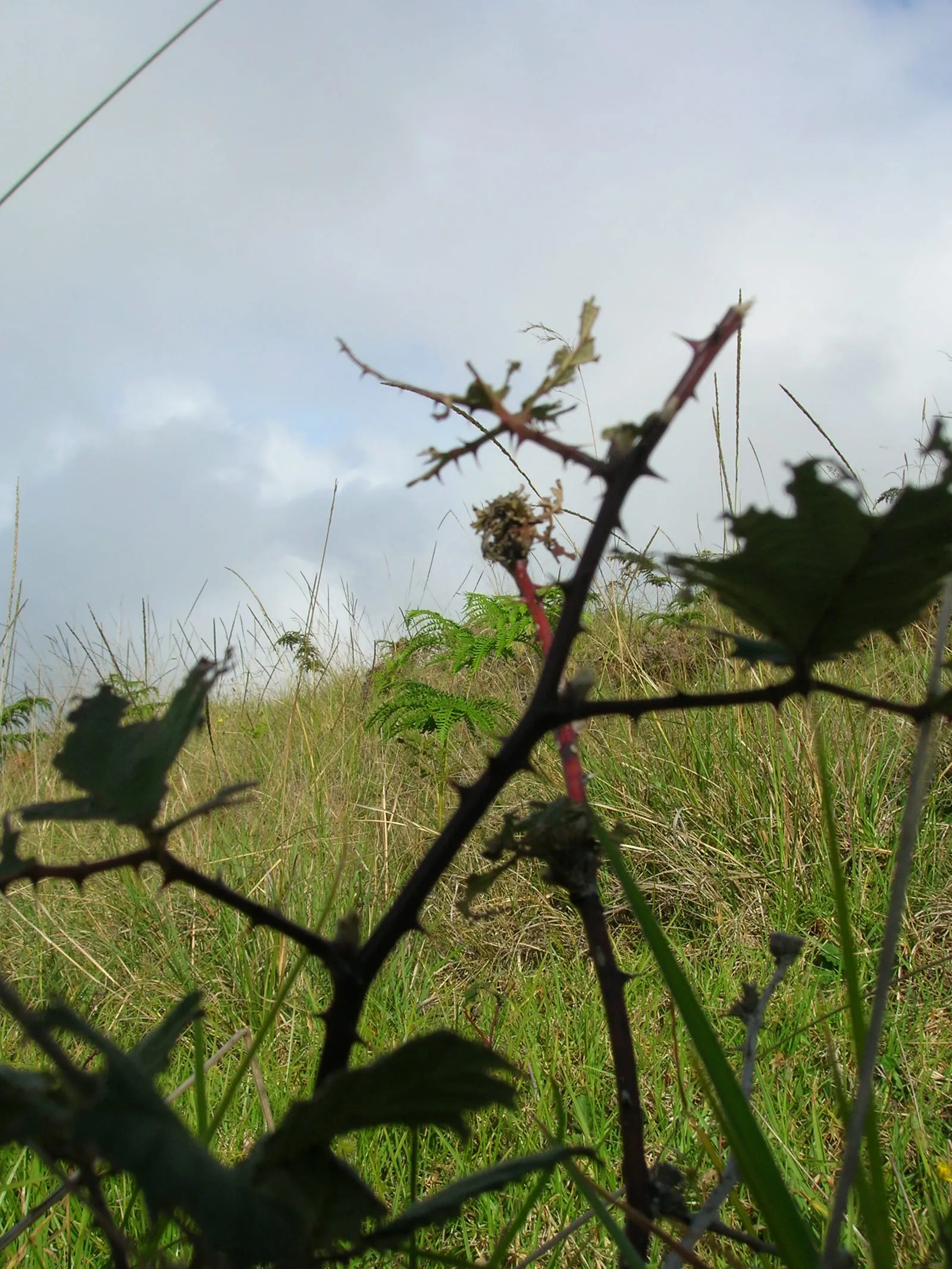
Image: "Starr 051123-5450 Rubus discolor", by Forest & Kim Starr, via Wikimedia Commons, licensed under CC-BY Source.

Related