Disease
fungalClubroot
Plasmodiophora brassicae
Soil-borne disease causing characteristic distorted club-shaped roots on brassicas. Persists in soil for 10-20 years; the dominant brassica pathogen in acidic poorly-drained soils.
- Pathogen type
- Fungal
- Hosts
- 9
- Symptoms
- 4
- Scientific name
- Plasmodiophora brassicae
- Resistant varieties
- 0
Biology and conditions
Clubroot is caused by Plasmodiophora brassicae, a soil-borne pathogen that infects the full range of brassica crops including cabbage, broccoli, kale, radish, and turnips. Though categorized as a fungal disease in most practical guides, it is technically a protist. That distinction matters less than its most consequential characteristic: resting spores can persist in soil for 10 to 20 years. Once a bed or plot is contaminated, the pathogen is essentially permanent.
Infection begins when resting spores germinate in moist soil and release zoospores that penetrate root hairs. The pathogen redirects cell division in root tissue, producing the distorted, club-shaped swellings that give the disease its name. These malformed roots lose their ability to move water and nutrients efficiently, causing plants to wilt during warm parts of the day, yellow at the lower leaves, and stunt overall. Infected plants pull from the soil with little resistance because root structure is compromised.
Conditions that favor infection include acidic soil (pH below 7.0), poor drainage, and soil temperatures in the range of 64°F to 77°F. Heavy clay soils that stay waterlogged after rain are particularly hospitable. The pathogen spreads readily through contaminated soil on tools, boots, and purchased transplants, making clean sourcing a real preventive factor.
Raising soil pH to 7.2 or above with lime is the most reliably documented management strategy. Alkaline conditions suppress spore germination and slow infection progression substantially. Resistant varieties are commercially available for several brassica crops and are worth prioritizing on any ground with a known history of the disease.
Symptoms
- ▸ Stunted plants that wilt during the day
- ▸ Yellowing and reddening of lower leaves
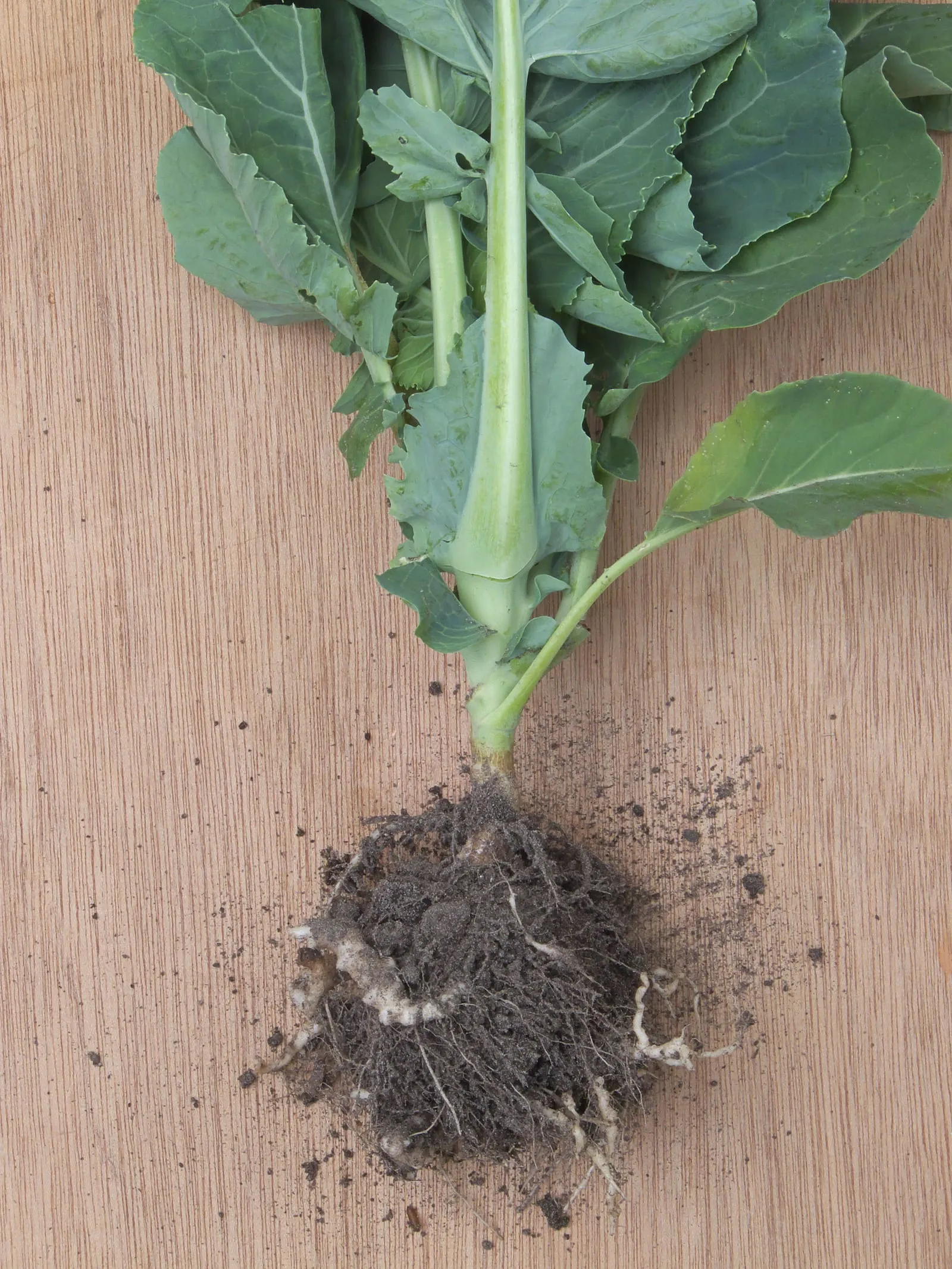
- ▸ Distorted galled or club-shaped roots when plants are pulled
- ▸ Affected plants pull easily from soil
IPM controls
- ✓ Raise soil pH to 7.2 or above with lime (the most reliable control)
- ✓ Crop rotation away from brassicas for 7+ years on infected ground
- ✓ Improve drainage with raised beds and organic matter
- ✓ Source clean transplants
- ✓ Plant resistant varieties where available
Affected crops
Image: "Plasmodiophora brassicae on cauliflower, Knolvoet bij bloemkool", by Rasbak, via Wikimedia Commons, licensed under CC-BY Source.

Related