Disease
fungalCorn Smut
Ustilago maydis
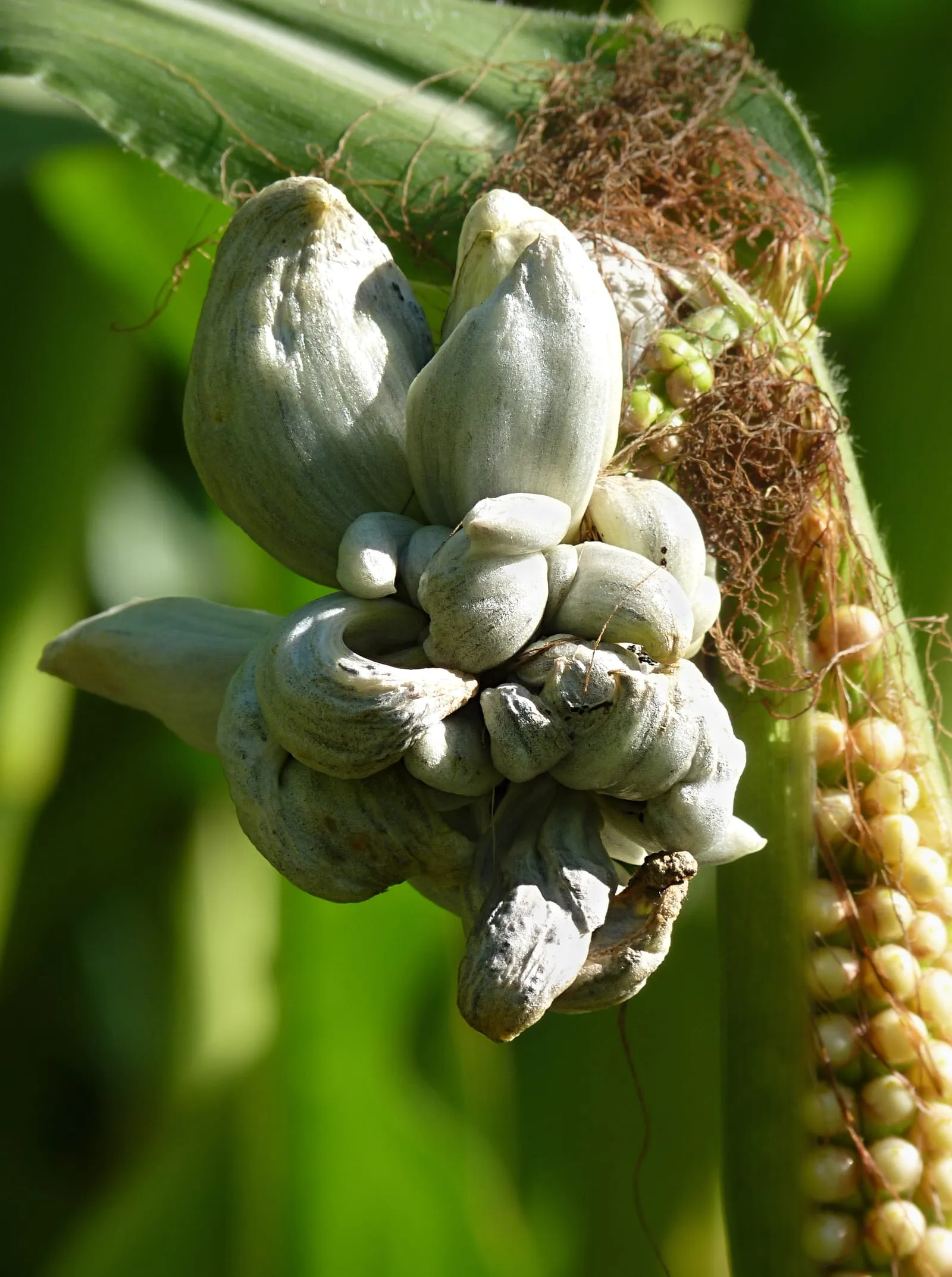
Fungal disease that produces large gray-black galls on corn ears and stalks. Considered a delicacy (huitlacoche) in Mexican cuisine.
- Pathogen type
- Fungal
- Hosts
- 1
- Symptoms
- 3
- Scientific name
- Ustilago maydis
- Resistant varieties
- 0
Biology and conditions
Corn smut (Ustilago maydis) is a fungal pathogen that colonizes actively growing corn tissue, redirecting plant cells to produce the characteristic gray-black galls that form on ears, tassels, and stalks. Galls range from 1 to 6 inches and are most striking when they develop on the ear itself, where they displace kernel tissue and reduce yield. The fungus enters through wounds created by insects, hail, cultivation equipment, or wind abrasion. Young, rapidly dividing tissue is most susceptible, which is why timing of infection relative to growth stage matters.
Warm temperatures in the 80 to 90°F range combined with moderate humidity favor infection and gall development. A pattern of drought stress followed by warm, humid conditions is especially conducive, as stress impairs the plant's ability to close wounds. Spores overwinter in soil and crop debris and can persist for several seasons, making continuous corn production a meaningful risk factor. Wind dispersal means spore pressure can arrive from neighboring fields regardless of on-site rotation.
Rotating away from corn for one to two seasons reduces the local soil spore load. More important is minimizing mechanical injury during cultivation, since cultivation equipment and tillage passes that nick stalks or clip roots create direct infection pathways. Resistant hybrids are available and represent the most durable control option; resistance ratings vary by region, so checking current extension trial data for your area is worthwhile before selecting seed.
One important nuance: corn smut occupies an unusual position among crop diseases. The immature galls, harvested before they blacken and rupture, are huitlacoche, a valued culinary ingredient in Mexican cuisine. Growers supplying specialty markets may choose to tolerate or manage infection differently rather than suppress it entirely.
Symptoms
- ▸ Large gray-black galls (1-6 inches) on ears, tassels, or stalks
- ▸ Galls eventually rupture and release black spore masses
- ▸ Reduced ear yield where galls form on the ear
IPM controls
- ✓ Plant resistant varieties
- ✓ Avoid mechanical injury during cultivation (entry point for spores)
- ✓ Crop rotation away from corn for 1-2 years
- ✓ Remove and destroy galls before they rupture (if not harvesting for huitlacoche)
- ✓ Tolerate the disease when growing for huitlacoche markets
Affected crops
Image: "Ustilago maydis J1b", by Jamain, via Wikimedia Commons, licensed under CC-BY Source.

Related