Disease
fungalDowny Mildew
Pseudoperonospora cubensis (cucurbits) and others
Water mold (oomycete, not a true fungus) that thrives in cool damp conditions. Spreads rapidly through cucurbit and brassica plantings on wind-borne spores.
- Pathogen type
- Fungal
- Hosts
- 15
- Symptoms
- 3
- Scientific name
- Pseudoperonospora cubensis (cucurbits) and others
- Resistant varieties
- 0
Biology and conditions
Downy mildew is not a true fungus. It belongs to the oomycetes, a group of water molds more closely related to brown algae than to the fungi they superficially resemble. On cucurbits, the primary pathogen is Pseudoperonospora cubensis; brassicas and basil are affected by distinct Peronospora species, though the symptoms are similar enough to cause confusion in the field.
The disease requires free moisture on leaf surfaces to germinate spores and initiate infection. Temperatures between 59°F and 68°F are optimal for sporangia production, and a single overnight dew period can trigger rapid spread across a planting. Warm, dry afternoons slow sporulation but do not reverse established infections. Because spores travel on wind currents, a regional outbreak can reach a garden within days of first appearance at nearby farms. The Cucurbit Downy Mildew Forecasting Network at cdm.ipmpipe.org tracks these spore-cloud movements in near real time and is the most reliable early-warning tool available to cucurbit growers.
The most cost-effective management combines resistant varieties with cultural controls: drip irrigation instead of overhead watering, wide plant spacing, and trellising to improve airflow. Preventive copper or phosphorous-acid sprays are warranted when spore advisories indicate regional pressure, but they work best applied before symptoms appear. Resistance in cucurbit varieties shifts frequently as new pathogen races emerge, so checking current seed catalog ratings each season is more reliable than replanting the same variety year after year.
Symptoms
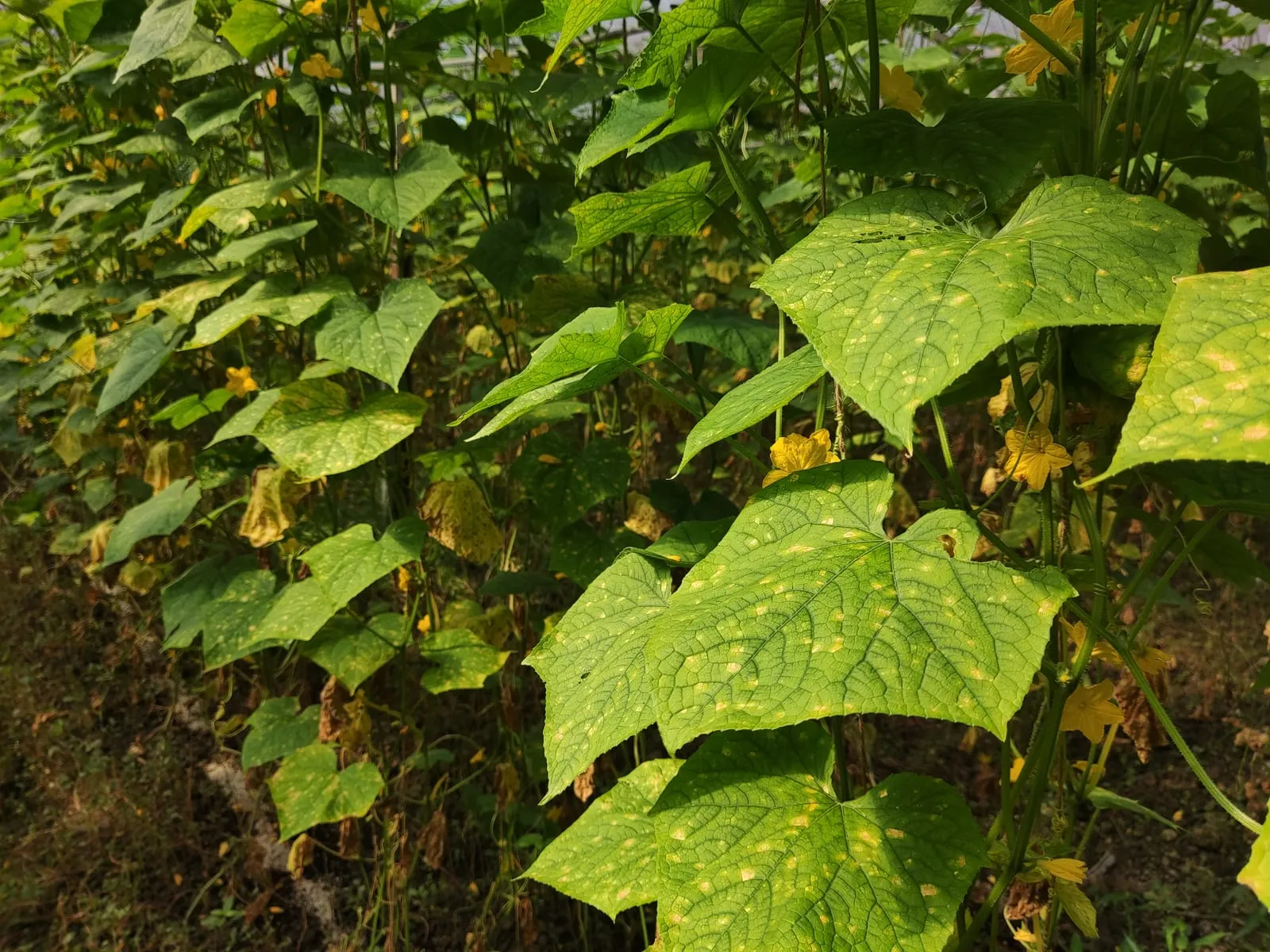
- ▸ Pale yellow angular spots on upper leaf surfaces (limited by leaf veins)
- ▸ Gray-purple fuzzy growth on leaf undersides in morning dew
- ▸ Rapid leaf collapse and defoliation
IPM controls
- ✓ Source resistant varieties (check seed catalogs annually as resistance changes)
- ✓ Avoid overhead watering, especially evening watering
- ✓ Wide spacing and trellising for airflow
- ✓ Preventive copper or phosphorous-acid sprays in high-risk regions
- ✓ Monitor https://cdm.ipmpipe.org for current spore-cloud advisories on cucurbits
Affected crops
Image: "Downy mildew on leaves of Cucumis sativus", by Wee Hong, via Wikimedia Commons, licensed under CC-BY Source.

Related