Disease
fungalEarly Blight
Alternaria solani
Fungal disease starting on lower leaves and progressing upward. The most common tomato and potato leaf disease in the eastern US.
- Pathogen type
- Fungal
- Hosts
- 3
- Symptoms
- 3
- Scientific name
- Alternaria solani
- Resistant varieties
- 0
Biology and conditions
Early blight (Alternaria solani) is a fungal pathogen that overwinters in infected plant debris and on volunteer Solanaceae hosts in the soil. Spores spread primarily by rain splash, landing first on the lowest, oldest leaves of the canopy and progressing upward as the season advances. The disease is not merely cosmetic: heavy defoliation reduces photosynthetic capacity, weakens the plant, and can trigger early senescence that cuts meaningfully into fruit yield.
Warm, humid conditions drive outbreak severity. Alternaria solani thrives when daytime temperatures fall between 75 and 85 degrees F and leaf wetness persists for six or more hours. In the eastern US, where summer brings recurring rain events and extended humidity, early blight is the most common foliar disease of tomatoes and potatoes. Plants under nutrient stress, particularly nitrogen deficiency, or carrying a heavy fruit load show heightened susceptibility.
The most cost-effective long-term strategy combines cultural controls with variety selection rather than a routine fungicide calendar. Mulching the soil surface interrupts the rain-splash cycle that carries spores from infected debris onto lower foliage. Staking or caging improves canopy airflow and accelerates leaf drying after rain events. Removing and discarding infected lower leaves as soon as they appear slows upward spread. A three-year rotation away from Solanaceae beds (tomato, potato, eggplant, pepper) reduces inoculum load in the soil over time.
For sites with persistent pressure, resistant varieties offer a better return than spraying. Mountain Magic, Defiant PhR, and Iron Lady carry Alternaria resistance as part of their disease packages and perform well in high-pressure seasons without routine fungicide applications. Where susceptible varieties are grown or pressure is severe, copper-based or chlorothalonil sprays applied on a 7 to 10 day interval provide useful suppression.
Symptoms
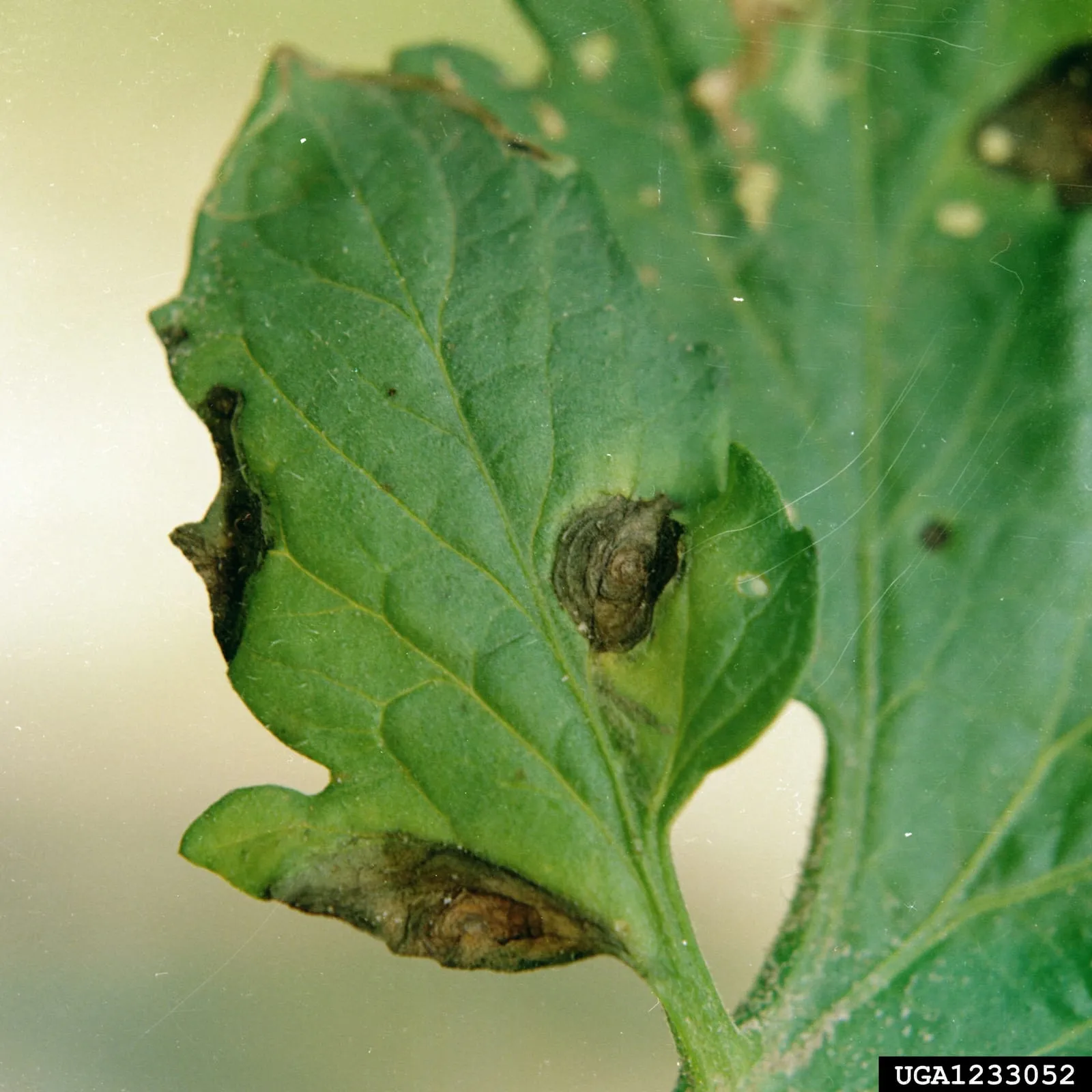
- ▸ Concentric-ring brown spots ('target' pattern) on lower leaves
- ▸ Yellowing and dropping of lower foliage
- ▸ Stem lesions and dark sunken areas on fruit at the stem end
IPM controls
- ✓ Mulch to prevent soil splash onto lower leaves
- ✓ Stake or cage plants for airflow
- ✓ Crop rotation away from Solanaceae beds for 3 years
- ✓ Remove and destroy infected lower foliage
- ✓ Resistant varieties (Mountain Magic, Defiant, Iron Lady)
- ✓ Copper or chlorothalonil sprays for high-pressure conditions
Affected crops
Image: "Alternaria solani - leaf lesions", by Clemson University - USDA Cooperative Extension Slide Series, via Wikimedia Commons, licensed under CC-BY Source.

Related