Disease
fungalGray Mold (Botrytis)
Botrytis cinerea
Ubiquitous fungal disease that causes fruit rot during cool wet weather, often the dominant berry disease in humid regions.
- Pathogen type
- Fungal
- Hosts
- 20
- Symptoms
- 3
- Scientific name
- Botrytis cinerea
- Resistant varieties
- 0
Biology and conditions
Botrytis cinerea is a necrotrophic fungus that colonizes dead and dying plant tissue before spreading aggressively into healthy ripening fruit. It is one of the most widely distributed plant pathogens in temperate agriculture and affects virtually every soft-fruited crop grown in humid regions.
The fungus produces enormous quantities of airborne conidia that germinate rapidly at temperatures between 60°F and 77°F when relative humidity is high or free moisture is present on tissue surfaces. Cool, overcast conditions during bloom and fruit ripening are the highest-risk windows: petals, already senescent, serve as an initial colonization site before the fungus moves into developing berries. Dense canopies that trap humidity and shed moisture slowly compound the risk considerably.
No commercially available berry varieties carry meaningful resistance to Botrytis. Management depends primarily on cultural practices that reduce canopy humidity: adequate plant spacing, annual renovation or aggressive pruning, and trellis systems that lift fruiting canes off the ground. Avoiding overhead irrigation during fruit development is effective and costs nothing once drip or soaker systems are in place.
In high-pressure years (wet springs, cool summers), fungicide applications at early bloom and again just before harvest provide measurable return. Captan, fenhexamid, and iprodione have established efficacy records against Botrytis; rotating modes of action slows resistance development. The most cost-effective single practice, however, is prompt removal of infected fruit during harvest: one overripe berry left on the plant can spread gray mold to adjacent healthy fruit within 24 to 48 hours under favorable conditions.
Symptoms
- ▸ Tan to gray fuzzy growth on ripening fruit
- ▸ Soft watery fruit collapse
- ▸ Spread from infected fruit to adjacent berries
IPM controls
- ✓ Wide spacing and trellising for airflow
- ✓ Fungicide at bloom and pre-harvest in high-pressure years
- ✓ Prompt removal of infected fruit
- ✓ Avoid overhead irrigation
- ✓ Harvest at first ripeness
Affected crops
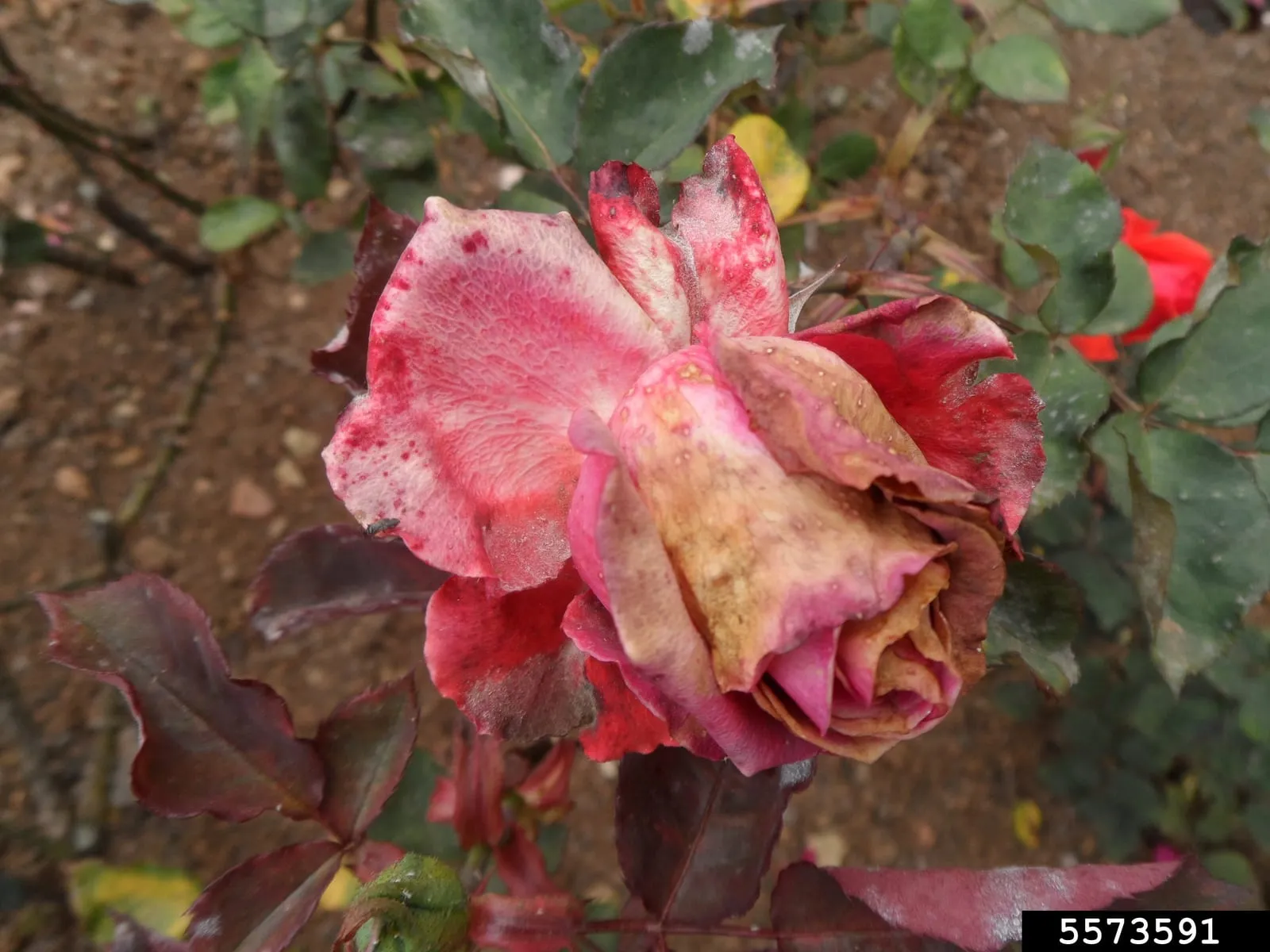
Image: "Gray mold (Botrytis cinerea) on Rosa sp-5573591", by Dr Parthasarathy Seethapathy, Tamil Nadu Agricultural University, Bugwood.org, via Wikimedia Commons, licensed under CC-BY Source.
_on_Rosa_sp-5573591.jpg)
Related