Disease
fungalLate Blight
Phytophthora infestans
The pathogen responsible for the Irish Potato Famine. Devastating in cool wet weather; can destroy a tomato planting in days.
- Pathogen type
- Fungal
- Hosts
- 2
- Symptoms
- 4
- Scientific name
- Phytophthora infestans
- Resistant varieties
- 4
Biology and conditions
Phytophthora infestans is technically an oomycete (water mold), not a true fungus, though it behaves like one in the garden and is managed similarly. This pathogen caused the Irish Potato Famine of the 1840s and remains one of the most economically damaging plant diseases in temperate regions worldwide. It spreads through spores carried by wind and water, making containment difficult once conditions favor an outbreak.
The disease thrives when daytime temperatures sit between 60 and 70°F paired with high humidity and extended leaf wetness from rain, heavy dew, or overhead irrigation. A planting can progress from first lesions to complete collapse in five to seven days under favorable conditions for the pathogen. Warm, dry summers generally suppress it; the Pacific Northwest, Great Lakes region, and humid coastal areas see the worst pressure. Potatoes and tomatoes are the primary hosts, though the potato and tomato strains are largely distinct. Volunteer potato plants and cull piles left in the field between seasons serve as overwintering inoculum and should be destroyed immediately, not composted.
Management centers on two levers: reducing leaf wetness through wide spacing, canopy pruning, and avoiding overhead irrigation, and applying preventive copper-based fungicides in high-risk regions or ahead of high-risk weather windows. Copper is not curative; it must precede infection to be effective.
For tomatoes especially, selecting resistant varieties is the most cost-effective defense available. Mountain Magic, Mountain Merit, Iron Lady, and Defiant carry meaningful late blight resistance and have performed consistently in university trial data. No variety is immune under severe pressure, but these routinely outperform susceptible types when regional conditions turn favorable for the pathogen.
Symptoms
- ▸ Water-soaked olive-green to brown lesions on leaves and stems
- ▸ White fuzzy mold on leaf undersides in humid conditions
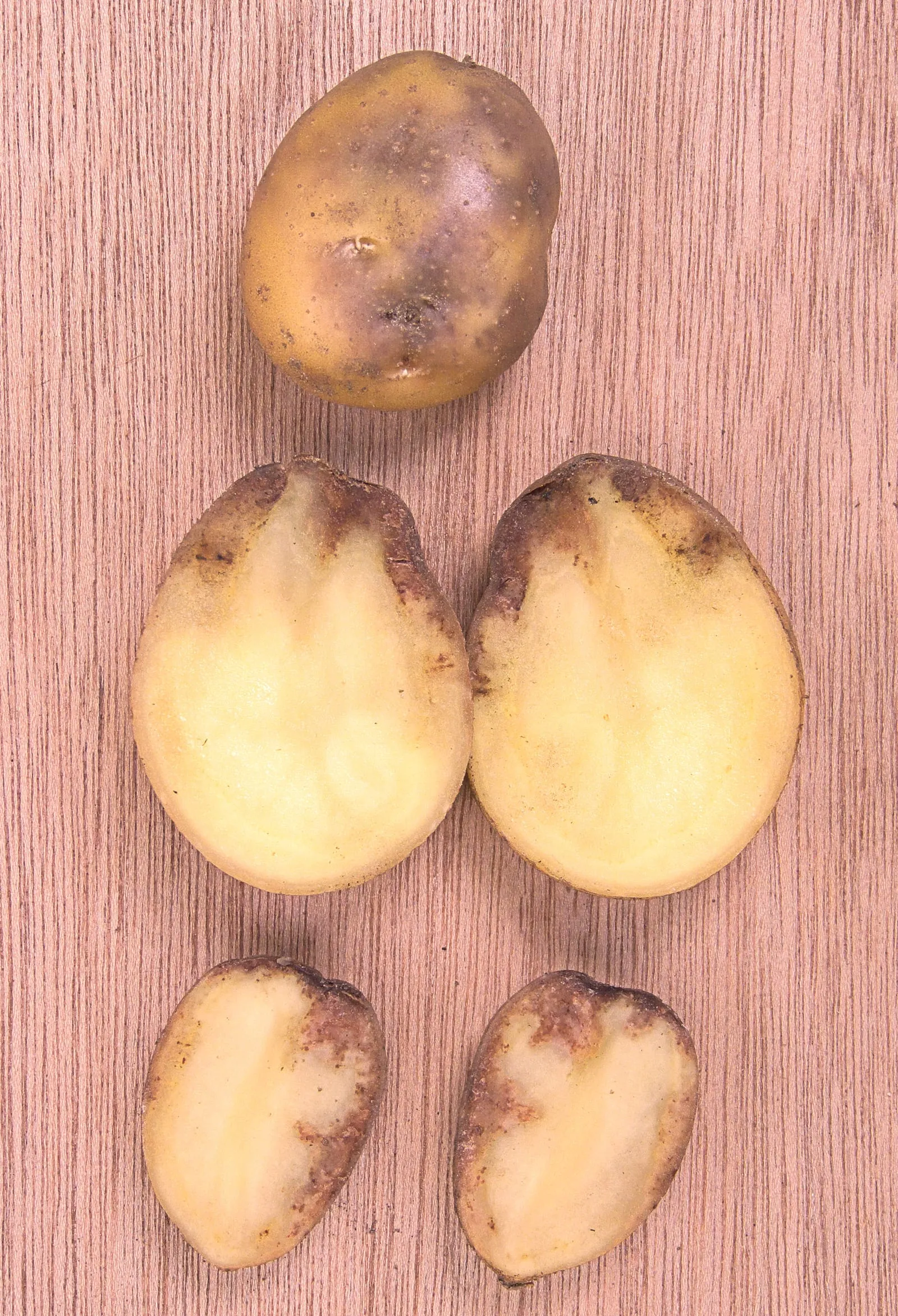
- ▸ Brown patches on fruit, firm at first then collapsing
- ▸ Whole-plant blackening and collapse
IPM controls
- ✓ Plant resistant varieties (Mountain Magic, Mountain Merit, Iron Lady, Defiant)
- ✓ Source clean potato seed and tomato transplants
- ✓ Destroy volunteer potatoes and any infected plants immediately (do not compost)
- ✓ Wide spacing and pruning for airflow
- ✓ Preventive copper sprays in high-risk regions
Resistant varieties
Selecting a variety with documented resistance is the most effective single decision for low-input management of late blight.
Affected crops
Image: "Phytophthora infestans (Aardappelziekte)", by Rasbak, via Wikimedia Commons, licensed under CC-BY Source.
.jpg)
Related