Disease
fungalStrawberry Leaf Spot
Mycosphaerella fragariae
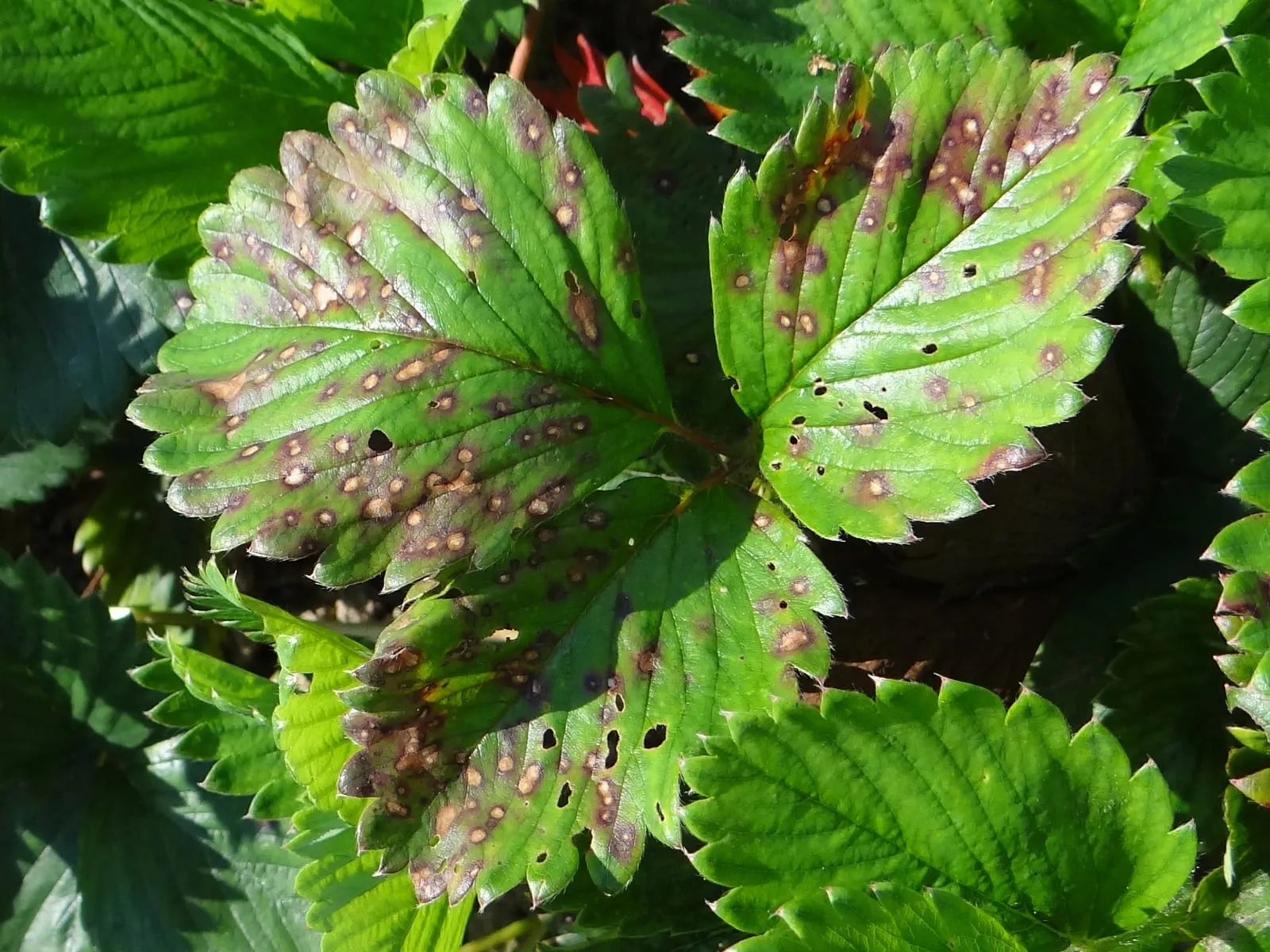
Common fungal disease producing characteristic small purple spots with white centers on strawberry leaves.
- Pathogen type
- Fungal
- Hosts
- 2
- Symptoms
- 3
- Scientific name
- Mycosphaerella fragariae
- Resistant varieties
- 0
Biology and conditions
Strawberry leaf spot, caused by the fungus Mycosphaerella fragariae, is one of the most common foliar diseases in commercial and home strawberry plantings across North America. The pathogen overwinters in infected leaf tissue and disperses primarily by water splash during rain or overhead irrigation. Spore germination is favored by temperatures between 65°F and 75°F combined with prolonged leaf wetness, conditions that occur regularly during spring growth and again in fall for everbearing types.
Symptoms begin as small, circular purple spots on the upper leaf surface. As lesions mature, the centers fade to white or gray while the purple border persists, giving the spots their characteristic bull's-eye appearance. In heavy infections, spots coalesce, leaves yellow and weaken, and premature defoliation follows. Plant vigor and berry size both suffer when a significant portion of the canopy is lost mid-season.
For June-bearing beds, annual renovation after harvest is the single most cost-effective practice. Mowing off old foliage and removing debris breaks the disease cycle before fall growth resumes. Wide in-row spacing and avoiding overhead irrigation reduce the leaf wetness periods that favor spore germination. In regions with historically high disease pressure, a targeted fungicide program applied at early leaf emergence can suppress early-season inoculum. Resistant varieties are available and represent the lowest-input long-term solution; consult regional extension trial data to identify varieties with documented resistance that also perform well in your zone. Sanitation throughout the season, clearing dead and infected leaves rather than leaving them to decompose in the bed, provides incremental but meaningful suppression.
Symptoms
- ▸ Small purple spots with whitish centers on leaves
- ▸ Yellowing and reduced vigor
- ▸ Premature leaf death in severe infections
IPM controls
- ✓ Renovate June-bearing beds annually (mow off old leaves after harvest)
- ✓ Wide spacing and good airflow
- ✓ Fungicide program in high-pressure regions
- ✓ Resistant varieties where available
- ✓ Sanitation of dead leaves
Affected crops
Image: "Ramularia grevilleana a1", by Jerzy Opioła, via Wikimedia Commons, licensed under CC-BY Source.

Related